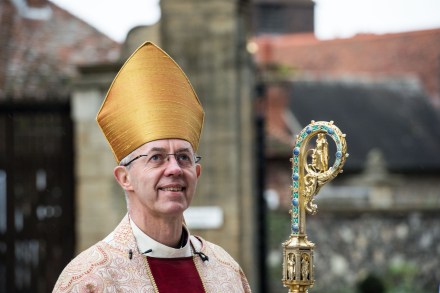
Theo Hobson

Theo Hobson

Theo Hobson is co-editor of Created for Love: Towards a New Teaching on Sex and Marriage.

The BBC should commission a Christian version of Woman’s Hour

From our UK edition

In his new book God is No Thing: Coherent Christianity, Rupert Shortt notes that religion is in some ways taken more seriously now than a decade or two ago. But huge habits of ignorance and condescension remain: ‘When secular humanists attack Christianity, they often fail to realise that it is the gospels which provide unseen elements in their own outlook.’ He rightly draws attention to the ‘tension between the enormous cultural footprint of Christianity on the one hand, and its concealment in a secular multicultural society such as Britain on the other.’ And he tentatively criticises the subtle marginalisation of Christianity from public discourse.
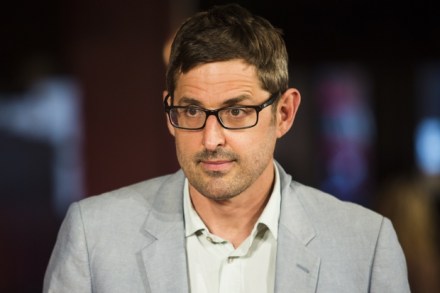
Louis Theroux has brought honest humanism to our screens

From our UK edition

Louis Theroux’s latest documentary on alcoholism confirms the fact that he has become an interesting broadcaster. He has grown up. This was already clear from his last couple of films from America, on a secure mental hospital, and on transgender children. This might sound excessive, but he has become capable of expressing a more nuanced humanity than the average television journalist. In his callow youth he was fun to watch, but overdid the sneering ironic act. He kept a straight face in order to allow idiots to expose themselves. Such an approach is tainted by a sort of self-righteousness: let’s look down on these ridiculous human specimens. Then he began to focus on fairly ordinary people with interesting struggles. And he paid attention, gave them space.

Will the human rights industry ever admit that it has Christian roots?

From our UK edition

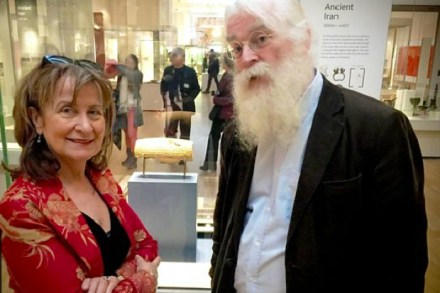
Helena Kennedy’s two-part radio programme on human rights was very predictable. She did a lot of hand-wringing. She spoke some passionate rhetoric about our common humanity. She quoted Hannah Arendt. She consulted a lot of non-Western thinkers, a lot of fellow human rights lawyers, and a token critic of the concept of human rights. The first part put much emphasis on the ancient global roots of the concept. Look how it is anticipated in this ancient Iranian or Mesopotamian or Buddhist document. I think this is misleading. Though many ancient cultures had impulses in this direction, they were frail. It was the Christian West that gradually heaved such aspirations into politics.

Brexiters shouldn’t knock Obama too hard. Most Brits still like him

From our UK edition

I suppose it’s inevitable that Brexiters will angrily reject Obama’s intervention, especially his line about Britain being left 'at the back of the queue' when it comes to trade. But if they let their annoyance spill over into a general criticism of the president, they will harm their own case. For most Brits still rate him very highly. Tim Montgomerie accuses him of extreme arrogance, and widens the critique: the grand stirring rhetoric that won him the presidency not only failed to unite America; it fostered a more extreme and angry political culture. I half-agree: Obama’s exceptional expression of liberal idealism scared his opponents, and provoked them to mobilise.

Channel 4’s Sex Box is far more damaging to British culture than Islamism

From our UK edition

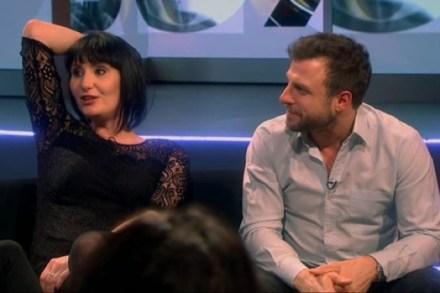
Last night Channel 4 broadcast a programme by Trevor Phillips, in which he worried about the integration of British Muslims. He suggested that we should switch to a policy of ‘active integration’. The night before, at the same time of 10pm, Channel 4 broadcast a programme in which the merits of having sex with a complete stranger were discussed. Some people find it very liberating, a sexpert explained, as a thrilled audience of thickos tittered. Yes I know – I wrote about Sex Box last week – one more strike and I’m officially volunteering to be the new Mary Whitehouse. My point is that sensationalist TV is guilty of falsifying who we are as a nation in a way that alienates people with traditional moral views.

Can Christianity be translated into a few core rules?

From our UK edition

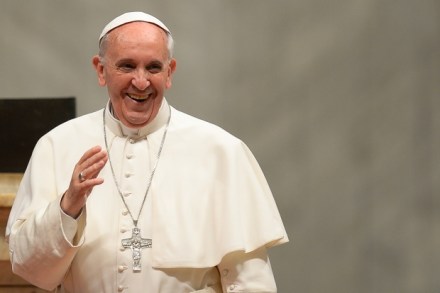
The message of Pope Francis, in his exhortation Amoris Laetitia (The Joy of Love), seems to be this: there must be rules. Only tough rules can express the absoluteness of the gospel. Without these rules it will be diluted, its saving force depleted. But the Church must apply these rules with Christlike tenderness and mercy, rather than with legalistic rigour. It must be tolerant of innovators on the edge, testing the boundaries. But it must uphold the core rules, even if they seem harsh. For this harshness corresponds to the absoluteness of the ideals of Christianity. We may all struggle to live up to these ideals, but we need absolute standards to aim for – we need to try, and fall short, in the right direction.

Channel 4’s Sex Box is vandalising our culture

From our UK edition

Some people seem to want to discuss their sex lives on television, as in the show Sex Box. Couples are interviewed before and after they have tried something new, right there in the studio (although hidden from view). This week, the couple were close friends, and were trying out being lovers for the first time. The interviews are full of therapeutic empowering chat, plus saucy joking. I consider this sort of thing a form of cultural vandalism, rather like what Isis got up to in Palmyra. Something frail and important is being damaged in a quick burst of self-righteousness. What is being damaged is the delicate tradition that associates sex with profound privacy. Without such privacy, its capacity to be meaningful is reduced.

Can Islam move away from theocracy?

From our UK edition

Terrorism is a distraction. It’s a distraction from the big question of our day, about Islam and violence. Only a tiny minority of Muslims affirm that sort of violence. A far larger proportion of Muslims condone another, vaguer sort of violence. It is this that we must confront. I mean the violence of theocracy. Theocracy is the belief that one religion should be absolutely culturally dominant. Of course it thinks that the state should enforce this; if the state fails to do so it loses legitimacy. This theocratic worldview is the underlying cause of Muslim terrorism. To judge from its founding texts, and its history, Islam is a religion that wants to be very firmly established. It wants to be the official religion of a nation, or empire.

The Church of England needs to create better headlines for itself

From our UK edition

It’s Holy Week, so I wonder if our national Church is in the news at all? Let’s see…There’s a story this week about a long dead bishop called Bell, accused of child sex abuse, to the anger of some. Don’t confuse Bell with Ball, an undisputed episcopal abuser. And don’t confuse Bishop Peter Ball with Bishop Michael Ball, the disgraced Ball’s twin brother – there’s also a story about such confusion. There’s also a simmering story about a recent archbishop, George Carey, allegedly failing to pass on a specific allegation of sexual abuse relating to Peter Ball. So: Bell, two Balls and Carey – that’s pretty much the Anglican news this Easter.

How ‘damning’ is the report into the Church of England’s handling of sex abuse?

From our UK edition

A ‘damning’ report has been published into the Church of England’s handling of a particular abuse case. Except it’s not very damning. In 1976 a 16-year old was abused by a priest called Garth Moore – an attempted rape took place. He kept quiet about it for a couple of years, then told various priests about it over the next few decades, including some bishops. Moore died in 1990. The Church did nothing about his claims until 2014, when it began an inquiry that led to him receiving some compensation last year. The report says that the Church was at fault for failing to advise him to report it to the police, and for failing to launch its own investigation earlier. But there is no allegation that the Church dissuaded the victim from pressing charges.

Donald Trump, American Iconoclast

From our UK edition

What’s different about Donald Trump? Forget about the hair for a while, if you can. What sets him apart is his defiant disregard for the ideological consensus that other American politicians sign up to. That consensus can be summed up as ‘hopeful humanism’. Of course ‘humanism’ doesn’t mean non-religion here: this hopeful humanism is always expressed with some degree of reference to Christian (or Judeo-Christian) tradition. This consensus, of course, involves certain patterns of moral rhetoric. It involves speaking about people of all races and religions with respect – not labelling Mexicans rapists, not proposing a ban on Muslims coming into the country.

An Islamic reformation has already begun

From our UK edition

Last Friday I took part in a debate entitled ‘Does Islam Need a Reformation?’ It was run by the Muslim group IREA.  I was a bit wary. I’ve been to a couple of Muslim-run debates and round-table discussions in which the mainly Muslim participants veered off-topic and took turns to attack Western foreign policy and to accuse British culture of Islamophobia. There was often more grievance-airing than real debate.  There was only a little bit of this on Friday: it was mostly a good discussion about the nature of religious reform and the question of Islam’s compatibility with secular values. It left me feeling hopeful on one level. It was encouraging that Muslims were defending their religion with reference to universal human rights.

The rite stuff

From our UK edition

Religion remains a surprisingly popular subject for plays. It’s partly because there’s already a core of theatricality there, in the rituals, the dressing-up and the little shibboleths of piety. In one way or another, religion involves performing. And religion plays the role of Hogwarts in Harry Potter — an enclosed world, a game with rules. We know how a priest is meant to behave, so we can more quickly engage with a story about his or her struggles. Also, of course, big issues of moral principle and human frailty are close to the surface. But does theatre treat this subject with respect? Or does it tend to sneer at religion, to reinforce a largely secular audience’s prejudices?

Are there any useful parallels between the EU referendum and religious history?

From our UK edition

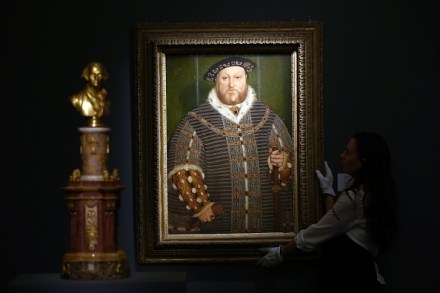
Niall Ferguson got me thinking about this in his Sunday Times piece, in which he rejected the allure of Brexit and declared himself an 'Anglosceptic'. He concluded: ‘In the days before empire, Henry VIII’s version of Brexit was to renounce Roman Catholicism and divorce Catherine of Aragon. A true sceptic in those days would have advised him to Bremain — and unite against the Turk.’ It’s an odd choice of illustration, because in that case Brexit did work, it paved the way for a stronger braver England, then Britain. It was the making of us. Tudor history is surely a precedent in the Brexiters’ favour. So can Boris dress up as Henry VIII, so to speak, and paint Brussels as Rome? In a sense he is doing exactly this, when he talks of sovereignty.

Islamic State is reviving an unfashionable concept: primitivism

From our UK edition

What do they mean, these Islamofascists, by using children in their publicity films? Last month one of their films featured a cute British kid of about six called Isa Dare: he looked on admiringly and then threatened the kaffir. Earlier this month a new film showed an English-speaking boy of about ten actually beheading a Syrian prisoner with a little knife. It wasn’t widely reported. (Has such stuff become routine, or has the quality press decided to refuse to mediate such messages?) Why the use of children? Does it make their regime seem scarier? Not really. Does it ensure such videos get maximum attention? Yes, but there’s more to it than that. It also heightens the attraction of the regime. To understand why, we have to revisit a rather unfashionable concept.

In the case of Bishop Bell, the Church has shown real compassion

From our UK edition

Christian columnists of left (Giles Fraser) and right (Charles Moore, Peter Hitchens) agree: Bishop Bell has been most sorely wronged. The Church should not have compensated the person he allegedly abused about seventy years ago. It has damaged the reputation of one of its major figures, without any sort of trial taking place. I disagree. I think the Church has behaved – shock, horror – Christianly. The Church knew what a huge step it was taking in believing this woman, who has now told her story to the Brighton Argus. (She was a relative of a member of staff in the bishop’s palace; she was occasionally read bedtime stories as she sat on his knee, and was interfered with.

Does an understanding of Britain’s cultural debt to Christianity develop with age?

From our UK edition

There’s a spate of statistic-based stories about Christianity in decline. Recently we heard that under a million Brits now attend the CofE. Now we hear that the proportion of Britons who say they have no religion is creeping up to 50 per cent. Already, most white Britons identify as non-religious. It’s not really news. For decades religion has been a minority thing, a subculture that the main culture ignores or derides. But this was half-obscured by a residual sense that most Britons were culturally Christian. In 2001 a surprising 72 per cent said that they were. We are seeing a new honesty from these cultural Christians – many of them are now moving away from the pretence that they are sort of Christian. And this means we can see the landscape a bit more clearly.

Gay marriage isn’t splitting the Anglican Communion – it’s holding it together

From our UK edition

My line on the Anglican crisis is a bit eccentric. I think there are now grounds for hope that the Communion can survive – and the reason is the recent rise of gay marriage as the central issue. Lazy punditry says that gay marriage is the bone of contention. But it’s actually a new issue – it wasn’t being discussed a decade ago, when Rowan Williams was holding these summits. The real bone of contention is whether actively gay priests and bishops should be allowed. On this the two sides are obviously adamantly opposed. The arrival of gay marriage as a big issue seems to make the crisis worse than ever – but this is a superficial view. It is actually a blessing in disguise. For it allows a compromise position to emerge.

There’s nothing courageous about Charlie Hebdo’s anniversary cover

From our UK edition

The new Charlie Hebdo cover is feeble. God with a machine-gun, looking over his shoulder, and the line ‘The Assassin is still at large’. It makes Richard Dawkins look nuanced. Religion is to blame? All religion? It feels dishonest, timid: a refusal to face the fact that it’s a particular form of religion that is the problem. In fact satire in general is pretty feeble, when it comes to religion and terrorism. Satire is good at attacking established power, and religious terrorism is obviously an intensely marginal thing – far more marginal than satire itself. There is a wider target: Islam in general, but in the West this too is more marginal than satire.

Justin Welby is right to offer only a vague message about refugees

From our UK edition

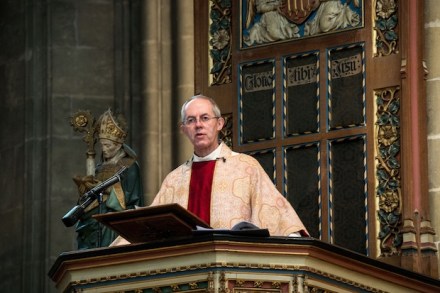
We should be more generous to refugees, said Justin Welby in his New Year message. Is he saying that the government should let more of them in? If so, should he be more specific? Does David Davies, the Tory MP for Monmouth, have a point? He wrote on his website: 'How wonderfully saintly it must feel to sleep at night with an easy conscience knowing you have roundly condemned the wicked politicians and bigots who worry about mass migration without actually having to take difficult decisions yourself and live with the consequences.' But Welby didn’t condemn those worried about mass migration: he just reminded people that hospitality to outsiders is an aspect of Christian morality. He kept it vague.