Theo Hobson

Theo Hobson

Theo Hobson is co-editor of Created for Love: Towards a New Teaching on Sex and Marriage.

Islamic State is reviving an unfashionable concept: primitivism

From our UK edition

What do they mean, these Islamofascists, by using children in their publicity films? Last month one of their films featured a cute British kid of about six called Isa Dare: he looked on admiringly and then threatened the kaffir. Earlier this month a new film showed an English-speaking boy of about ten actually beheading a Syrian

In the case of Bishop Bell, the Church has shown real compassion

From our UK edition

Christian columnists of left (Giles Fraser) and right (Charles Moore, Peter Hitchens) agree: Bishop Bell has been most sorely wronged. The Church should not have compensated the person he allegedly abused about seventy years ago. It has damaged the reputation of one of its major figures, without any sort of trial taking place. I disagree.

Biblical art, like Christianity, is always renewing itself

From our UK edition

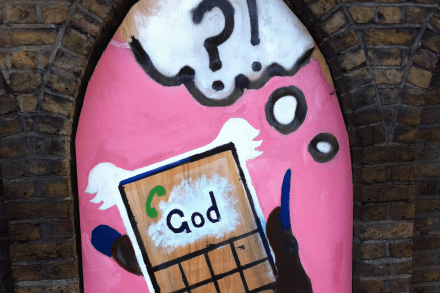
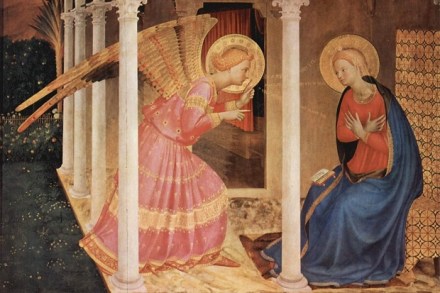
This sign adorns a local church in Harlesden. I suppose it could be called a Pop Annunciation. Who says religious art is stuck in the past? Then again, it is a perennial – and fascinating – question in Christian art: how much contemporary life to include in biblical scenes. For centuries artists have shocked the public

Is Christmas really the right time for the church to ‘man up’?

From our UK edition

A vicar called Paul Eddy has argued, in the Oxford church newspaper, that carol services should be more manly. For there are many men who only get this annual glimpse of church, and they should be challenged in their assumption that religion is a soppy women-and-children thing. He suggests showing a clip from an action

The Church of England urgently needs a better PR team

From our UK edition

The new report by the Woolf Institute on religion in British public life is predictable stuff. It says that some reforms are needed, so that Britain’s pluralistic, largely secular character is better expressed in law. It recommends that the law that demands religious worship in school assemblies should be scrapped, that faith schools should move

Can Christianity incorporate Daleks into its iconography?

From our UK edition

The Times has a story for the first week of Advent, about baby Jesus and golden Daleks.  An artist called Kate Richardson exhibited her work in a minor Cornish gallery. Some Christians complained about some of the paintings, and the exhibition was cancelled. The contentious works were copies of famous nativity paintings, in which a

There’s a good reason why humanism should be taught in schools

From our UK edition

A confusing story about RS (religious studies in schools) from last week has come to my attention. A group of parents brought a court case against the Department for Education: they complained that its new GCSE syllabus failed to include humanism. They won the case – sort of. The judge said that schools should not be

Britain should be proud of its role in spreading universal morality

From our UK edition

I promised to provide, in this space, a forum for thinking about ‘what we believe’. We the West. There are two articles worth noting in the last few days. Toby Young, right here in The Spectator, wondered how liberal values can be sexed up. Should we hope that potential Islamists will be won over by ‘a crash

Has ‘Islam’s reformation’ really begun?

From our UK edition

Usama Hasan, an imam attached to the Quilliam Foundation, argues in the Times that Islam is steadily adapting to modernity. It has been doing so since the nineteenth century, when the Ottoman Empire launched certain reforms. Islam should not be judged by a few marginal hiccups in this process. ‘Isis follows a fundamentalist and selective

Islamic State are clear about their values. Are we clear about ours?

From our UK edition

Here we go again. The same mantras are dusted down: we must be more assertive of our values, less tolerant of extremism, we must challenge Muslim separatism more effectively, demand better integration. And in my opinion the same root question is somewhat evaded: what exactly are our values? It is easier to assume that this

Picasso was a much better sculptor than a painter

From our UK edition

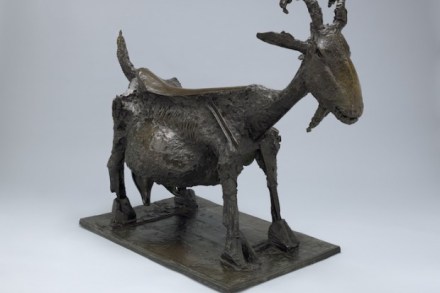
If you’re anywhere near New York soon, don’t miss the exhibition of Picasso’s sculptures at the Museum of Modern Art. It has restored my love of the great magician. As a teenager I had eyes for no one else. He was the obvious god of modern art. Almost all previous art looked boring, and not

I’ve discovered a new way to annoy holier-than-thou rugby fans

From our UK edition

Some advice. Don’t watch the rugby world cup final with anyone too politically correct. My friend Tom and I were so busy arguing about the Haka that we missed the first try during the semi-final on Saturday. ‘I love a bit of primitive ritual’ I said, as the men in black became animated wood carvings that

Ted Hughes vs Philip Larkin – whose team are you on?

From our UK edition

Are you a Phillist or a Teddist? A Phillist is not a Philistine in a hurry, but one who warms to the sensibility of Philip Larkin. A Teddist prefers that of Ted Hughes. Recent BBC documentaries on each poet have clarified the choice. Whose vision of life is more convincing and compelling – the glum

Will anyone dare to be the new John Ruskin?

From our UK edition

Brian Sewell, who died last month, was not popular with his fellow critics. He accused them of kowtowing to power, of puffing up every trendy artist put forward by the galleries and collectors. Of ‘arse-licking’, to be precise (see for example this exchange with Matthew Collings). They could brush off this charge easily enough: Sewell just

Corbyn’s salvation

From our UK edition

On religion, Jeremy Corbyn is interestingly moderate, circumspect — not the angry atheist you might expect. In a recent interview with the Christian magazine Third Way, he said his upbringing was quite religious: his mother was a ‘Bible-reading agnostic’ and his father a believer, and he went to a Christian school. ‘At what point did