The Spectator

The devolution fallacy

It is easy to see why Labour leader Keir Starmer should find himself tempted into the idea of greater devolution. Electoral geometry indicates that he might end up having to negotiate with the SNP after the next election. It is harder to see why Gordon Brown’s advice should be sought, given how badly his own attempts at devolution have backfired. As Tony Blair’s shadow chancellor, Brown argued that a new parliament in Edinburgh would scotch the snake of independence. It was a view widely held by Labour at the time. In the words of the then shadow Scotland secretary, devolution would kill the SNP ‘stone dead’. This has not, to put it mildly, gone according to plan.
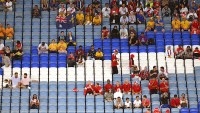
Will the World Cup final be better attended in 2022 or 1930?

Final countdown Could fewer people watch the 2022 World Cup final in the flesh than watched the inaugural 1930 contest? The first World Cup final, won 4-2 by Uruguay, was held in the Estadio Centario in Montevideo on 30 July 1930. The stadium officially held 93,000 people. That is more than the present Wembley stadium and 4,000 more than the capacity of the venue for this year’s final, the Lusail Stadium in Qatar. There are conflicting accounts of how many attended the 1930 final, however, with some sources saying it was full and others giving an official attendance of 68,346. A Brexit blow? Is it true that trade with the EU has declined since Brexit?

Letters: Brexit is indefensible

When the wind blows Sir: Matt Ridley’s article ‘Blown apart’ (3 December) highlighting the wind-farm delusion touches only lightly on the planning process. Where he does focus on planning in England, he states that there is no ‘ban’ on onshore wind farms, only the standard planning requirements that they are confined to areas designated for that purpose, with community support a vital component. In Scotland decisions on wind-farm developments under 50 megawatts are taken by the local planning authority. Major developments over 50 megawatts are determined by Scottish ministers.  Assessment of both scales are based on interpretation of planning regulations, which is a subjective matter. Two planning officers looking at the same document can reach opposite conclusions.

What the census misses about Christianity in Britain

When asked about their religion in a census, many British people have the same response: that it’s none of the government’s business. For a while, as a joke, tens of thousands stated their faith as ‘Jedi’, a fictional order of knights from Star Wars. Nevertheless, this year’s figure marks an important trend: just 46 per cent identified as Christian, down from 72 per cent two decades ago. Muslims are growing in number, but slowly: from 5 per cent of the population ten years ago to 6.5 per cent now. By the next census, those who profess any religion may be outnumbered by those who do not.

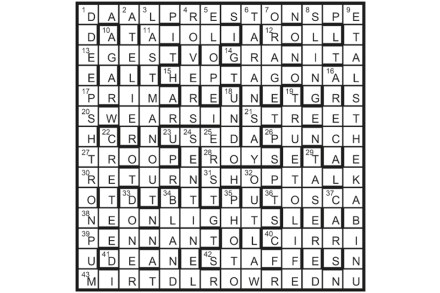
2581: In the balance – solution

The theme word is scales: 1D, 14 and 40 are creatures with scales; 5, 9 and 17 are musical scales; 13, 34 and 39 all gave their names of scientific scales. 33 was to be highlighted. First prize Mrs D. Selvidge, Vale, Guernsey Runners-up G. Snailham, Windsor; H.A.

What was in the Wellcome Collection’s Medicine Man exhibition?

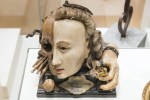
Not Wellcome The Wellcome Collection closed its own Medicine Man exhibition on the history of medicine, complaining that it was racist. Some of the treasures it displayed: – Wax and cloth head of Elizabeth I, half of which shows a face and the other half a decomposing skull being consumed by insects. – Pair of bellows used for blowing smoke into the rectum of people fished out of the Thames, which some doctors believed could revive them after near-drowning. – Charles Darwin’s walking stick, topped with a skull. – Napoleon’s toothbrush, made from silver and horsehair. – A Japanese papier-mâché figure adorned with acupuncture points, used as a teaching aid.

Gathering Daffoldils

In bulb-beds in the public park, daffodils lie headlong, scythed by Spring storms. The rate of attrition is high: one in ten felled beyond saving, fodder for slugs. I triage the casualties, their snapped stems, bruised blooms spattered with mud. These I bring home, and a vase of water will be their hospice: a tattered corps of buglers sounding the last post.

Letters: Why I left the Society of Authors

Write and wrong Sir: As a former member of the Society of Authors I read with interest Julie Bindel’s article about its failure to defend J.K. Rowling when she received death threats (‘Write-off’, 26 November). I asked on the society’s ‘Children’s Writers and Illustrators’ Facebook page why they had not spoken out in support of a fellow children’s author and the administrator replied that Rowling ‘has not requested an intervention’. I hadn’t realised that the defence of freedom of speech was something which had to be specifically requested. The other responses I got ranged from blandly negative to downright vitriolic and it wasn’t long before the administrator closed the discussion.

In defence of Brexit

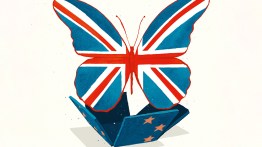
Opponents of Brexit have been given plenty of ammunition in recent weeks. Trade with the European Union has taken a big knock. Many British exporters say that owing to the excessive bureaucracy they can no longer sell to the Continent. The United Kingdom’s new trade deals have promised a lot but delivered little. There is worldwide inflation, but Britain is still expected to be the worst economic performer in Europe next year, by some margin. Opinion polls suggest an ever-growing number of voters think it was a mistake to leave. This magazine is the only publication to have backed British independence in both the 1975 and 2016 referendums – arguing on both occasions that it was time to go ‘Out, and into the world’. That remains our view.

How much alcohol is drunk in Qatar?

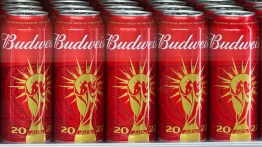
Cornish pasting Malcolm Bell, the chief executive of VisitCornwall, complained in an online interview about ‘emmets’ – an emmet being a derogatory word for an outsider, derived from a local dialect word for ‘ants’. Some more insults in Cornish dialect: Bimper, a peeping Tom; Dobeck, a fool; Gocki, stupid; Piggy-whidden, a weakling; Squallyass, a crybaby; Janjansy, a fibber; Timdoodle, a fool; Tuss, an offensive person. Team building Ten players in Qatar’s World Cup squad were born outside the country. Only 12% of Qatar’s population are native Qataris. Where are the rest of its citizens from? India 22% Bangladesh 13% Nepal 13% Egypt 9% Philippines 7% Pakistan 5% Sri Lanka 4% Sudan 1.9% Syria 1.7% Jordan 1.

Letters: What about Qatar’s Christians?

More turmoil Sir: The comparisons made by Kate Andrews between the post-2008 settlement and the ‘Austerity 2.0’ Budget last week seem accurate and this is likely to have wider consequences (‘The squeeze’, 19 November). The failure of growth and perceived lack of care for many in society post-2008 undoubtedly contributed to Brexit and the increased bifurcation of the electorate. Jeremy Hunt now appears to wish to add to intergenerational inequality by keeping the triple lock. Trussism clearly failed at the point of prosecution, but at least it represented a new approach. The Sunak/Hunt answer, which makes no acknowledgement of the sacrifices made by the young during Covid, will produce more of the political turmoil we have experienced in the last decade.

The Spectator’s 2022 Books of the Year

From our US edition

William Boyd Writing effective comedy is very difficult. True comic genius, the ability to create a unique tone of voice — deadpan, perfectly timed, self-deprecating, abjuring all whimsy (the British disease) and grandstanding — is extremely rare. One thinks of S.J. Perelman, Peter de Vries, the Grossmiths and P.G. Wodehouse amongst very few others. One name that can be added to this tiny and exclusive club is Theo Fennell who has published, this year, his memoir I Fear For This Boy: Some Chapters of Accidents (Bloomsbury, $35). It relates incidents in Fennell’s life where everything that could go wronnd Catholic Churches as he veered between them.

books

Will Sunak continue with the censor’s charter?

Had it not been for the Tory leadership contest over the summer, a new censorship law would have been passed in Britain by now. The Online Safety Bill included a clause banning content regarded as ‘legal but harmful’ – a dangerously vague phrase that could mean anything that ministers wanted. It would, in effect, have been the end of free speech in the UK. Rishi Sunak said that, if elected, he’d amend the legislation. But this may be only a partial reprieve. The new text of the Bill has yet to be published. But one mooted compromise is that ‘legal but harmful’ would be removed for adults but still apply to under 18s. The trouble is that this would be almost impossible to implement.

Portrait of the week: record inflation, record NHS waiting lists and the return of Trump

Home Jeremy Hunt, the Chancellor of the Exchequer, said, ‘We’re all going to be paying a bit more tax’ as he polished up his Autumn Statement. ‘The number one challenge we face is inflation,’ said Rishi Sunak, the Prime Minister. The annual rate of inflation rose to 11.1 per cent from 10.1 per cent the month before. Regular pay increased by 5.7 per cent in the year to September but its real value fell by 2.7 per cent because of inflation. In a survey of grocery prices, the consumer group Which? found Heinz tomato ketchup had gone up 53 per cent in two years and Anchor spreadable butter by 45 per cent. Unemployment rose a little from 3.5 to 3.6 per cent, but an increase in the economically inactive was largely attributed to the long-term sick, of whom there are now 2.

2579: Destructive plot – solution

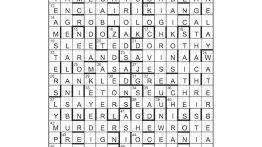
The theme was MURDER SHE WROTE, the long-running TV series starring ANGELA LANSBURY as JESSICA FLETCHER in the corpse-strewn CABOT COVE. The theme could also describe AGATHA CHRISTIE and DOROTHY L. SAYERS. First prize R.A. Towle, Ilkeston, Derbyshire Runners-up M.F. O’Brien, London N12; John M.

Who has lost the most money in human history? 

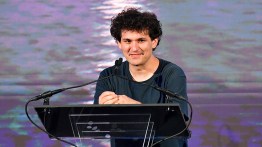
Billion-dollar losers Sam Bankman-Fried, the 30-year-old founder of FTX, saw his wealth plummet from $16 bn to zero when the company collapsed. Other big fortunes lost: – Masayoshi Son, founder of Softbank, lost paper wealth of around $70 bn (in today’s money) during the dotcom crash of 2000-2. The company later floated and now he is reckoned by Forbes to be worth $22.8 bn. – Yasumitsu Shigeta, founder of mobile phone company Hikari Tsushin, lost a paper fortune of $42 bn in the dotcom crash, but thanks to a partial recovery in shares he is now worth $3.4 bn, says Forbes. – John Rockefeller, the oil magnate and America’s richest man at the time of the Wall Street Crash, is reckoned to have lost the equivalent of $10 bn.