The first act of Tony’s long goodbye
The Spectator's theatre critic Lloyd Evans has done a very funny review of Blair's performance for us. Do give it a read.
The Spectator's theatre critic Lloyd Evans has done a very funny review of Blair's performance for us. Do give it a read.
Blair has achieved what all successful British Prime Ministers achieve: he has changed both his own party and the opposition. David Cameron would not exist politically without Tony Blair, in the same way that Blair would not without Thatcher. Yet there’s no single achievement of the Blair years that transcends everything else—which is why it is so difficult to work out where history will rank him. (Mary Ann Sieghart, though, had some eloquent first thoughts on the subject in The Times this morning) Blair didn’t, thankfully, succeed in taking us into the Euro. Devolution has never really been a Blair project, it is something he inherited from John Smith. On the economy, the story is what he hasn’t done—radically hike taxes etc.
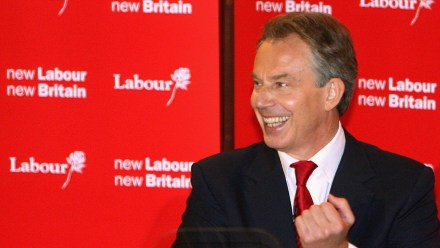
Dogs bark, cats miaow, Blair gives superb speeches. His latest farewell remarks were no exception, and there were a few misty eyes here in 22 Old Queen Street. Not mine, I’m afraid to say. Fat lot of good his speeches have done of us over the years. But here’s what I made of his remarks. This was his long-awaited “sorry”. Specifically “I give my thanks to you, the British people, for the times I have succeeded – and my apologies to you for the times where I have fallen short”. Of course, he did qualify this earlier: “I may have been wrong. That’s your call. But believe one thing, if nothing else – I did what I thought was right.” So even when he was wrong, he was kinda right.
Richard Perle, neo-con policy intellectual, sends in his thoughts on Blair and British ingratitude: I'm sorry to see him go as I was sorry to see the departures of Thatcher and Reagan before him. Conviction politicians, all. It may be a while before you get another--they're rare on both sides of the Atlantic. Its ironic that Blair stands (falsely) charged with misleading when, in fact, he led with strength and purpose. It is even more ironic that he should be derided as Bush's poodle when, in fact, he led Bush more often than he was led by him. You Brits have a remarkable habit of political ingratitude that transcends class and party.

The stage was set for a high-energy celebration this afternoon. There was clapping, music, and a woman in black and white dancing near the podium. But by the standards of this most theatrical of public speakers, the Prime Minister's farewell address today was personal and pensive. Compared to the shouted list of Labour's achievements that has become so familiar at Prime Minister's Questions, punctuated only by whoops of support, this speech seemed like a sombre confessional. Sometimes, he said, decisions had been easy to make, and easy to plan. But "sometimes, as with the completely unexpected, you are alone with your own instinct." With what he conceded might seem like "messianic zeal", Tony Blair described how in the end, each of his decisions has come down to "belief".
We’ll have lots more coming up on Coffee House today. Highlights include a review of Blair’s performance by The Spectator’s theatre critic Lloyd Evans and a debate on what the Tories can—and should—learn from Blair between our editor Matthew d’Ancona and Tim Montgomerie of Conservative Home that will be going online after 4PM.. So, stay tuned.
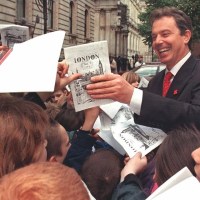
Tony Blair possessed many of the qualities of a good - perhaps even great - Prime Minister. He was clever, brave and held deep convictions. My complaint against him - which amounted to a fundamental and continual criticism of his ten-year premiership - was that his convictions were not those of a social democrat. He replaced the pursuit of greater equality with the encouragement of meritocracy. He was essentially the Prime Minister of the middle classes - though the middle class, being an ungrateful section of society, never quite acknowledged how much he had done for them. The two tragedies of his premiership were Iraq and the obsession with newspaper headlines - the consequence of damage done to previous Labour leaders by an antagonistic press.
Andrew Roberts is nothing less than the jewel in the crown of the Daily Mail, and he has written a very funny piece for that paper about what the world would be like if Britain still ruled America. According to Andrew, it would be a much happier place than it is today. There would have been no American civil war (thanks to Queen Victoria's enlightened decision to abolish slavery in the early 1860s); there would have been no world wars (thanks to the square-jawed deployment of Anglo-American forces in 1914 and in 1936); and there would have been no Bolshevik Revolution (because there had been no Great War to make straight the way of Lenin and his gang). There are one or two difficulties with this reading, chief among them that it is absolutely unbelievable.
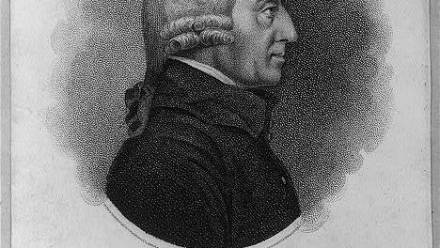
Fabulous piece by P.J. O’Rourke on Adam Smith as inventor of the web. "I wonder if the know-it-alls at Wikipedia realize that the Internet was fully described and completely understood more than 200 years ago by Adam Smith, founder of free market economics. And Smith, I'm almost certain, knew less about computers than I do (and I can't get Dora the Explorer from the Washington Monument to the Lincoln Memorial without tech support from my 6-year-old)." You get the idea. To read the whole thing click here at Forbes.com.
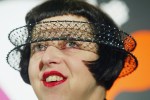
Isabella Blow passed away on Monday morning and took with her much of what made London a fashion capital. She was original and funny and the antithesis of Philip Green - London's new and unlikely face of fashion. She was interested in the people who made and wore clothes beautifully - she wasn't interested in selling them. Post Izzy what are we left with? Hats that are just hats. Designers who make clothes to sell perfume. A Bond Street that looks just the same as Madison Avenue or Montenapoleone. Without Izzy we are one step closer to a homogenized world in which we all wear the same suit, same tie, same shoes. She could spot talent, potential, and style a mile off. That took a kind of talent in its self.

‘Radically pragmatic, rather than dogmatic’, is the way Oliver Letwin, Conservative head of policy, described the new Tory approach this week. Speaking at Policy Exchange, Letwin was hoping to ‘rebut’ critics who say they’ve not seen much in the way of substance since David Cameron became leader of the party eighteen months ago. Joking that high intellectual concepts should not be the preserve of Labour politicians such as Gordon Brown and David Miliband, the former shadow chancellor set aside his party’s professed attachment to plain English and couched his argument in language he himself described as ‘ridiculously high-falutin’.
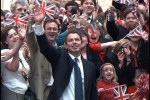
Today’s Sun has the scoop on the choreography behind Blair’s resignation as Labour leader. Apparently, he’ll travel up to Sedgefield and announce his departure in an “emotional resignation speech” at noon. I share Matt’s view that it will be a spectacular performance. Remember how his conference speech did leave them wanting more. He ended that speech with a subtle dig at David Cameron. Telling the party, “You're the future now. Make the most of it.” But there’s been no leaking on what his peroration will be tomorrow. For what it’s worth, my money’s on the line, “Things got better.
If, like me, you’re trying to get your head round the radical changes in the online world – and the revolution usually called “Web 2.0” – then check out Seth Godin’s post on the battle between longer and shorter content. Godin is one of the world’ great marketing gurus, which probably sells him short, as his books and blogs are worth consulting on just about everything (from business methods to the Iraq War).
Nicolas Sarkozy was taken in by a phone prankster claiming to be the Canadian PM on Sunday night. No damage done, though. Sarkozy said nothing controversial, merely some boiler plate about being a “big fan of Canada and our bilateral relations are excellent.” The line that eventually tipped him off wasn’t exactly subtle: “Since you are a rightist, and I am a conservative and (US) President George W. Bush is too, I would like to invite him to dine with us too. I've always dreamed of hosting a dinner of fools." But what is it about Canadians and hoax phone calls? Remember how the Queen got coaxed into saying something indiscreet about Canadian politics by a Canuck DJ back in 1995. Must be something to do with the cold.
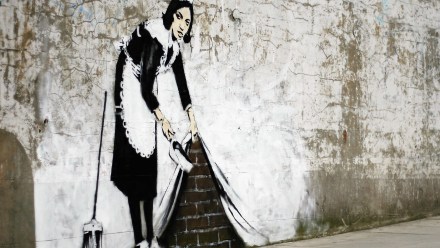
This week's New Yorker has a fascinating profile of the graffiti artist Banky. He's one of those people you either love or hate. This quote gives you a flavour of where he's coming from: "I don’t think art is much of a spectator sport these days,” he began. “I don’t know how the art world gets away with it, it’s not like you hear songs on the radio that are just a mess of noise and then the d.j. says, ‘If you read the thesis that comes with this, it would make more sense.’ ” Do read the whole thing.
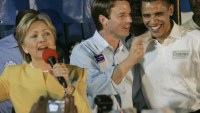
At 9p.m. last Thursday, while over 15 million American households were tuned in to “Grey’s Anatomy” on ABC, 1.7 million were watching the first Republican primary debate on the cable news channel MSNBC. Yet despite these paltry viewing figures (only 2.2m tuned in to the Democratic debate the previous week), the media twitter means that these political beauty-parades have surprisingly big effects on the polls. The latest “Survey USA” poll of likely voters in key early voting state New Hampshire has former Massachusetts governor Mitt Romney at the head of the Republican pack for the first time (with 32%), beating both Rudy Giuliani and John McCain.
Peter Hain was on the Today programme this morning doing a victory lap for the resumption of devolution in Northern Ireland. But he gave the game away when he predicted that this deal would stick as there are no political forces more extreme than those in government. The consequence of the Good Friday agreement, or more accurately how it has been implemented, has been to destroy the forces of reason and moderation in Northern Ireland. We now have an executive composed of the two extremes—and it isn’t a pretty sight. Peter Mandelson’s trenchant criticisms of the way Blair has handled the process were spot on. The most shameful thing is that on the mainland we don’t care.
The Scottish Parliament is often reported by London newsreaders as a proxy for Scottish public opinion. In truth, it’s an institution held in wide contempt – and the desultory 52% turnout (in what was a knife-edge election) speaks volumes. This is the first fact to consider when judging the problems which Alex Salmond is facing this week. Look at the final results. The SNP was supported by just 17% of the electorate (and 32.9% of votes cast against Labour’s 32.2%). It was the largest party by just 15,800 votes of the 2.02 million cast. It is the thinnest imaginable mandate. Sensing this weakness, the Scottish LibDems have refused to enter coalition. Salmond looks set to run a minority government, which will be hopelessly hamstrung.
Tony Blair' send his congratulations--or should that be félicitations--to Nicolas Sarkozy.
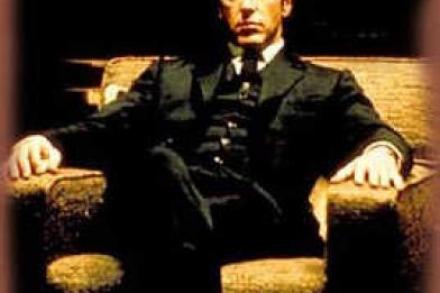
"Barzini's dead. So is Phillip Tattaglia -- Moe Greene -- Strachi -- Cuneo -- Today I settle all Family business." Remember that scene in The Godfather, where Michael Corleone tells his soon-to-be-executed brother-in-law that the Corleones have settled all their vendettas in a bloody spree of vengeance? That's what Westminster feels like this morning. The Gordfather has seen them off: all of them. Milburn, Blunkett, Johnson, Clarke, Miliband, and now, unexpectedly, Reid. He has settled all Brownite Family business. He is the unchallenged Don. But - of course - we know from Godfather Part II that blood quickly begets blood, that feuding abhors a vacuum. In today's Guardian, Jackie Ashley argues that John Reid's decision to resign as Home Secretary will end the factionalism.