The Spectator

New poll shows Labour seven points ahead

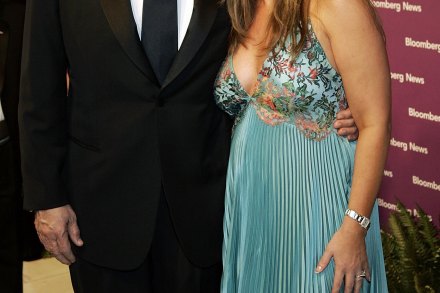
The Sunday Telegraph's ICM poll is a serious blow to David Cameron, not least because it coincides with the disclosure that Tony Lit, the Tory candidate in Ealing Southall, gave £4800 to Labour. The picture of Mr Lit standing next to a beaming Tony Blair will be very hard to recover from. On the national stage, Gordon's seven point lead over Dave would translate into a majority of 115 seats - a landslide victory ten years after New Labour's first. We are in uncharted waters now, and how Cameron responds will be the best test yet of his mettle. How to broaden his appeal without making the error of Hague and Howard of retreating into the Tory comfort zone and focusing on the core vote? Tricky.

Letters | 14 July 2007

Sir: Charles Moore’s insinuation (Spectator’s Notes, 7 July) that following Alan Johnston’s release the BBC would now report Hamas more sympathetically is baseless. Beeb remains unbiased Sir: Charles Moore’s insinuation (Spectator’s Notes, 7 July) that following Alan Johnston’s release the BBC would now report Hamas more sympathetically is baseless. If he needs evidence he should consider that during the time that Alan was in captivity the BBC continued to report Gaza objectively — despite the incarceration of one of our own. Thankfully Alan is now free and, as ever, the BBC will report the region with courage and integrity.

Malloch Brown speaks

If Douglas Alexander’s speech yesterday--or, more accurately the spin applied to it--prompted concerned phone calls from Washington and a memo from Gordon to the cabinet to go easy with the Bush bashing, then one wonders what Mark Malloch Brown’s quite extraordinary interview with the Telegraph will prompt. Malloch Brown, Kofi Annan’s former chief of staff, tells Rachel Sylvester and Alice Thomson that while at the UN he felt that: “everything I had worked for and fought for was suddenly under attack from one corner of the American political system and if they wanted to go toe to toe on it, I was going to do it.

This is not a moral crusade

A fortnight ago we urged David Cameron to raise his game after Gordon Brown’s impressively bold start as Prime Minister. A fortnight ago we urged David Cameron to raise his game after Gordon Brown’s impressively bold start as Prime Minister. In his response to the report by Iain Duncan Smith’s social justice policy group, the Tory leader has done just that. Mr Cameron has sounded focused, impatient to improve the state of the nation, and visibly determined to take on the new PM and defeat him. Although the proposed £20 per week boost to married couples has inevitably dominated the headlines, it is only one of many sensible recommendations to emerge from Mr Duncan Smith’s 671-page report.

Conrad Black convicted

The most comprehensive coverage of the Conrad Black trial can be found at the Canadian magazine Maclean’s. For a firm defence of Black, check out Mark Steyn’s blog on the trial.

It will take more than a tax break to restore the sanctity of marriage

David Cameron told Jon Snow last night that in proposing tax breaks for married couples — whether straight or gay — he was ‘not moralising, not preaching’. His social affairs guru, Iain Duncan Smith, who inspired Cameron’s new family-friendly policy, made the same point earlier in the week.  'It is not about finger-wagging or moralising.' he said. Sadly, both men meant what they said. Like all politicians, they look for economic solutions to moral problems, for solutions that won’t cause pain and therefore cost votes.  But here’s the deal: marriage is not typically a financial undertaking; it is a moral undertaking, a legally binding (and in some cases sacramental) commitment to a person of the opposite sex.

What’s wrong with the new consensus

When I supported the Iraq war, it was certainly for the aims James mentioned. And yes, I’m feasting on humble pie now. And Stuart’s right to say that even the Republicans are deserting Bush – the House has just voted to pull out troops by Spring. So I suspect Wee Dougie’s speech will be at the softer end of what’s to come. Britain’s political class are getting in synch with the would-be 2008 presidential candidates.

Why America went to war

Come off it, James. American did not go to war to 'set about a phenomenally ambitious project to build democracies in parts of the world where they had never succeeded before'. America went to war to extract the blood price for 9/11. Saddam was identified with the terrorists. He was said to have weapons of mass destruction and therefore to be a threat to world peace. In attacking Iraq the United States and Great Britain maintained they were acting in self-defence. It was all nonsense, and has ended in disaster. But none of this matters in relation to what Douglas Alexander said yesterday. What matters is that the Gordon Brown is distancing himself from the George W. Bush. So are the American people. So is the Republican party.

What do you call a coalition without Ming?

Martin Bright has an intriguing interview with Ming Campbell in this week’s New Statesman. In it, Ming confirms that he and Brown discussed the possibility of current Lib Dem frontbench MPs serving in Brown’s cabinet. Yet, interestingly, it seems that the possibility of Campbell himself taking a job was not discussed. Campbell also tells Bright that: “PR is fundamental to our analysis of what is necessary for the United Kingdom. It would be inconceivable for us to be in a full-blown coalition with a party that does not accept that." All of which raises the question, is a coalition without Campbell a full-blown one?

Nigel Dempster RIP

His critics called him vain, snobbish, jumped-up and vicious - all true - but Nigel Dempster was also generous (he felt uncomfortable if anyone else paid for lunch); charming (displaying exaggerated and affected old-world manners which made women redden with appreciation) and exceptionally funny (with a theatrical sense of timing when recounting a juicy anecdote). But The Greatest Living Englishman (as Auberon Waugh only half-jokingly dubbed him) was an incredibly complex character - his Daily Mail colleague and contemporary mischief-maker, Peter McKay, believed he was so beset by his "demons" that it was a wonder Dempster could ever sleep.

We have a winner, Ms. Moneypolly

The best suggestion by a Coffee Houser for a new author of James Bond stories was Simon Chapman who proposed The Guardian’s in-house funster, Polly Toynbee. A bottle of champagne is on its way to Simon: congratulations! Here is how we think the book might begin: DIAMONDS ARE FOR TAXING by Polly Toynbee Bond walked at a brisk pace, checking the time on his Rolex Oyster Perpetual: he was late for his meeting with M. An engagement at his tailor in Conduit street had delayed him: unavoidable. In life, there were always priorities. He reached for his black gun-metal cigarette case and black oxidised Ronson lighter and then remembered, with irritation, that smoking had been banned throughout the Service. The woman responsible, Miss Moneypolly, stood in the doorway.

How the Beckhams will crack America

If you want to know how Brand Beckham will be marketed in the States take a look at the storyboards for the ad campaign that is being launched to promote his first game for the LA Galaxy. One of the most intriguing things about Beckham’s arrival in the US, as Sports Illustrated points out, is how he’ll fit in with team mates who earn so much less than him. He’ll be sharing a dressing room with people who earn $17,700 a year—in contrast to his six and a half million bucks.

The Bureaucratic Bungling Corporation

Life is full of little ironies. I am just off to the BBC’s Millbank studios to do some recording for The Week in Westminster. Meanwhile, I have spent much of the afternoon having acrimonious conversations with senior BBC management. The cause? The Corporation has decided to withdraw permission from Emily Maitlis, star Newsnight and News 24 presenter, to be a Contributing Editor at The Spectator.

Ricky Gervais hasn’t lost it

I rarely allow myself to be “Outraged of Westminster”, but this scandalous post by Jim Shelley, the Mirror’s TV critic, has forced me to make an exception. Ricky Gervais has not “lost it” or become a “tiresome embarrassment”. Indeed, the miracle of the man is that he has managed to escape the role of David Brent – one of the greatest comic characters of all time – to produce another excellent series (Extras), establish himself as a top-rank stand-up, produce the best podcasts I have ever heard, and write a series of splendid children’s books (the Flanimals).

The author’s Faulks, Sebastian Faulks

The news that Sebastian Faulks has written a Bond novel says a lot about the status 007 has achieved in the culture. On the big screen and through a ruthless process of reinvention, Bond remains a player at the multiplex. Poor Pierce Brosnan thought he was doing just fine, being tortured in Korea to the strains of Madonna in Die Another Day….and then along came Daniel Craig to make Pierce look about as modern as a Robin Reliant. In the new Spectator which hits the newsstand tomorrow, Tim Walker has a terrific interview with Rupert Everett who speculates that a gay actor could never play Bond. But who knows? The film version of the character has to be almost infinitely adaptable to survive in the movie marketplace.

Why Cameron is right on families

For all my misgivings about the Cameron project, he is in exactly the right place on the family. His speech today was authentic, strong, thought-provoking and laid out clear blue water between him and Gordon Brown. As the rather pitiful performance of Ed Miliband on Today this morning showed us, Brown is uninterested in the family agenda. He looks as this only in terms of children, whips his calculator out and declares them “lifted out of poverty” having crossed some weird threshold. Cameron talks about broken homes – language everyone understands. The Broken Society topic is the most urgent issue in Britain today, and Cameron is firmly on the right side of the debate.

I haven’t thrown in the towel

I would like to reach across cyberspace to reassure the great Anne Applebaum. She says in Slate that "the Spectator magazine—the Conservatives' once-faithful house organ—was ready to throw in the towel" with my cover story a fortnight ago 'All bets are off.’ Yes, we did indeed declare that Brown is surprising the Conservatives (and us) but our principles haven’t changed one iota. We remain a cheerleader for conservatism and common sense in general, which is why I feel under no compulsion to cheer Cameron as he moves so far to the left that he actually overtakes Brown. On several issues: flag waving, private equity, the environment, house building and tax Brown can reasonably claim to be to the right of the New Tories. It’s truly bizarre, but there we are.

Why social breakdown is so difficult for government to deal with

"All of the work that we have done has reinforced the importance of the first three years on a child’s cognitive and emotional development. The emotional brain is largely created in the first 18 months of life and its auditory map is formed even earlier, by 12 months. Furthermore, it has also been shown, alarmingly, that a child’s education developmental score at 22 months can accurately predict educational outcomes at the age of 26." This stat in Iain Duncan Smith’s report illustrates the difficulty for public policy in dealing with the whole problem of social breakdown. You can have the best schools in the world but if social advantage is entrenched by the age of three, then they won’t make much difference--at least for this generation.

Bush will change Britain’s politics more than America’s

While the Republicans in America are quietly burying George W. Bush's legacy in domestic policy, the Tories are embracing it. Iain Duncan Smith’s report on social policy, a labour of love if ever there was one, is animated by the same spirit of compassionate conservatism that underpinned George W. Bush’s first presidential campaign. IDS’s description of the philosophical underpinnings of the report couldn’t have been put better by Bush, or Karen Hughes: “Our approach is based on the belief that people must take responsibility for their own choices but that government has a responsibility to help people make the right choices. Government must therefore value and support positive life choices.