George Osborne wins politician of the year
The Spectator Threadneedle politician of the year is George Osborne and the parliamentarian of the year is Alex Salmond. A full list of winners is available here. Full video of the event is available below.
The Spectator Threadneedle politician of the year is George Osborne and the parliamentarian of the year is Alex Salmond. A full list of winners is available here. Full video of the event is available below.
We have just posted the text of the remarks that Matthew d’Ancona delivered at the Spectator Threadneedle Parliamentarian of the Year awards earlier today, We’ll also have video of the whole event available shortly.
Newcomer of the year: Nick Clegg Inquisitor of the year: Michael Conarty Peer of the year: Baroness Thatcher Speech of the year: William Hague Resignation of the year: Tony Blair Minister to Watch: Liam Byrne Marathon Man of the year: Ian Paisley Campaigner of the year: Iain Duncan Smith Parliamentarian of the year: Alex Salmond Politician of the year: George Osborne To read Matthew d'Ancona's remarks on the winners, click here.
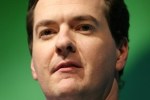
George Osborne, The Spectator politician of the year.
If you want to watch today’s event live click here. The awards ceremony from Claridge's Hotel in London will be broadcast live with welcome speech from 1-1:10pm and 1:50-2:30 pm. The awards will be presented by last year's winner John Reid and hosted by Matthew d'Ancona, editor of the Spectator. To watch click here.
The Spectator Threadneedle politician of the year is George Osborne and the parliamentarian of the year is Alex Salmond. A full list of winners is available here. Full video of the event will be available shortly at Spectator.co.
Seeing as Gordon Brown is stonewalling efforts from both MPs and journalists to find out who he has invited to Chequers for dinner, I thought we could help him out by suggesting some suitable guests. I’m thinking Larry Summers for some economics and US politics, Amartya Sen for a bit of development talk and Linda Colley and Simon Schama if Brown wants to talk to Britishness.
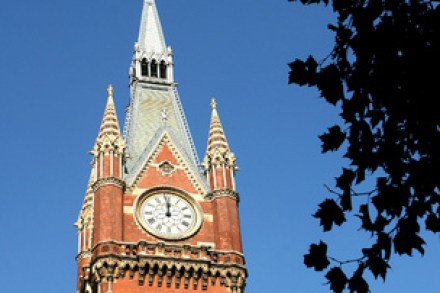
We’ve just posted a column by Martin Vander Weyer on the significance of the St Pancras Eurostar terminal and why it means that one day we might get a fast, efficient rail service in the country. Read it here.
Daniel Finkelstein cuts to the chase on Comment Central and points out that if the Home Secretary knew about this government foul-up for four moths and kept it secret then surely the Prime Minister must have been told about it? Or, did Jacqui Smith keep Gordon Brown in the dark about something that could have derailed any autumn election campaign? Before this is all done, Labour might have got through yet another Home Secretary.
This Thursday watch the Spectator Parliamentarian of the Year awards on Spectator.co.uk. The awards ceremony from Claridge’s Hotel in London will be broadcast live with the welcome speeches running from 1 to 1:10pm and the awards from 1:50 to 2:30 pm. The awards will be presented by last year's winner John Reid and hosted by Matthew d'Ancona, editor of the Spectator.

From our US edition
Telling Right from Right Sir: I was very disappointed to see James Forsyth pinning the xenophobe label to Gordon Brown for his comment ‘British jobs for British workers’ (Politics, 3 November). The trouble with Forsyth and his kind of Conservatives is their claim that the logical position of the Right is to welcome a free labour market, hence immigration. But they are best described not as true conservatives but as neoconservatives or market-obsessed Jacobins. Just as New Labour shouldn’t be confused with Old Labour, so the new Right should be differentiated from the traditional, small-c conservative Right. Traditional conservatives believe in markets as a means to an end, not as the end itself. They do not worship Mammon.
Gordon Brown managed to keep a straight face last month when he claimed that he was abandoning plans for a snap election because he needed time to spell out his ‘vision for change’. The rest of the country, it must be said, was laughing at this nonsense, knowing full well that it was polling evidence that had changed the Prime Minister’s mind. But let us take Mr Brown at his word: he explicitly invited the electorate to judge him not only by his competence, but by the scale of his ambitions and political philosophy. The Queen’s Speech on Tuesday was intended to impress voters with its sheer sweep, as well as with the 32 individual measures it launched. This was a curate’s egg from a son of the manse.
On December 11th, the Spectator is hosting with Intelligence Squared a debate on the future of Iraq at Central Hall in Westminster. The speakers include Liz Cheney, Tony Benn, Sir Christopher Meyer, William Shawcross, Rory Stewart, and Ali Allawi. If you want to be in the audience and have your say on the most pressing issue of our time you can buy tickets here or by calling 020 7494 3345. Tickets cost £25.
Gregory and the inquest Sir: We read once again an attack on Mohamed Al Fayed by Martyn Gregory over the inquest into the deaths of Diana, Princess of Wales and Dodi Al Fayed (‘No “flash before the crash”’, 27 October). As it happens, Mr Gregory has rarely appeared at the inquest, which goes a little way to explaining his skewed views. But he was present on Monday, and collared me to ask about the evidence relating to a white Fiat Uno. ‘It will be front-page stuff,’ he volunteered. Mr Gregory would barely notice if it was ‘front page’ or not. His article demonstrated that he has ignored the entire output of the British press in the past four weeks.
When Nigel Lawson was Chancellor of the Exchequer, he liked to say that the problem with tax simplification was that you always end up complicating tax, too. The same is true of much constitutional reform: any attempt to remove an anomaly will often create another. New Labour’s devolution experiment responded to the desire of the Scottish and Welsh people for greater autonomy. In so doing, however, it has created new and growing grievances among the people of England.
Tonight, Spectator.co.uk broadcasts the latest debate in the Spectator / Intelligence Squared series. From 6:45pm, listen to John Redwood, Nigel Lawson, Tim Harford, David Rieff, Eric Bettellheim and Frances Cairncross discuss whether carbon trading can combat climate change without hurting economic growth. You can listen to the debate here and have your say by voting in our poll.
We’ve just posted a great piece by Martin Vander Weyer on the dangers to capitalism of the kind of huge pay-offs that the departing boss of Merrill Lynch is set to receive. You can read it here.
This Tuesday, Spectator.co.uk broadcasts the latest debate in the Spectator / Intelligence Squared series. From 6:45pm, listen to John Redwood, Nigel Lawson, Tim Harford, David Rieff, Eric Bettellheim and Frances Cairncross discuss whether carbon trading can combat climate change without hurting economic growth. You can listen to previous debates on whether Britain has failed Zimbabwe and whether we should be reluctant to assert the superiority of Western values by clicking here.
From our US edition
Stolen seats Sir: On what evidence does Stephen Pollard (Politics, 20 October) base his contention that the ‘only possible reading of the past three decades’ is that the voters ‘turn to the Conservatives only when the Labour party presents itself as unelectable’? Since 1977, the Tories have been in power for 18 years (60 per cent of the time) and Labour for 12 years (40 per cent). Apparently, then, Labour spend most of the time being unelectable. Even in 1997, opinion polls were showing that on all manner of economic and social issues, the voters consistently preferred Tory policies, albeit they had become sick of Tory politicians. Tony Blair, of all people, understood that.
It is almost 40 years since Enoch Powell delivered his notorious speech on immigration to the Annual General Meeting of the West Midlands Area Conservative Political Centre on 20 April 1968. ‘As I look ahead,’ said Powell, ‘I am filled with foreboding. Like the Roman, I seem to see “the River Tiber foaming with much blood”.’ That Virgilian prophecy has not come to pass, but the effect of Powell’s incendiary speech — combined with the restrictive power of town hall ‘multiculturalism’ in the 1980s — was to make level-headed discussion of immigration all but impossible. That discussion is now, at last, beginning — better late than never — and it could scarcely be more important.