The Spectator

Just in case you missed them… | 9 May 2011

…here are some of the posts made on Spectator.co.uk over the weekend: Fraser Nelson rails against the Tories' intellectual dishonesty over the NHS. James Forsyth explains why Nick Clegg will get his way on NHS reform, and lists the winners and losers from last week's elections. Peter Hoskin reports on Chris Huhne's latest difficulties, and wonders which Lib Dem will be rudest about the Tories. Jonathan Jones highlights a promising underdog in the race for the Republican nomination. David Blackburn reports on the latest political convulsions in Northern Ireland. Hamish Macdonell watches Alex Salmond see out his rivals. Martin Bright says that Vince Cable is the saddest politician in England.
Letters | 7 May 2011

The Queen and I Sir: I did not expect Andrew Roberts (‘The meaning of a marriage’, 23/30 April), to agree with my New York Review of Books article on the royal family but, since he quoted from it, I would have thought he might have read it all the way through. True, the piece begins by setting out the reasons why one might have assumed these to be ‘anxious times for the House of Windsor’, from austerity to the Duke of York’s travails.

Portrait of the week | 7 May 2011

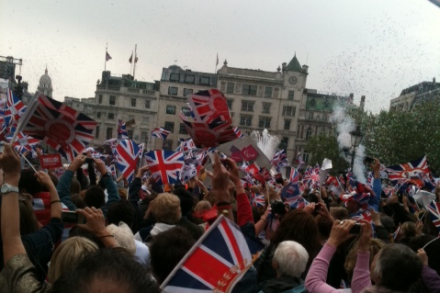
Home Prince William was created Duke of Cambridge, Earl of Strathhearn and Baron Carrickfergus on the morning of his wedding to Catherine Middleton at Westminster Abbey. The Duchess’s dress was designed by Sarah Burton of Alexander McQueen. It did not rain and a million or so people cheered in the streets, with 25 million in Britain watching on television. During the wedding a Union flag was burnt by republicans in Chetwynd Court in King’s College Cambridge. The Duke and Duchess returned two days later to their house on Anglesey. April was found to have been the warmest for 350 years. Wildfires broke out on heathland in England and Scotland, sweeping through the estate at Balmoral.

Lead article: Disunited kingdom

David Cameron visited Scotland only once during the battle for its parliament’s elections. David Cameron visited Scotland only once during the battle for its parliament’s elections. Hadrian’s Wall is becoming a forbidding obstacle for the Conservatives: a boundary with an unfamiliar, inhospitable land redeemed only by opportunities for deer stalking and trout fishing. Ed Miliband ventured north a fortnight ago, in an attempt to save Labour’s Scottish campaign — but as The Spectator went to press it seemed that this, too, had proved fruitless. The Scottish Nationalist leader, Alex Salmond, has found to his delight that his opposition has crumbled.

Dear Mary | 7 May 2011

Q. A friend of ours went with his nephew to a funeral. The nephew is an absolute maniac driver. They flew up to Scotland and all the way our friend was terrified because the nephew was renting a car at the airport and then proposed to drive 50 miles. What to do? Just as the nephew was paying for the car, our friend asked to be added as a driver because he was thinking of buying the same model and could think of no better time to do a test drive! Problem solved. —D.P., by email A. Indeed. How considerate of you to share this solution with readers. Q. Consanguinity obliges me to extend hospitality to a relative of my wife’s, and thus somewhat reluctantly I include him once a month on our dinner list.

The week that was | 6 May 2011

Here is a selection of posts made at Spectator.co.uk over the past week. Fraser Nelson listens to John Humphrys inadvertently make the case for No2AV, and reveals that this week’s Spectator considers life after bin Laden. James Forsyth says that electoral calamity may lead to concessions for Clegg, and explains the significance of this week’s Cabinet bust-up. Peter Hoskin notes that the CIA’s director has blasted Pakistan’s intelligence services, and has kept abreast of the Libyan campaign. David Blackburn interviews Nigel Farage, and explains why there may not be TV debates at the next election. Jonathan Jones has the figures from the recent Canadian election.

Just in case you missed them… | 3 May 2011

….Coffee House carried extensive coverage of the Royal Wedding and the death of Osama bin Laden. In addition to those stories, here are some of the other posts made at Spectator.co.uk over the Bank Holiday weekend. Fraser Nelson believes that a degree of separation will strengthen the coalition. James Forsyth argues that the Gaddafi family are legitimate targets for NATO, and says that the recriminations over the defeat of AV will change the debate over Lords reform. Peter Hoskin catches Chris Huhne courting the left, and ponders James Purnell’s latest intervention in the welfare debate. Jonathan Jones has a brief guide to the Canadian elections. Hamish Macdonell says that Labour is still off course in Scotland.

CoffeeHousers’ Wall, 2 May – 8 May

Welcome to the latest CoffeeHousers' Wall. For those who haven't come across the Wall before, it's a post we put up each Monday, on which – providing your writing isn't libellous, crammed with swearing, or offensive to common decency – you'll be able to say whatever you like in the comments section. There is no topic, so there's no need to stay 'on topic' – which means you'll be able to debate with each other more freely and extensively. There's also no constraint on the length of what you write – so, in effect, you can become Coffee House bloggers. Anything's fair game – from political stories in your local paper, to chat about the latest football results.

Just in case you missed them….

…here are some of the posts made at Spectator.co.uk over the bank holiday weekend. James Forsyth reveals that it will be a long time until Cameron and Clegg play tennis again, and worries that the ill-feeling between the coalition partners will be permanent. Ed Howker has a question for Chris Huhne, and reveals further conflicts of interest in the Yes2AV campaign. Peter Hoskin asks if Cameron will help Clegg for the coalition’s sake, and notes Brown’s latest shuffle on the world stage. David Blackburn charts the pattern of the local campaign in the Home Counties, and examines David Cameron’s weekend interview. Daniel Korski says that all eyes are turning to Syria.

CoffeeHousers’ Wall, 25 April – 1 May

Welcome to the latest CoffeeHousers' Wall. For those who haven't come across the Wall before, it's a post we put up each Monday, on which – providing your writing isn't libellous, crammed with swearing, or offensive to common decency – you'll be able to say whatever you like in the comments section. There is no topic, so there's no need to stay 'on topic' – which means you'll be able to debate with each other more freely and extensively. There's also no constraint on the length of what you write – so, in effect, you can become Coffee House bloggers. Anything's fair game – from political stories in your local paper, to chat about the latest football results.

Letters | 23 April 2011

Rubio for President? Sir: Richard Littlejohn’s idea of a President Rubio (‘Who will fight Obama?’, 16 April) is little more than wishful thinking. The Florida senator is at most a lukewarm conservative, which will become increasingly obvious over his six-year term. (Obama is only the second man in 50 years to go directly from Senate to White House — it’s a difficult path because legislative service forces a politician to commit his views to the record.) Littlejohn is impressed that Rubio could draw a crowd of 5,000 in his home state, yet there are a half-dozen other Republicans with at least as much pull — including figures such as Palin, Bachmann and Trump, whom Littlejohn rightly discounts.

Barometer | 23 April 2011

Easter day The late date of Easter this year has rekindled one of Britain’s lengthiest political debates: the implementation, or rather non-implementation, of the Easter Act 1928. The act was to fix the date of Easter on the Sunday following the second Saturday in April — meaning that it would wander between 9 and 15 April rather than between 22 March and 25 April. — The act demanded that before it could be implemented ‘regard shall be had to any opinion officially expressed’ by a Christian church. That has been the stumbling block. In 1966 the Church Assembly of the Church of England passed a motion in favour. The Catholic Church in Britain also approved. But the Orthodox Church, which has a different date for Easter as it is, did not.

Portrait of the week | 23 April 2011

Home David Cameron, the Prime Minister, made a joint statement on Libya with President Barack Obama of the United States and President Nicolas Sarkozy of France, saying that ‘so long as Gaddafi is in power, Nato and its coalition partners must maintain their operations’. British and French military officers were being sent to Libya to train opposition forces. The frigate Cumberland, which had evacuated hundreds of people from Libya, arrived at Devonport to be decommissioned. The Ministry of Defence posted on the internet secret information about Britain’s nuclear submarines, by not properly blanking out sections of the documents. The Commons Education Committee recommended that Ofsted should be split into two inspectorates, for education and children’s care.

Leader: No alternative

‘It’s not the voting that’s democracy,’ says Dotty in Tom Stoppard’s play Jumpers, ‘It’s the counting.’ Dotty is right, of course. ‘It’s not the voting that’s democracy,’ says Dotty in Tom Stoppard’s play Jumpers, ‘It’s the counting.’ Dotty is right, of course. Counting may be boring, but it is crucial. Nick Clegg knows this well. If on 5 May Britain decides to count votes the AV way, it will be a triumph for his party. According to a recent academic analysis, the alternative vote would give the Lib Dems 43 more MPs — almost doubling the number they have now. But it would be a victory not just for Lib Dems, but also for the forces of banality. Why?

The week that was | 22 April 2011

Here are some of the posts that were published on Spectator over the past week: Fraser Nelson makes an appeal for Easter reading suggestions. James Forsyth reveals that Ed Miliband will hire tails for the Royal Wedding, and says that there are more attacks on Clegg to come. Peter Hoskin watches the NHS furore rumble on, and notices Nick Clegg reaffirming the coalition's wedding vows. Peter Hoskin and Jonathan Jones compare Osborne's and Obama's cuts. David Blackburn says that tuition fees are set to spoil the government's summer, and reports on the latest EU budget row. Daniel Korski argues that the Libya intervention needs to be stepped up. Rod Liddle reports on a late conversion.

CoffeeHousers’ Wall, 18 April – 24 April

Welcome to the latest CoffeeHousers' Wall. For those who haven't come across the Wall before, it's a post we put up each Monday, on which – providing your writing isn't libellous, crammed with swearing, or offensive to common decency – you'll be able to say whatever you like in the comments section. There is no topic, so there's no need to stay 'on topic' – which means you'll be able to debate with each other more freely and extensively. There's also no constraint on the length of what you write – so, in effect, you can become Coffee House bloggers. Anything's fair game – from political stories in your local paper, to chat about the latest football results.

Just in case you missed them… | 18 April 2011

…here are some of the posts made at Spectator.co.uk over the weekend. Fraser Nelson urges you to have a look at this week’s Spectator, and says that the Bank of England needs to listen to Andrew Sentence. James Forsyth wonders of the coalition will declare war on the enemies of enterprise, and explains Vince Cable’s objections to coalition immigration policy. David Blackburn analyses David Cameron’s Sunday interview, and says that the AV campaign has descended into cheap slogans and insults. Martin Bright asks if the far right operate as lone wolves. Nick Cohen doesn’t understand Tories. And Alex Massie examines Muckle Eck’s Big Mo.

Letters | 16 April 2011

Short memories Sir: Matt Cavanagh’s razor-sharp analysis (‘Operation Amnesia’, 9 April) chimes with the anecdotal evidence borne by friends returning from Afghanistan. But it is not just the soldiers who have made mistakes. Their political masters bear primary responsibility for initiating, in the first place, the unfunded strategic overstretch which goes beyond Afghanistan. The result is that our Armed Forces are now unable to respond effectively to new, unexpected (and potentially more serious) crises such as the ones which have erupted recently in the Maghreb and the Middle East — as well as the ones which are surely yet to come. We seem to be suffering from strategic, as well as operational, amnesia.

Barometer | 16 April 2011

Prince of cars It was revealed that Audi has been enticing royal customers with 60 per cent discounts. It is not the first car company to target royalty to build its image. — In 1898 the Daimler Motor Company of Coventry offered the Prince of Wales the use of five cars on a visit to Warwick Castle. — The generosity was richly rewarded: in 1902, as King Edward VII, he ordered a 22 HP model from the company and bestowed a royal warrant. — Daimler remained the sole supplier of vehicles to the Royal Family until 1949 when, after a gearbox failure in a Daimler given to him as a wedding present, Prince Philip ordered a Rolls-Royce instead. Behind the veil A ban on wearing burqas came into effect in France.