The Spectator

CoffeeHousers’ Wall, 29 August – 4 September 2011

Welcome to the latest CoffeeHousers' Wall. For those who haven't come across the Wall before, it's a post we put up each Monday, on which — providing your writing isn't libellous, crammed with swearing, or offensive to common decency — you'll be able to say whatever you like in the comments section. There is no topic, so there's no need to stay 'on topic', which means you'll be able to debate with each other more freely and extensively. There's also no constraint on the length of what you write — so, in effect, you can become Coffee House bloggers. Anything's fair game, from political stories in your local paper, to chat about the latest football results.
Letters | 27 August 2011

Family problems Sir: One can’t help but admire Iain Duncan Smith’s determination to rethink conventional ideas on social policy (‘Gang War’, 20 August). However, it’s not clear what action he has in store for the ‘120,000 families who cause the greatest problems’. The Family Intervention Project that he inherited from New Labour is, if the Department for Education website is to be believed, still in place — despite rather meagre evidence for its efficacy. Originally it was touted as a measure to move problem families into secure housing where their behaviour could be closely monitored. Yet when we examined this programme last year, we found that nearly all the scheme’s participants remained in the same housing.

Leading article: Victory in the air

From our US edition

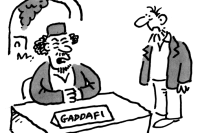
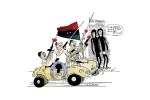
Critics of our intervention in Libya said that Colonel Gaddafi’s treatment of his people was not Britain’s direct concern. Critics of our intervention in Libya said that Colonel Gaddafi’s treatment of his people was not Britain’s direct concern. They argued that a prime minister’s job is to defend the national interest, not the rebels in Benghazi. When David Cameron called for a no-fly zone, he was ridiculed at home and outvoted in Brussels. Why interfere in a civil war? Why lose ourselves in another maze of Islamic tribal conflict? The Prime Minister saw it in more simple terms. The West had the means to prevent a massacre, and very little time to do so. It needed to act straight away, and worry about an exit strategy later.

Portrait of the week | 27 August 2011

From our US edition

HOME David Cameron, the Prime Minister, stood outside 10 Downing Street and commented on events in Libya. ‘This has not been our revolution,’ he said, ‘but we can be proud that we have played our part.’ He had broken off his holiday in Cornwall for a meeting of the National Security Council. He had only just resumed his holiday after having previously flown home from Tuscany for the riots in England. Of the 1,400 people to have appeared in court in connection with the riots, 157 were convicted, 327 bailed and almost 800 remanded in custody. Birmingham police released footage of some of the 11 shots fired at them during the riots.

Barometer: Risky manoeuvres

A Red Arrows pilot was killed when his plane crashed, the first fatality in the RAF’s aeronautical troupe since 1988. — Aeronautics were once more hazardous. They were pioneered by a San Franciscan, Lincoln Beachey. In 1910 he took flying lessons, crashing on his first and second flights. He went on, in 1911, to entertain crowds by flying over Niagara Falls. — By 1913 he had earned the nickname ‘the man who owns the sky’. In that year he saw a circus picture depicting a plane flying upside down, and performed the feat for the first time on 24 November 1913. — The following year he embarked on a 126-city US tour. In one display he accidentally killed a spectator when he swept her off a hangar with his wingtip.

The week that was | 26 August 2011

Here are some of the posts made at Spectator.co.uk over the last week. Fraser Nelson celebrates the schools revolution, and considers Cameron’s immigration problem. James Forsyth reveals how the government plans to overcome Labour’s education legacy, and reports on an encouraging start for the new Libya. David Blackburn charts the constructive debate between left and right over the riots, and examines thelatest divisions in the Eurozone.    Martin Bright is pleased that the EDL Tower Hamlets march has been cancelled. Rod Liddle is sceptical about our "great victory". Alex Massie explains how the Eurozone is affecting the SNP. The Arts Blog reads the work of Britain’s most tweetwise woman.

CoffeeHousers’ Wall, 22 August – 28 August 2011

Welcome to the latest CoffeeHousers' Wall. For those who haven't come across the Wall before, it's a post we put up each Monday, on which — providing your writing isn't libellous, crammed with swearing, or offensive to common decency — you'll be able to say whatever you like in the comments section. There is no topic, so there's no need to stay 'on topic', which means you'll be able to debate with each other more freely and extensively. There's also no constraint on the length of what you write — so, in effect, you can become Coffee House bloggers. Anything's fair game, from political stories in your local paper, to chat about the latest football results.
Just in case you missed them… | 22 August 2011

…here are some of the posts made at Spectator.co.uk over the weekend. Fraser Nelson says the far right should be allowed to ‘perish in the sunlight’, and ponders the end of Gaddafi. James Forsyth applauds a burst of common sense from Eric Pickles, and says that Europe is likely to become a key issue in the autumn. David Blackburn examines the Starkey affair, and notes that the row over human rights has far reaching consequences. Martin Bright calls for action on youth unemployment. And the Arts Blog gets to grips with the final instalment of Chris Mullin’s diaries.