Rubbish
Criminals on the net Sir: Nick Cohen (‘Nowhere to hide’, 15 September) raises interesting points about the double-edged nature of the internet. The web has brought us massive communications benefits. However it also affords criminals the same. It is this that concerns me, rather than Mr Cohen’s claim that it will allow, through our Communications Data Bill, the government to monitor people’s every move. This is based on a fundamental misunderstanding of the Bill. Its purpose is to update powers law enforcement bodies already have, making them relevant to the 21st century. It cannot make sense to enable police to investigate crimes conducted using a mobile phone but not give them powers to investigate crimes conducted over the internet.
Two weeks ago Justine Greening was demoted for the offence of sticking to the Conservative manifesto on which she was elected and refusing to back down over the proposal for a third runway at Heathrow. This week she has shown that she is far from being demoralised by the experience; in fact, it might turn out to be the making of her. She has grasped in a fortnight what seemed to evade Andrew Mitchell, her predecessor at the Department for International Development (DfID), for two-and-a-half years. She has taken the trouble to examine her department’s swollen budget and ask herself: is all this money really being wisely spent?
Home The government gave a commercial company, Capita, a contract to find and remove more than 150,000 migrants who have overstayed their visas. A French court prohibited a magazine from republishing pictures of the Duchess of Cambridge topless, or distributing them. After appearing in the French magazine, the pictures had been printed in the Irish Daily Star. The Duke and Duchess continued their Jubilee year tour, taking in the Solomon Islands and Tuvalu. In a freedom of information case brought by a Guardian journalist, an appeal court ruled that correspondence between Prince Charles and the government should be made public. Derek Jameson, a former editor of the Daily Star, died, aged 82. Lord Stevens of Ludgate, a former chairman of United Newspapers, joined Ukip.
Turning Bac Michael Gove has called his replacement for GCSE the ‘English Baccalaureate’. But the Baccalaureate’s origins are at odds with some of Mr Gove’s views on education. — The philosophy behind the International Baccalaureate (IB) was laid out in a booklet entitled Techniques d’education pour la paix: existent elles? written for Unesco by Marie Therese Maurette, then head of the International School of Geneva. She advocated that children should not be taught history until the age of 12, and then the history of India, China, Japan and the Middle East should be taught simultaneously with European history.
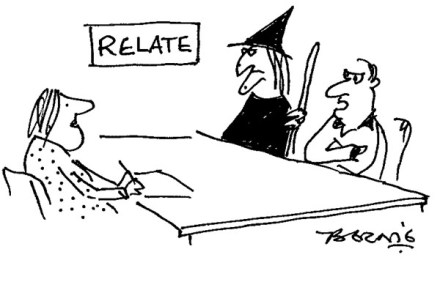
In tomorrow's Spectator, an anonymous former minister recounts their experiences of David Cameron's reshuffle. They describe the walk in to see the Prime Minister - through the back entrance where the cameras cannot see ministers arrive - and the way the Prime Minister tries to placate them by explaining that there are '303 someone elses' that he needs to keep happy. You can read the full copy below, or in the magazine from tomorrow: Divorce is something I have yet to experience personally but Dave’s reshuffle has set me up nicely for any future threat to my own nuptial bliss. Out of the blue comes the call. It’s Dave’s office. ‘We need to talk — can you come over?