Holly
The North in need Sir: Neil O’Brien’s article on the North-South divide is welcome (‘The great divide’, 1 December). As a Geordie who spent much of his working life in the West Midlands before being immersed in the Westminster bubble for the last decade, London increasingly feels like a separate country. The wealth, the economic activity and the jobs are something that many communities only an hour and a half away on the train can only dream about. Many of the heavily industrialised towns and cities never recovered from the recession of the early 1980s. We have generational unemployment and significant pockets lacking any aspiration. There is a lack of successful role models for the young, and of private sector activity.
Distilling a philosophy The manager of Fitzpatrick’s in Rawtenstall, the last surviving temperance bar in Lancashire, has pleaded guilty to drink-driving. His embarrassing predicament would have been understood by the very earliest members of the temperance movement, however. — When cheese-maker Joseph Livesey of Preston founded the British Association for the Promotion of Temperance in 1832 it demanded only that people temper their drinking by refraining from spirits. — Livesey’s personal journey can be traced in the names of his various publications, beginning with the Moral Reformer (1831), the Preston Temperance Advocate (1834), the Teetotal Progressionist (1852) and the Staunch Teetotaller (1867). — 1867 also saw him convert to vegetarianism.
Home In his Autumn Statement, held nearer the winter solstice, George Osborne, the Chancellor of the Exchequer, confronted the need to extend austerity measures for reducing the deficit to 2018. The economy would shrink by 0.1 per cent in 2012. He cut corporation tax to 21 per cent from 2014, cancelled January’s fuel tax rise and promised consultation on tax incentives for shale-gas exploitation. All but four Whitehall departments would be asked to save an extra 1 per cent next year and a further 2 per cent the year after, with the hoped-for £5 billion going to schools and roads. Battersea should get its own Underground connection.
It took Tony Blair about five years to work out what he wanted to do with his government and George Osborne appears to be on a similar, depressingly slow learning curve. It’s not that he lacks ideas. There were plenty of good ones in his mini-budget this week, including tax cuts for the low paid, and for companies. But none of this will speed the recovery. ‘It’s taking time, but the British economy is healing,’ the Chancellor said, to laughter in the house. We are not even halfway through the recovery. To go through the small print of the budget was to grasp just how vile the outlook is. At election time, voters tend to ask themselves: are you better off than you were at the last election?
Key points from the Autumn statement Working-age benefits: will only rise by 1 per cent in each of the next three years rather than by inflation Corporation tax cut: Extra percentage point cut: down to 21 per cent in 2014 compared to 28 per cent when George Osborne took office Income tax threshold: will rise by £235 more than planned, to £9,440 in April 2013, saving basic-rate taxpayers an extra £47 next year Fuel duty: the 3p per litre rise planned for January 2013 has been scrapped Tax-free allowance: Reduction in tax-free allowance on pension contributions: from £50,000 a year to £40,000 and £1.5 million lifetime pot to £1.25 million.
Editor of Vanity Fair, Graydon Carter, is this week's Shelf Lifer. He reveals a predilection for Herman Wouk, an in depth knowledge of certain sections of the Eaton's catalogue and a fondness for a particular character in P.G. Wodehouse. What are you reading at the moment? Don’t Stop the Carnival by Herman Wouk As a child, what did you read under the covers? I grew up in Canada, where the nights end early, and a child’s day does as well. So pretty much all my evening reading was done under the covers. A lot of Hardy Boy mysteries. And the Eaton’s catalogue. For the lingerie ads. Has a book ever made you cry, and if so which one? I do recall dabbing an eye while reading J.B. Priestley’s Angel Pavement.
Much of the response to the Leveson Inquiry has focused on the disappointment of the victims of phone hacking and other intrusions by the press that David Cameron is opposed to introducing statutory underpinning for a new system of newspaper regulation. But how much can victims tell us about how to change a system? In an article for the Spectator in May, Carol Sarler argued that it was unwise to treat victims of tragedy as universal sages. Sarler pointed to the way Sara Payne and Denise Fergus were often called to back certain laws in an 'automatic elevation of "victim" to "expert"'. She wrote: It really is no surprise to learn that Sara Payne favours restrictions to keep online pornography away from children.
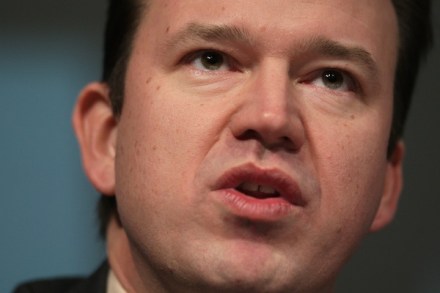
Neil O'Brien's appointment as a new special adviser for George Osborne has gone down very well in the Westminster bubble, partly because of the Policy Exchange director's ability to look beyond that bubble. He has written a number of times for the Spectator, and as an insight into the man who will be advising the Chancellor, here are some of his key pieces: In this week's magazine, O'Brien points to the North's growing detachment from Westminster, with 'an almighty 83 per cent of northern voters' believing that politicians do not understand the real world. He writes: 'Westminster politicians have repeatedly promised to close the North-South gap, but failed because they ignored economic reality, and flushed our money away on stupid gimmicks.