The Spectator

Barometer | 16 May 2013

The first filibuster A bill for an in-out referendum on the EU seems doomed to be killed off by a ‘filibuster’ — a campaign by opponents to keep on talking until it runs out of time. — The filibuster is often assumed to be an invention of Westminster, yet its first recorded use was in the Roman senate in 60 BC, by Cato the Younger against an attempt by private contractors to renegotiate deals for government work. — The publicani were businessmen who bid for the right to collect taxes in the provinces on behalf of Rome. Many, however, got their sums wrong and were losing money. Cato was having none of it, and kept on killing off debates on the subject for months until they backed down.
Portrait of the week | 16 May 2013

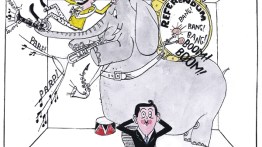
Home David Cameron, the Prime Minister, flew to Sochi, on the Black Sea, to talk with President Vladimir Putin, principally about Syria. He then flew to Washington, to support the American tour by Prince Harry and hold talks with President Barack Obama. They said that Britain and America wanted to strengthen the moderate opposition in Syria somehow. In a joint press conference, Mr Obama also said: ‘The UK’s participation in the EU is an expression of its influence.’ Mr Cameron tried to placate Tory MPs by rushing out a draft EU referendum bill, in the face of an amendment in the Queen’s Speech debate expressing regret at the absence of such a bill in the government programme. EU officials investigating price-fixing raided the London offices of BP and Shell.

Why can’t Ed Miliband accept that Labour voters want welfare reform?

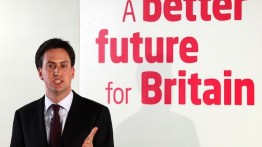
David Cameron, it has been argued this week, has become detached from the views of Conservative voters on Europe. Amid the noise on the EU referendum, however, comes more evidence that it is Ed Miliband who has the greater problem of detachment from the views of his party’s supporters. While the Labour leader continues to battle on against welfare reform, a report from the Joseph Rowntree Foundation reveals just how far his voters have moved away from the idea of a redistributive welfare system as a force for good. Miliband’s problem is that he seems to believe he will be facing Mrs Thatcher at the next election. His strategy is built around fighting a Conservative party that is perceived to be harsh on the poor.

Letters | 9 May 2013

One-nation Toryism Sir: When my late father, John McKee, stood as Conservative candidate for South Shields in the 1970 general election he gained 19,960 votes, more even than David Miliband in the same constituency 40 years later. In last week’s by-election in the South Shields constituency, the Conservative candidate attracted only 2,857 votes. Many things have changed since 1970 but one important thing that is different is that in those days the local Conservative party had a large number of working-class members helping in the campaign; there was even a flourishing Conservative Trade Union organisation in the constituency. Nor was South Shields unique in this respect.

Portrait of the week | 9 May 2013

Home The UK Independence Party gave the government and opposition a jolt by doing well in the elections for 34 English councils, increasing its number of councillors from eight to 147 and gaining a projected national vote share of 23 per cent (compared with 25 per cent for the Conservatives, 29 per cent for Labour and 14 per cent for the Liberal Democrats). In a parliamentary by-election at South Shields, the Lib Dems were driven into seventh place, with only 352 votes, with Labour retaining the seat with 12,493 and Ukip coming second with 5,988. Nigel Farage, the leader of Ukip, grinned a good deal and said ‘Send in the clowns,’ throwing back at him Kenneth Clarke’s pejorative description of Ukip supporters.

Lord Lawson’s exit

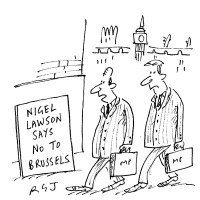
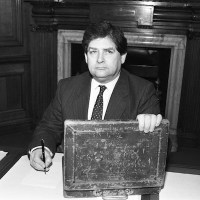
Lord Lawson’s announcement that he intends to vote for Britain to leave the European Union has been interpreted by some as reinforcing demands that David Cameron holds his referendum this year or next, rather than 2017. But it does no such thing. Follow Lawson’s arguments and the logical conclusion is that the best chance of securing a British exit from the EU is for a vote to be held as planned, in four years’ time. As the Prime Minister has said in a letter to MPs, he is powerless to bring in a vote while in coalition because the Liberal Democrats are so vehemently against it. Nick Clegg’s commitment to the Euro project is such that he would not allow it to be threatened by giving the public a say.