Love
In defence of bats Sir: I am saddened by the ‘us versus them’ stance taken by Melissa Kite (‘Bats vs people’, 3 August) when referring to bats. I might be better known for wielding a different sort of bat, but I am a strong supporter of the winged variety. These amazing creatures have lived alongside people for centuries but bats are often misunderstood and even persecuted. So let’s set the record straight; bats are a natural British pesticide, eating midges and other pests. But the last century hasn’t been good for bats. We have carelessly destroyed much of their habitat and, although, as Ms Kite noted, they are protected by law, with the challenges bats face they need all the help they can get.
Other people’s rocks Spain threatened to introduce a €40 border-crossing charge and find other ways of making life difficult for people of Gibraltar. A reminder of some Spanish colonial possessions: Ceuta North African city captured by the Portuguese in 1415. Sided with Spain when Portugal became an independent country again in 1640. Despite claims by Morocco, Spain affirmed its intention to keep it when King Juan Carlos visited in 2007. Melilla Along the coast from Ceuta. Seized by Spain in 1497. Uprising of local African population suppressed. King Juan Carlos visited in 2007, ignoring Moroccan protests. Penon de Alhucemas Fortified skerry off Morocco. Given to Spain in 1559 by the Muley Abdala el Gabib in return for help fighting the Ottoman empire.
Home Retail sales enjoyed their fastest July growth in seven years, thanks to demand for beer, sun cream, swimwear and barbecue food. Manufacturing output rose by 1.9 per cent in June, following declines in both April and May. Lloyds Banking Group announced profits of £2.1 billion for the first half of the year and António Horta-Osório, its chief executive, said he expected it to pay out 70 per cent of profits in dividends by 2015. Sir Ian Andrews resigned as the chairman of the Serious Organised Crime Agency after failing to declare a directorship in a management consultancy firm.
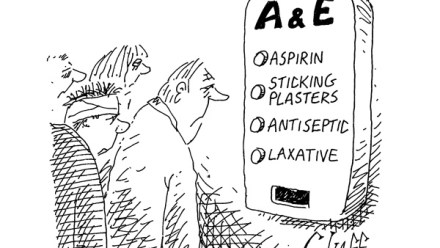
When spending money is declared to be a good in itself, it is certain that much of it will be wasted. If that was not obvious already, it was proven by experiment when Gordon Brown announced 13 years ago that he wished to increase healthcare spending in Britain to the European average without much of a plan as to what he wanted to achieve with the money. There followed years of plenty for NHS staff, whose pay packets bulged. Patients found it harder to discern an improvement. Indeed, Brown’s great NHS spending splurge coincided with the Mid Staffs scandal. It should come as little surprise, then, that the same is happening in the charitable sector. The government’s target of pumping 0.
There was a row earlier today when a leading figure in the EDL linked (inadvertently, he says) to a website of anti-Semitic sympathies. It is dispiriting that, more often than not, Judaism and Jewish people only receive mainstream media coverage when there is a public spat about anti-Semitism, for there is so much more to their history than persecution. As it happens, Simon Schama will be telling this, for want of a better phrase, “alternative history” in a BBC TV series this autumn. But readers of the Spectator don’t have to wait for the telly or the DVD because Schama will be giving us an exclusive talk at Cadogan Hall in London on Tuesday 17th September.