Slugs
Party politics Sir: I don’t think it is true that I would be unhappy in any party, as Ross Clark suggests (‘The end of the party’ 14 September). I was very happy in the old Liberal party, which I joined as a 14-year-old and did not leave for almost 20 years. I then became a Eurorealist so could not join any major party. Having taken a leading role in the Bruges Group I then set up the Anti-Federalist League, which subsequently became Ukip. Between 1988 and 1997 I spent a huge amount of time writing pamphlets, fighting by-elections, fighting general and European elections, leading parties and campaigns — while all the time teaching and researching at LSE, my only salaried post. So again, I remained consistently in one camp.
Vitamins and the veil A judge at Blackfriars Crown Court allowed a niqab-wearing defendant to identify herself only to a policewoman, and a Birmingham college reversed a ban on students wearing veils on the campus. While the debate rages, the Jordanian Centre for Diabetes, Endocrinology and Genetics has identified a hazard associated with the garments: vitamin D deficiency. A study of 5,600 Jordanians revealed that 36.5% of niqab-wearers and 37.9% of hijab-wearers suffered from low levels of vitamin D, compared with 29.5% of women who wore no head covering. Just 5% of men suffered from low levels of vitamin D.

Next week, those who made dire predictions of ruinous climate change face their own inconvenient truth. The summary of the fifth assessment report by the Intergovernmental Panel on Climate Change (IPCC) will be published, showing that global temperatures are refusing to follow the path which was predicted for them by almost all climatic models. Since its first report in 1990, the IPCC has been predicting that global temperatures would be rising at an average of 0.2° Celsius per decade. Now, the IPCC acknowledges that there has been no statistically significant rise at all over the past 16 years. It is difficult to over-emphasise the significance of this report. The IPCC is not simply a research body making reports and declarations which are merely absorbed into political debate.
Home The government sold 6 per cent of Lloyds Banking Group to big investors for £3.2 billion. It still owns 32.7 per cent of the bank. Barclays published details of plans to raise £5.95 billion by issuing new shares. The Financial Conduct Authority warned Barclays of a £50 million fine for a deal with Qatari investors in 2008, in which it failed to ‘act with integrity’ towards shareholders; Barclays contests this. Blitz Games of Leamington, a computer games designers, closed its doors after 23 years. Inflation measured by the consumer prices index fell from 2.8 per cent to 2.7 per cent, but by the retail prices index rose from 3.1 to 3.3 per cent.
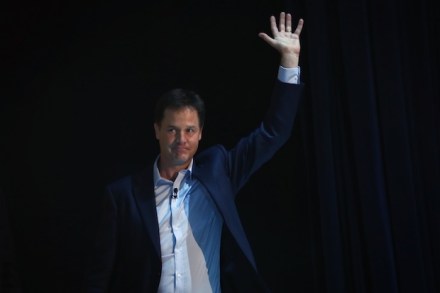
listen to ‘Nick Clegg: 'We want to get in to government next time around'’ on Audioboo Three years ago – nearly three and a half – I walked into the Cabinet Office for my first day as Deputy Prime Minister. Picture it: history in the making as a Liberal Democrat leader entered, finally, into the corridors of power, preparing to unshackle Britain after years of Labour and Conservative rule. Only to arrive and find an empty room and one shell-shocked civil servant promising me we’d get on with things shortly – but first he had to get us some desks. You saw the calm bit in the rose garden. What you didn’t see was the utter chaos indoors. To say the Coalition caught Whitehall off guard is a massive understatement.

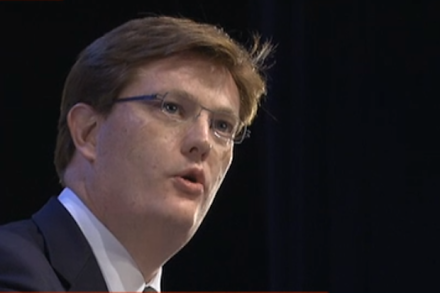
listen to ‘Danny Alexander: There's no spending bonanza around the corner’ on Audioboo Conference, it’s great to have you here in Scotland. In Glasgow or, as we like to call it in Inverness, ‘the deep south.’ This great city has many claims to fame: its industrial heritage, culture, football, it’s even the home of the new Doctor Who. So, let take me you back in time. It’s spring 2010. We’re in the depths of the economic storm. Greeks rioting on our TV screens. Labour had dug a gigantic hole of debt - the bankers had pushed us in. We were forecast to have the largest deficit in the EU. The polls had closed; we were in the uncharted waters of a hung Parliament. Action was needed. And as a Party, we stepped up.
listen to ‘Vince Cable's speech to the Lib Dem conference 2013’ on Audioboo Friends. It is a special pleasure to speak to Conference in the city where I had my political baptism of fire. Glasgow is a great city and Glaswegians are warm, hospitable and humorous. But Glasgow has experienced one party, Labour, rule for decades. And I was part of the Labour political machine here in the 1970s. On one level it worked. Insanitary slums were razed to the ground. We built 30,000 new social homes for rent in a decade – 5,000 in one year, a scale unimaginable today. There was also an unhealthy tribalism and a Tammany Hall political machine in which union bosses had excessive influence in picking candidates and deciding policy.
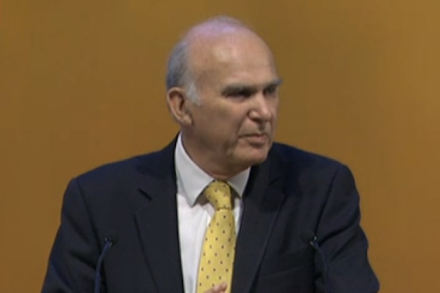
Welcome to Glasgow. This year’s conference sees us gather in a city that has always been important to the Liberal Democrats, a city once represented by Roy Jenkins, that gave us Ming Campbell and where nearby in 2005 Jo Swinson won a famous victory to take her seat from Labour and become an MP at just 25. Before anything I want to pay tribute to our team of Scottish MPs who lead the way in Parliament in arguing for a United Kingdom that is strong, secure and together. All under the direction of our fantastic Chief Whip and rally compere. Over the course of the next year, our party will continue making the case for Scotland in the UK. And we have the right team to get the job done.