The Spectator

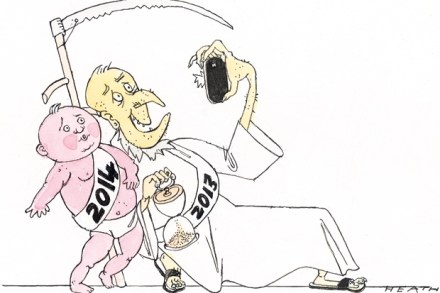
Portrait of the week | 3 January 2014

Home Six months of talks in Northern Ireland, chaired by Dr Richard Haass, a retired American diplomat, ended without resolving the contentious issues of flag-flying, sectarian parades or a policy on trying crimes committed during the troubles. Bus loads of Romanians and Bulgarians set off for London as restrictions on their right to work in Britain were lifted. Nigel Farage, the leader of Ukip, called for refugees from the conflict in Syria to be given asylum in Britain; Lord Howe, the health minister, said that some should be accommodated in the European Union. Tories were said to have persuaded Boris Johnson to undertake ‘short bursts’ of campaigning before the election. The Duke of Cambridge is to spend ten weeks studying agriculture at Cambridge University.

Elizabeth Jane Howard 1923 – 2014

The novelist Elizabeth Jane Howard died yesterday at the age of 90. She is most famous for the series of 14 Cazelet novels; the last of which, All Change, was published last autumn. Here is a snippet from Nicola Shulman’s review of the book: ‘If there is anything in publishing to melt the realities of book reviewing into this delicious scene it’s the prospect of a new Cazalet novel. Not only do I get to read it in plain sight, but the 19-year break since the last one necessitates a re-read of the whole lot. Days and days, that means, immersed in the lives of that many-petalled flower of the home counties, the Cazalet family.

A Charm against Indigestion

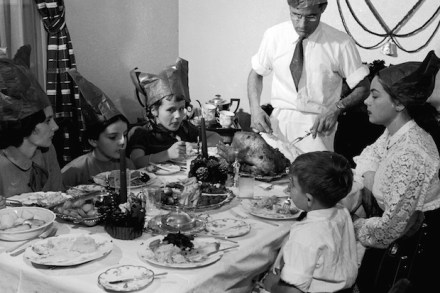
Soothe your post-Christmas dinner indigestion with these readers' charms, dug out from the spell-book that is the 24th December 1954 edition. The usual prize of £5 was offered for a charm against the pains of indigestion after Christmas dinner, in not more than eight lines of English verse: the charm to be pronounced while taking the prescribed dose of bismuth, bicarb., or other normal remedy. Nearly ninety competitors were prepared to reinforce their doses of magnesia, bismuth, bicarb. and alka-seltzer with a rhyming charm; but, although among the big and little guns there were (as Sir John Squire said in a Masefield parody) `some interesting ones,' I was rather disappointed not to come across a really charming charm.

The Spectator correctly predicted that Australia would regain the Ashes

Australia have regained the Ashes, much to the dismay of the British side. But did the Spectator's Australian edition predict this might happen months ago? Here's Terry Barnes's piece from August, in which he suggested that Australian cricket does well under a Conservative government, and terrible under a Labor one.    So the Australian Test cricket team licks its wounds after yet another disastrous Ashes series in which its top-order batting was too brittle and its bowling lacked sufficient penetration. What’s been overlooked, however, is that the crash in Australia’s Test fortunes since December 2007 coincides with the disastrous Labor tenures of Kevin Rudd and Julia Gillard.

Should Gatwick Airport have a second runway?

What’s the future for British airports? Earlier this month, The Spectator hosted a lunchtime discussion sponsored by Gatwick Airport with MPs and policymakers who had come to test its thesis: that expanding London’s second airport is the most sensible way forward, as it would boost competition while causing a fraction of the noise pollution. The debate was chaired by Andrew Neil. Also present were Fraser Nelson, editor of The Spectator, political editor James Forsyth, client services director Melissa McAdden, Kwasi Kwarteng MP and the Institute of Directors' Simon Walker. Andrew Neil opened the discussion by asking Stewart Wingate if he expected the Davies report was moving in the direction of a third runway at Heathrow.