Aliens

Why we need a free press Sir: As bereaved parents and (to borrow from some signatories of last week’s advertisement) victims of public authority abuse we wholly oppose adoption of the politically endorsed Royal Charter of Press Regulation. The European Court of Human Rights ruled that Christopher, our mentally ill son, had been denied his right to life as a result of failures by the prison service, the police and the NHS. Our experience was that, in the aftermath of our son’s death, the primary objective of the public authorities involved was to protect themselves from criticism because of those failures rather than to achieve justice for our son.
Escapology This week marked the 70th anniversary of the Great Escape, when 76 Allied servicemen tunnelled out of Stalag Luft III prisoner of war camp in Poland. Fifty of them were executed on recapture. How successful were escape attempts? — At least 483 Allied servicemen escaped German camps. Only 12 reached home turf, including three from the Great Escape. — The biggest breakout was of French servicemen from Oflag XVII-A in Austria in 1943: 132 escaped, two of whom made it out of German-controlled territory. — None of these figures include Horace Greasley, who claimed to have escaped from and returned to a camp in Lamsdorf, Germany, about 200 times to conduct an affair with a German-Jewish girl.
Home David Cameron, the Prime Minister, said that inheritance tax ‘shouldn’t be paid by people who’ve worked hard and saved and who bought a family house’ and that this would be addressed in the Conservative manifesto. Two opinion polls after the Budget, by Survation for the Mail on Sunday and by YouGov for the Sunday Times, had put Labour one percentage point ahead of the Conservatives. Nineteen Labour movement figures wrote to the Guardian warning the party not to hope to win the election on the basis of Tory unpopularity. The rate of inflation fell from 1.9 to 1.7 per cent, as measured by the Consumer Prices Index, or from 2.8 to 2.7 per cent as measured by the Retail Prices Index. The government said it would sell another 7.
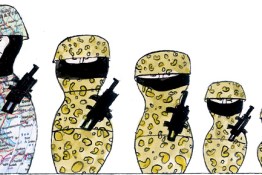
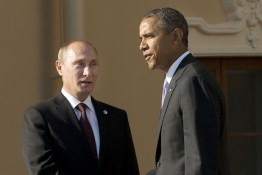
One cannot legislate for a quiet world. When a former Princeton University college professor was elected president of the United States, he joked before his inauguration that ‘it would be the irony of fate if my administration had to deal chiefly with foreign affairs’. That was Woodrow Wilson, speaking in March 1913. Similarly, the Hawaiian-born Barack Obama came to office with little interest in what lay over the Atlantic. He wanted to be the Pacific president, more concerned with Asia than the squabbles of the old world. Fate, it turned out, had other plans. This week Obama has found his visit to Europe dominated by talk of Russian militarism — and has ended up almost begging his Nato allies to do more to address the problem on their doorstep in Ukraine. Fat chance.