The Spectator

Bidenbucks out, DoGEbucks in?

From our US edition

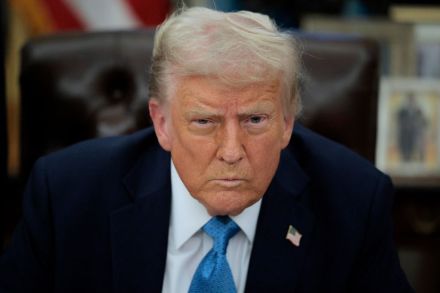
Forget Trumpbucks and Bidenbucks: Americans could see Muskbucks (or DoGEbucks?) hitting their mailboxes if the world’s richest man has his way.This time, it wouldn’t be via payouts from X — it would be courtesy of the billions of dollars in savings that Musk claims have already come from the Department of Government Efficiency’s (DoGE) wide-ranging cuts. According to Musk, DoGE has already saved taxpayers $55 billion — and he would like to see payments sent back to taxpayers when his agency winds down ahead of America’s 250th birthday. The idea started — where else?
This month in culture: March 2025

From our US edition

With Love, Meghan Netflix, March 4 If there were an award for the year’s least eagerly awaited show, Netflix’s With Love, Meghan would have to be in the running, if not quite the clear front-runner at this early stage of the year. Even the synopsis — “Meghan Markle invites friends and famous guests to a beautiful California estate, where she shares cooking, gardening and hosting tips” — summons up gasps of horror. The footage that has arrived via trailer indicates that this will be as vacuous as an Instagram reel brought to full, unlovely life, with its uniquely dreadful hostess conveying nothing so much as an onscreen vacuum where any kind of charm, grace or likability should be.

culture

The many legal challenges to Trump’s Executive Orders

From our US edition

It was Groundhog Day in more ways than one this month. Yes, Punxsutawney Phil (accurately) predicted six more weeks of winter, but America also witnessed newly inaugurated President Donald Trump issue a flurry of Executive Orders, only to see many challenged immediately by Democratic attorneys general and paused by judges.During Trump’s first term, Executive Orders like his one restricting travel from seven Muslim-majority countries were challenged by Democrats and liberal activist groups like the American Civil Liberties Union. This time around, many of the challenges and pauses are focusing on Trump’s work, in conjunction with Elon Musk, to slash government spending radically.

Letters: The real value of independent schools

Strength of service Sir: Matthew Lynn and Steven Bailey (Letters, 1 February) are quite wrong to deplore the decline of Britain as a manufacturing nation. Manufacturing – especially of the heavy sort – is best suited to a country with plenty of space, little regulation, cheap energy and cheap non-unionised labour. That was once the case for Britain but it is no longer; nor is it so for the majority of European countries. Germany epitomises the folly of mindlessly adhering to manufacturing, as is well explained in Wolfgang Munchau’s excellent book Kaput. Britain, on the other hand, has successfully diversified into services and is now the world’s second-largest exporter of this income earner.

The Spectator fights back against government excess

Britons used to be able to rely on their parliament to safeguard liberty and their wallets. Those who were sent to the House of Commons came not as petitioners for a larger government and greater state expenditure but as guardians of individual freedom and defenders of private property. It was self-evident to them that those who spent their own money would always spend it more wisely than those who took others’ money and spent it to please whom they may. During those times MPs, including even ministers, regarded restraint on executive power and tight control on public spending as unquestioned virtues, and the nation prospered.

Portrait of the week: Andrew Gwynne sacked, Trump saves Prince Harry and a £30m refund over moths

Home Andrew Gwynne was sacked as a health minister and suspended from the Labour party for making jokes about a constituent’s hoped-for death, and about Diane Abbott and Angela Rayner. Oliver Ryan, a member of the WhatsApp group where the jokes were shared, had the Labour whip removed and 11 councillors were suspended from the party. Asked about 16,913 of 28,564 medics registering to practise medicine in Britain last year having qualified abroad, Wes Streeting, the Health Secretary, said there was ‘no doubt’ that ‘the NHS has become too reliant’ on immigration. The government issued guidance saying that anyone who enters Britain by means of a dangerous journey will normally be refused citizenship. In the week to 10 February, 210 migrants arrived in small boats.

Why DoGE should scrap the F-35

From our US edition

The Trump administration’s Department of Government Efficiency (DoGE) has set its sights on the Pentagon. Defense secretary Pete Hegseth told Axios that he will welcome “the keen eye of DoGE” to scrutinize Department of Defense (DoD) spending “very soon.”Hegseth also said he’s already talked to DoGE head honcho Elon Musk about ways to make the Defense Department run more efficiently. Though in Hegseth’s view “efficiency” does not equate to funding cuts (he wants DoD spending to increase), one quick and easy way to curb waste right out the gate would be to abandon the F-35 fighter jet, fire every senior person involved in its commission and put in place systems to ensure that such horrors never happen again.

Trump announces steel tariffs

From our US edition

President Trump said that steel tariffs would be announced Monday — and that reciprocal tariffs against, among others, the European Union, were coming early this week. Yet questions remain whether these tariffs will go into effect, or if their announcement is being used as a bartering chip, as with other tariff threats last week.The threat of tariffs reemerged after Trump met with Japanese prime minister Shigeru Ishiba last week to discuss Japanese investment in US Steel. This 25 percent tariff on imported steel and aluminum appears to be an attempt to protect US and Japanese shared interests. This tariff is set to be placed on all nations equally and is not a bargaining tool, unlike those with which Trump threatened Canada and Mexico last week.

The Spectator is hiring: US Online Editor (London)

Join The Spectator’s expanding team as our US Online Editor and work with the best British journalists, authors, critics and cartoonists. As US Online Editor you will work closely with the senior editorial team in the UK and US to commission, edit and publish Spectator articles covering the United States. You will take charge of daily output – which includes covering breaking news and responding to world events – curating the US website and promoting Spectator articles on social media. The Spectator was founded in 1828 and is the most influential magazine in Britain. There’s never been a better time to join us. This role is full-time and based in The Spectator’s London offices.

What’s next for DoGE fever?

From our US edition

Washington, DC has been struck with DoGE (Department of Government Efficiency) fever — just as everyone started getting over the bugs they all caught at from Trump’s inauguration. Elon Musk and his gang of twenty-something whiz kids are making their mark across the federal government, starting with USAID, which Musk has repeatedly criticized in strident terms as being the core of the corruption he’s seeking to root out.

Letters: The army that Britain needs

Common ground Sir: Katy Balls asks ‘Lawyer or leader?’ (Politics, 25 January), but it became fairly clear which Keir Starmer is when he appointed as his Attorney General Lord Hermer, a human rights lawyer. As was mentioned, Lord Hermer has often represented those rejecting British values rather than standing up for them. Sir Keir and Lord Hermer show a clear preference for international law over Britain’s common law. They ignore the reality that common law has served the nation brilliantly over the centuries. It relies on the precise written word and precedent, being non-political, transparent, predictable and fair. British laws are enacted by our democratically elected parliament which can amend or repeal them.

2686: Poem VIII – solution

The poem is ‘Say not the struggle nought availeth’ by Arthur Hugh Clough. The final words are SUN CLIMBS SLOW, HOW SLOWLY, BUT WESTWARD, LOOK, THE LAND IS BRIGHT. The other two extracts are DUPES (25A) and THE FIELD (22). CLOUGH (3) was to be shaded. First prize Will Snell, London SE10 Runners-up Mike Conway, Grimsby; P. and A.

Britain could learn from Trump’s approach to foreign policy

The Foreign Secretary describes his approach to diplomacy as ‘progressive realism’. One can legitimately ask what is progressive about a closer accommodation with the slave-labour-deploying Leninists of Beijing or what is realistic about ceding the UK’s sovereignty over the Chagos Islands to China’s ally Mauritius. But David Lammy seems happy in his work. His choice of words serves to give an updated gloss to what most observers would readily recognise as the Foreign Office’s traditional approach – appeasement of our enemies and embarrassment at anything which appears to be a reminder of our colonial past. Whatever the aptest description of this government’s foreign policy, it is fair to say Donald Trump is piloting a different approach to international affairs.

Portrait of the week: Shoplifting surges, Trump eyes Gaza Strip and Norway’s government collapses

Home Sir Keir Starmer, the Prime Minister, flew to Brussels for an EU summit, sought a ‘reset’ of relations and had celeriac soup and sea bream for dinner. AstraZeneca dropped plans to invest £450 million in a vaccine manufacturing plant in Speke, Liverpool, blaming the government’s ‘final offer compared to the previous government’s proposal’. Rachel Reeves, the Chancellor of the Exchequer, said that she supported the expansion of Leeds Bradford Airport; she had already backed a third runway at Heathrow and the reopening of Doncaster Sheffield airport. Water bills in England and Wales will rise to an average of £603. Some councils will be allowed to raise their tax by more than 5 per cent – Bradford by 10 per cent.

Introducing the MAGA-za Strip

From our US edition

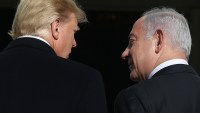
President Donald Trump warned Hamas that there would be “hell to pay” when he returned to the White House if the terrorist organization continued to hold the hostages that it and Gazans have held for almost 500 days. Around eighty hostages, living and murdered, remain in Gaza.Last night, Trump laid out what “hell to pay” could look like: a potential American takeover of the Gaza Strip, maximum pressure against Iran and arms shipments to Israel.Trump, who famously compared the Arab-Israeli conflict to a “real-estate deal” in 2015, proposed a radical reshifting of the entire region, alongside Israeli prime minister Benjamin Netanyahu — the first foreign leader he’s hosted in person in the White House in his second term.

Not Quite Laid Up

Grunting, you slipper-creep across the floor slower than a sailboat in a Force 1 breeze. I wonder whether in that ancient circuit board of a head from which so little intelligible has issued for weeks the Beaufort Scale still means anything or whether, if mentioned, you would as usual get totally muddled, mistake Force 1, under whose waftings the sea hardly ripples, for gale Force 10. Standing close in case of mishap I watch you grip the grubby Zimmer frame tighter, then tack hard to port and slump into the Stannah Lift that will ease you past prints and oils of your father’s ships until you reach the downstairs harbour.

USAID in the DoGE house

From our US edition

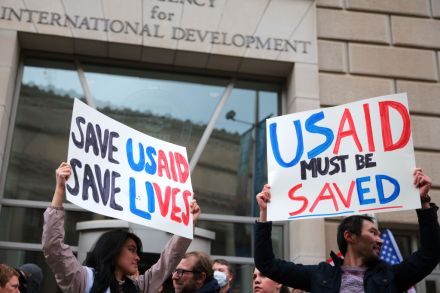
Elon Musk claims that President Trump and DoGE are shutting down USAID.He made his claim on X Spaces last night following the administrative leave of two senior security officials at the US Agency for International Development (USAID) after they denied the newly established Department of Government Efficiency (DoGE) the ability to receive sensitive data from the agency, the Guardian reports.DoGE was created on Trump’s first day to “maximize governmental efficiency and productivity.” Headed by Musk, the department has already taken action to bring to light extensive federal spending and has been granted access to the US Treasury’s federal payment system.Musk said that USAID is beyond repair.