Clown 3
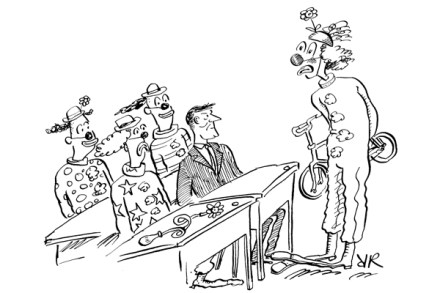
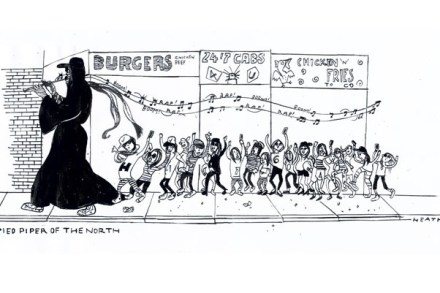
Mind games Sir: I hope that people are not unduly put off by Melanie McDonagh’s misrepresentation of mindfulness as a cop-out for navel-gazers who lack the moral fibre to engage in ‘proper’ religion (‘The cult of mindfulness’, 1 November). She describes it as a ‘practice of self-obsession’, but it is the opposite: it creates a space in which the self can be seen for what it is as it hops around, generating superfluous judgments. You begin to obsess less about what your ‘self’ compulsively comes up with, and to approach life from a more anchored perspective. May I invite those who think that sounds bogus and flaky to engage in a short experiment?
Space to dream Richard Branson’s dream of commercial space flights has suffered a setback after a prototype craft crashed. But others are still offering opportunities for adventure… — Golden Spike is an American company planning to send a couple of passengers to the Moon from 2020 onwards. Each will pay an estimated return fare of $700 million. — Inspiration Mars Foundation plan to take advantage of a rare alignment of planets in 2018 to send a male/female couple on a ‘quick’ 501-day flypast of Mars. As yet, it hasn’t announced whether or not they will have to pay for the privilege. — Mars One, a Dutch company, plans to start a colony of four humans on Mars by 2023.
Home Fiona Woolf, the Lord Mayor of London, resigned as the head of an inquiry into historical child sex abuse three months after Baroness Butler-Sloss, the former president of the family division of the High Court, resigned from the same appointment. Both had been criticised for having establishment links. ‘It is really going to be hard to find someone with no connections,’ Mrs Woolf said. ‘A hermit?’ Exploitation of vulnerable children has become the social norm in some parts of Greater Manchester, according to a report by Ann Coffey, the Labour MP for Stockport. The Serious Fraud Office opened a criminal investigation into accounting irregularities at Tesco.
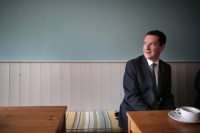
Imagine if, in one of her first acts as First Minister of Scotland, Nicola Sturgeon announced that, in spite of the result of September’s independence vote, Scotland was to declare independence anyway, on the basis that opinion polls now showed a majority of people in favour of independence and therefore there was no need for the decision to be approved in a referendum. David Cameron and his government would surely treat it as an outrage. Why, then, has the Chancellor this week seen fit to announce that the people of Greater Manchester are to have a directly elected mayor? Two years ago the very same question was put to the people of the City of Manchester in a referendum and the answer was a resounding ‘no’.
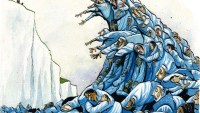
Britain’s appalling record on refugees is a moral failure, and a national disgrace, says Justin Marozzi in this week’s issue of the Spectator. We are now witnessing a global crisis on a scale not seen for 20 years, and our only response is throw money at international development, while letting in far too few refugees. But as Douglas Murray argues, economic migrants to the UK have poisoned public tolerance for genuine asylum seekers. It’s time for a frank debate about immigration, he says. Justin and Douglas join Fraser Nelson on this week’s podcast, to discuss the moral arguments for and against letting in refugees.

From The Spectator, 7 November 1914: On Wednesday next the King will open Parliament in state, the only alteration in the prescribed ceremonial being the temporary disuse of the glass coach. This alteration is due to a cause which, it is interesting to note, is reflected in every large household in the kingdom. So many members of the King's servants have gone to the front as soldiers that it is difficult to find a sufficient number of the men trained to the ceremonial work. Otherwise, and most properly, the state will be full state. We are sure that the country as a whole will most heartily endorse the King's decision.
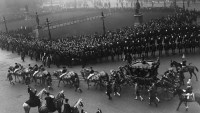
From ‘News of the Week’, The Spectator, 7 November 1914: On Wednesday next the King will open Parliament in state, the only alteration in the prescribed ceremonial being the temporary disuse of the glass coach. This alteration is due to a cause which, it is interesting to note, is reflected in every large household in the kingdom. So many members of the King’s servants have gone to the front as soldiers that it is difficult to find a sufficient number of the men trained to the ceremonial work. Otherwise, and most properly, the state will be full state.
Home Fiona Woolf, the Lord Mayor of London, resigned as the head of an inquiry into historical child sex abuse three months after Baroness Butler-Sloss, the former president of the family division of the High Court, resigned from the same appointment. Both had been criticised for having establishment links. ‘It is really going to be hard to find someone with no connections,’ Mrs Woolf said. ‘A hermit?’ Exploitation of vulnerable children has become the social norm in some parts of Greater Manchester, according to a report by Ann Coffey, the Labour MP for Stockport. The Serious Fraud Office opened a criminal investigation into accounting irregularities at Tesco.
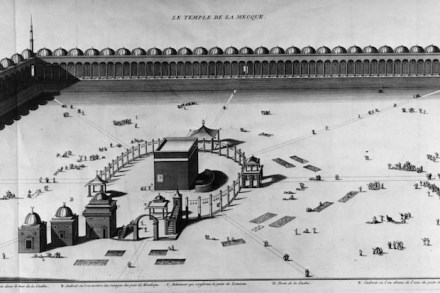
From The Spectator, 7 November 1914: We are glad to note that the Indian Government has issued a reassuring proclamation as regards the Holy Places. We trust, however, that before long France, Russia, and Britain, all of whom are Powers with large numbers of Mohammedan subjects, will join in a common declaration to the Moham- medan world that in no circumstances shall we interfere with the Holy Places or the religious feelings of Mohammedans. Moslems may be perfectly certain that no rearrangements made after the war will compromise in the very slightest degree religious rights in Arabia. We owe such a declaration to our Mohammedan subjects and to ourselves. It must not be supposed that there is serious danger of any attempt to proclaim a Holy War succeeding.
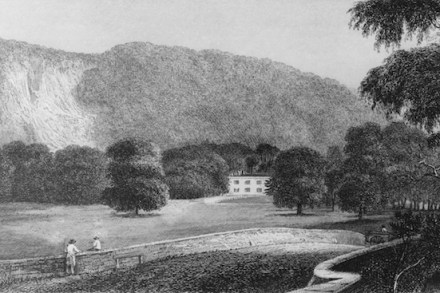
From The Spectator, 7 November 1914: By far the largest addition to or alteration in the scenery of Surrey and its commons has been the building of the hutments which are to form the winter quarters of the new Army. This is a change which is visible near and far. Go up Hindhead on a clear day, and from that sunlit and windy plateau look out east and north towards the chalk downs and the heights beyond Bagshot. The landscape has changed from the familiar slopes and levels of three months ago. The blues and greys and greens are streaked and slashed with yellow and white. The quiet of the pines and heather and the great stretch of English country spread to view from these high places has gone.
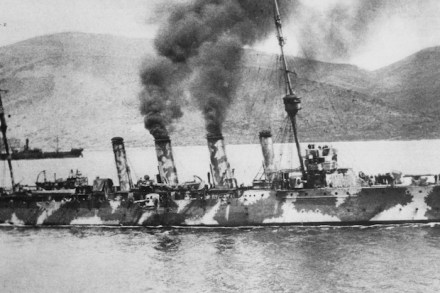
From The Spectator, 7 November 1914: THE most important event of the week has been the declaration of war on Turkey by Britain. In the words of the London Gazette of Thursday: "Owing to hostile acts committed by Turkish forces under German officers, a state of war exists between Great Britain and Turkey as from to-day. Foreign Office, November 5th, 1914." The Gazette also contains an Order in Council annexing the island of Cyprus. The Order points out that the outbreak of hostilities annuls the Convention, Annexe, and Agreement made between us and the Turks in 1878. In addition, the British Fleet during the past week has been busily bombarding the forts at the mouth of the Dardanelles, apparently with good results.
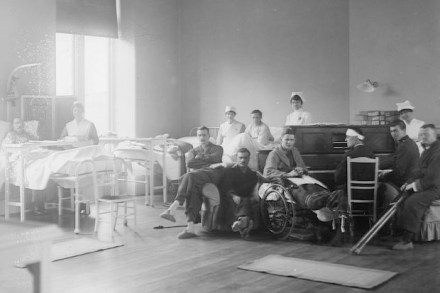
From The Spectator, 31 October 1914: THE following are extracts from the diary kept by a Red Cross probationer this autumn: Tuesday—A rumour has gone about that we are to have wounded here one day this week. I wonder! Instead of dusting, I polished all the twenty electric-light switches all round the ward this morning, besides doing the taps. Far more amusing than dusting and much better exercise. Wednesday—One of the patients—No. 8—ran quite a bad temperature to-day, and seemed in great pain. It was wretched to see him suffer; he seems unable to eat or sleep, and gets no rest from his pain. Such a wet day! For the first time we got soaked coming home.
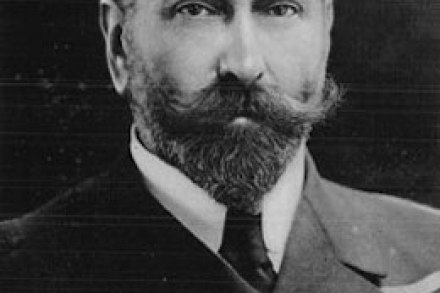
From The Spectator, 31 October 1914: We regret to record that a gallant and patriotic sailor, Prince Louis of Battenberg, has fallen a victim to the foolish prejudice that people with foreign names and of foreign birth cannot be loyal British subjects. It was announced on Friday that Prince Louis of Battenberg had resigned the office of First Sea Lord in a letter to Mr. Winston Churchill, the candour and simplicity of which do him the greatest credit.