Park
Times past Sir: ‘Imagine,’ says Hugo Rifkind in his excellent piece on the power of Google (29 November), ‘that there was one newspaper that got all the scoops. Literally all of them.’ We don’t have to imagine: such a newspaper existed, a couple of centuries ago, and Hugo works for its descendent. The Times of the early 19th century had a foreign intelligence service that regularly outperformed Whitehall’s, and a circulation several times that of all its rivals combined. It thundered as confidently on royal scandal as it did on the details of parliamentary reform. Its editor dictated the membership of at least one cabinet. Regulation just entrenched this state of affairs.
A fatal shot The sad death of Australian batsman Philip Hughes was a reminder that a cricket ball can kill. A blow on the cricket field may even have cost us an heir to the throne. — One of the earliest suspected victims was Frederick, Prince of Wales, the son of George II, who is first recorded as having played cricket in 1733 when he put up a team against Sir William Gage, in a match played on Mouley Hurst, Surrey. — In 1751, a few weeks after his 44th birthday, he was said to be suffering from an abscess in the chest caused by a blow by a cricket ball, or possibly a real tennis ball. He then caught a chill and developed pleurisy. He died on 31 March after the abscess burst.
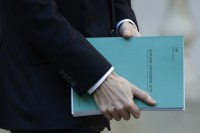
When George Osborne first became Chancellor, he asked to be judged on his ability to reduce the deficit. He does not make that request any more. This year’s deficit is almost three times higher than the £37 billion he originally planned, but he understandably glossed over this point when delivering his Autumn Statement. He has other interests now: pension reform, building motorways, or spending more on GPs. The mission to balance the books has been delayed until the end of the decade — or, perhaps, the start of the next. He said this week that his extra spending was made possible by ‘the hard decisions that we have taken’.

Home The government spent days announcing how the Autumn Statement would allocate funds. ‘Frontline’ parts of the National Health Service would get an extra £2 billion for the time being, £750 million of it diverted from elsewhere in the Department of Health budget. Another £1.1 billion from bankers’ fines would go to support GPs. Labour said it would give the NHS twice as much. Out of the £15 billion already set aside by the government for roads, a tunnel would be built for the A303 past Stonehenge. Of £2.3 billion (over six years) earmarked for flood prevention, only £4.3 million was set aside for the Somerset Levels, but £196 million for the Thames estuary.
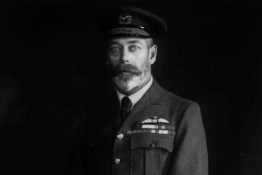
From The King at the Front, The Spectator, 5 December 1914: It is impossible for the ordinary Englishman not to be delighted with the good taste and good breeding as well as the sincerity with which the King has acted throughout the war. Burke bade us so to be patriots as not to forget we are gentlemen. That, again, is an easy thing to say and not always an easy thing to do, for undoubtedly there are many men who in the excitement of a great crisis cannot help showing a vein of coarseness in their fibre which no one had perceived before. Great events bring out great and good qualities, or mean and bad qualities, according as they predominate in the individual.
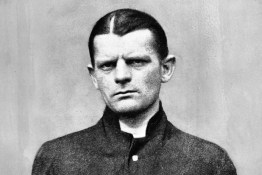
From ‘The Honourable Spy’, The Spectator, 5 December 1914: Decency is violated by the military spy when he becomes, for instance, a naturalised subject of a foreign power only to betray his adopted country. No such charge of dishonour can be brought against the German spy Lody who was shot at the Tower. He spied, he was discovered, and he paid the penalty without repining. In his last letter he compared his fate with that of the soldier on the field, modestly claiming a slightly lower place, and with admirable fairness he did not forget to pay a tribute to the justice of his judges. He took his chances and lost the game, but he played it intrepidly and within the rules to the last.