The Spectator

The Spectator at war: Trialling terror

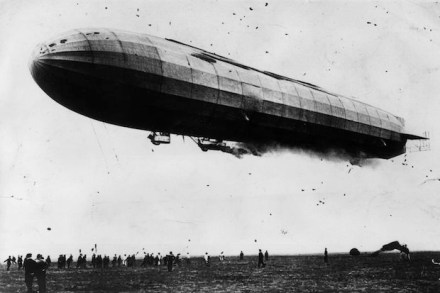
From 'The Trial Runs', The Spectator, 22 May 1915: LONDON is busy with rumours just now as to an imminent air raid upon the capital by German aircraft. It may be that some definite piece of information has leaked out of Germany, but it is just as likely that the rumours are due to one of those rerulsione of belief from which people always suffer when their information is scanty. Any observer may have noticed during this war that there have been regular pulsations, or cycles, of optimism and pessimism. As a rule there has not seemed to be much more reason for the one than for the other.
The Spectator at war: Munitions, men and management

From 'A National Government', The Spectator, 22 May 1915: We are not going to say anything about the mistakes of the past. They are not merely dead. They are buried. We have got to think only of the future. It is obvious that the construction of a National Government, however ideal in appearance, will be a mockery unless that Government are prepared to face the new situation in a new spirit. Without that we might just as well have gone on with the old Government. The nation will be mocked if things are to go on just as before, and will never forgive the men who have mocked it.

The Spectator at war: National Government

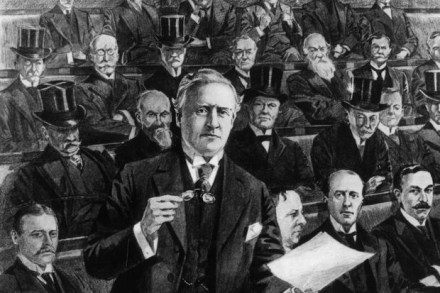
From 'News of the Week', The Spectator, 22 May 1915: We have named a Dictator to finish the war. The Dictatorship, it is true, is in commission, but none the less it is a Dictatorship. The new National Government will be all-powerful. Let us hasten to say that this will not make their task or their responsibilities any the easier. On the contrary, the responsibility that will rest on each Minister individually and upon the Cabinet collectively will be very much greater. Neither jointly nor severally will they be able to excuse themselves from doing the right thing by declaring that the Parliamentary situation would not allow it, or that if they had done an unpopular though a wise act, or a necessary act, they would have been thrown out of office by an Opposition waiting to destroy them.

The Spectator at war: Outrages in Belgium

From 'German outrages in Belgium', The Spectator, 15 May 1915: TOWARDS the end of last year the Prime Minister appointed a Committee to inquire into the outrages committed by German troops during the present war, and the Report of the Committee was issued on Wednesday. As the Committee indicate, the inference to be drawn is that the German military authorities made up their minds that it was desirable to terrorize the Belgian people in order to overcome Belgium's resistance to the German Army, and in order to maintain the German communications without having to devote too large a force to protect them. In other words, the military interests of Germany were held to justify any kind of cruelty that might con- ceivably contribute to the success of German arms.

The Spectator at war: Standing at ease

From 'Standing at Ease', The Spectator, 15 May 1915: It is a contradiction in terms, but we think it is true to experience, to say that certain people in distress never stand at ease but when they are working hard. They are as a rule people of very strong will. "Attention!" they shout at their own souls, determined that nothing shall come between them and their task. With an effort which takes all their strength, they concentrate upon their work. "Stand at ease," murmurs the still voice which cannot be gainsaid, and suddenly their work is invested with an intense and unnatural interest, Breathless, delighted, and refreshed, they follow its intricacies, so monotonous in days of peace, so all absorbing now. Their minds are working at high pressure.

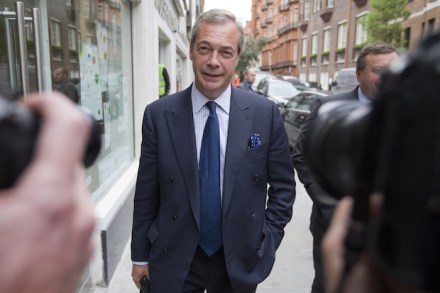
Podcast special: can Nigel Farage survive the Ukip wars?

In this View from 22 special podcast, Fraser Nelson and Sebastian Payne discuss the ongoing Ukip wars with Laura Pitel from The Times. Can Nigel Farage survive as leader? Is there still a conflict between Team Farage and other tribes within the party? And what role has Douglas Carswell played, if any, in the briefing wars?