The Spectator

The Spectator at war: Sunday best

From ‘Favourite Hours’, The Spectator, 19 June 1915: On a Sunday the Church and the world agree, and declare together that the distinctions between master and servant are merely matters of expediency involving no principle, and those who will not listen to the one can hardly avoid hearing the other. By the by, the persons who airily declare that you "never see any poor people in church" immensely overstate the truth, deceived by the fact that very few people look poor on a Sunday—in the country literally no one. Again, the fact that the majority of people have a good dinner on Sunday is a great safeguard against class bitterness.

The Spectator at war: Taxing work

From ‘Taxing Wages and War Profits’, The Spectator, 19 June 1915: Tax is growing much too complicated, and the multiplication of exemptions in the last few years has led to an enormous increase of clerical work at Somerset House. At the same time, the Government have never yet had the courage to carry out the ideal of compelling a return from every individual in the kingdom. Yet practically there are few people who do not have to make such a return either for the purposes of Super Tax, or in order to secure one or other of the numerous exemptions now operative. It would be far better to face the whole problem boldly, to compel a return from every individual, and then to grade the tax scientifically.

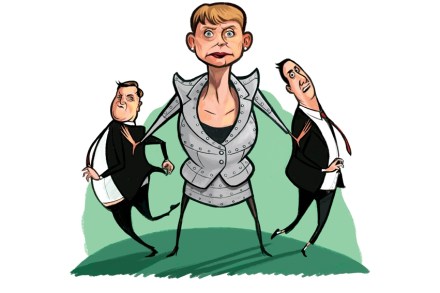
Does Yvette Cooper want to be Labour’s Iron Lady?

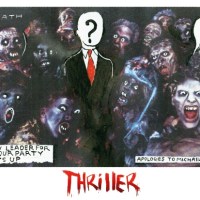
On Wednesday night in the televised Labour leadership hustings, Yvette Cooper channeled Margaret Thatcher, saying: ‘I’m not standing because I want to be something, but because I want to do something.’ So is she trying to pose as Labour’s Iron Lady? After all, it was Thatcher who originally said that: 'It used to be about trying to do something. Now it's about trying to be someone.' Here's the conclusion that Melissa Kite came to in The Spectator, back in 2012: In Yvette Cooper’s home, an entire room is given over to memorabilia of her husband’s life in politics.

The Spectator at war: How to use the Home Guard

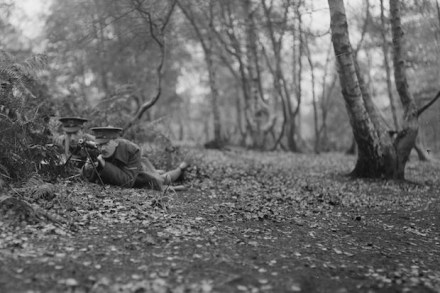
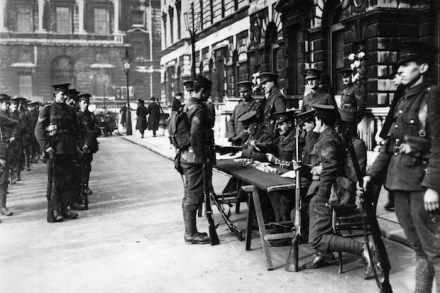
From ‘How to Use Our Home Guard Volunteers’, The Spectator, 19 June 1915: There is a technical objection which for the moment seems to raise an insuperable barrier against the military authorities getting what, in many cases, they so eagerly desire, and against the Volunteers rendering the aid which they are equally anxious to render. Clause 6 of the War Office letter of November 19th, 1914, to Lord Desborough, the letter which regularized the position of the Volunteer Training Corps and contains the War Office recognition of all those affiliated to the Central Association of Volunteer Training Corps, and is also the charter of the Volunteers, makes the following stipulation: "No form of attestation involving an oath is permitted.

Barometer | 18 June 2015

Dropping the Clangers The Clangers made a comeback on BBC television. Some Clanger facts: — The actors doing the voices worked from a script in English, even though they were playing seemingly unintelligible noises on the swanee whistle. It was a good job the young viewers didn’t understand Clanger-language, because the creatures were known to tell each other to ‘sod off’. — The last Clanger episode, made after a gap of two years, was made specially to be broadcast on the evening of 10 October 1974, polling day in the second general election of that year. It consisted of the Clangers being taught how to play party politics, but rejecting the concept. It was written by co-creator Oliver Postgate after he become angry about the miners’ strike.

Letters | 18 June 2015

Growing congregations Sir: I would like to take issue with Damian Thompson (‘Crisis of faith’, 13 June) and his assertions that England’s churches are in deep trouble. Last Saturday 250 Christians ranging in age from zero to 80, from two independent and orthodox local churches in Lancaster and Morecambe, met in a school to sing, pray, and hear preaching about Jesus Christ — this as well as our normal Sunday services. We believe we are doing what the Bible tells us to: preaching the good news of Christ from the pages of the Bible — and our churches are growing. Indeed, we can testify to growth in many local churches in the UK (whether independent or within a denomination).

Let Greece go

The campaign to keep Greece in the euro has resulted in five years of groundhog days. The unfortunate country seems to be forever approaching a day of repayments it cannot afford. Ministers and diplomats assemble to thrash out a deal. Meetings collapse in bad temper, and markets sink. Then, at the eleventh hour, a deal is somehow forged. Greece agrees to reforms which seek to cut spending and balance the books in return for billions of pounds of bailout cash. Markets rebound. The money is paid, the debt repayments met. And then all starts to go wrong again. A few months later we are back where we began. Anyone who hoped the election of Greece’s Syriza government in January would break the cycle has been disappointed.

Portrait of the week | 18 June 2015

Home Talha Asmal, aged 17, from Dewsbury, West Yorkshire, died in a suicide bomb attack on forces near an oil refinery near Baiji in Iraq, having assumed the name Abu Yusuf al-Britani. A man from High Wycombe, Buckinghamshire, Thomas Evans, 25, who had changed his name to Abdul Hakim, was killed in Kenya while fighting for al-Shabab. Three sisters from Bradford were thought to have travelled to Syria with their nine children after going on a pilgrimage to Saudi Arabia. Britain had had to move intelligence agents, the Sunday Times reported, because Russia and China had deciphered documents made public by Edward Snowden, the CIA employee who has taken refuge in Russia. Payments expected by customers of the RBS group of banks failed to enter accounts overnight.