Serial
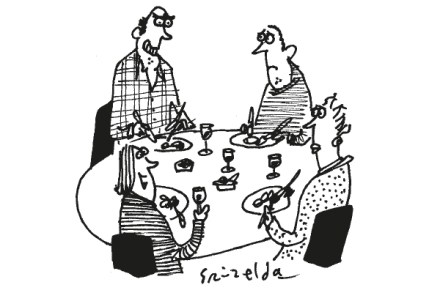
A tax on empty dwellings Sir: Both the Conservative and Labour candidates (‘Battle for London’, 2 January) rightly see housing as the big issue in London’s mayoral election this year: Ukip and the Greens would probably say the same. But if one travels along the river at night and observes the large blocks of flats that appear to be almost empty, one wonders if there really is a problem. Anecdotal evidence says that the owners are mostly Chinese (but they could be Arabs, Russians, or others based abroad), who occupy these properties for little more than a week or a month in the year.
The outsiders Did the seven members of Harold Wilson’s cabinet who campaigned to leave the Common Market in the 1975 referendum damage their careers? Michael Foot, Employment Secretary. Made deputy leader by Jim Callaghan in 1976. Elected leader in 1980. Tony Benn, Industry Secretary. Challenged Denis Healey unsuccessfully for Labour deputy leadership in 1981. Barbara Castle, Social Services Secretary. Sacked from cabinet by Jim Callaghan when he became prime minister in 1976. Eric Varley, Energy Secretary. Swapped jobs with Tony Benn after referendum. Fifth in shadow cabinet elections in 1979. John Silkin, Planning and Local Government Secretary. Became agriculture secretary in 1976. Stood for Labour leadership in 1980 but was defeated. Peter Shore, Trade Secretary.
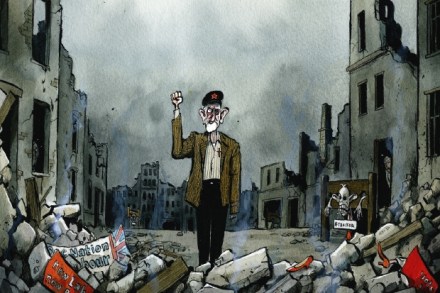
Home David Cameron, the Prime Minister, decided to allow ministers to campaign for either side in the referendum on membership of the European Union, once his negotiations had been concluded on Britain’s relationship with the EU. The government said it was commissioning 13,000 houses to be built by small builders on public land made available with planning permission. Junior doctors decided to go on strike after all, starting with a day next week, after talks between the government and the British Medical Association broke down. In an extraordinarily drawn-out reshuffle, Jeremy Corbyn, the leader of the Labour party, replaced Michael Dugher as shadow culture secretary with Maria Eagle, who was replaced at defence by the Trident-hating Emily Thornberry.

When David Cameron said this week that he is worried his children would not be able to afford to buy their own homes, he struck on one of the greatest economic problems of his premiership. The old British promise is that if you work hard and make the right decisions, you can advance in life and own your own home. This is the ladder that most aspire to climb. But for an entire generation, even the hope of home ownership is slipping out of view. A huge number of young Britons cannot hope to have the kind of life their parents enjoyed. The Prime Minister must know he is on dangerous ground here. His own children, of course, will not have to worry — just as he did not have to worry.
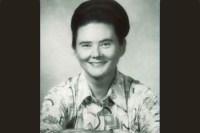
Let’s not get sentimental — she would not have liked that — but Florence King, the American writer and splendid reactionary, has died. It is sad because Florence was brilliant, brave and most of all funny. Her best-known work, Confessions of a Failed Southern Lady, is a tremendous book — essential reading, I’d say, for anyone who wants to understand spirited American conservatism, rather than the lobotomised crap churned out on TV or talk radio, or by Republican Party candidates. She deserves to be better known, though it is heartening today to see fans sharing her quotes on Twitter. (My favourite: 'while watching 'Psycho' a single question ran through my head: "Where can I get a shower head with that kind of capacity?

When David Cameron said this week that he is worried his children would not be able to afford to buy their own homes, he struck on one of the greatest economic problems of his premiership. The old British promise is that if you work hard and make the right decisions, you can advance in life and own your own home. This is the ladder that most aspire to climb. But for an entire generation, even the hope of home ownership is slipping out of view. A huge number of young Britons cannot hope to have the kind of life their parents enjoyed. The Prime Minister must know he is on dangerous ground here. His own children, of course, will not have to worry — just as he did not have to worry.
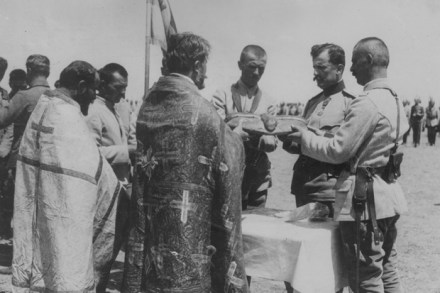
From ‘A Mobilisation of the Church’, The Spectator, 8 January 1916: Suppose the Church were mobilised so that the majority of the younger clergy and all the ordinands were set free for service in the Army, the situation at the end of the war might be very different from that which we have been anticipating. There is no life more intimate than that of the barrack-room. There is no life where the essential characters of men are so fully revealed as the life of the trench. Those of the combatant clergy who returned from the war would know all that was worth knowing of the characters of ordinary men…With such men as clergy a new era might dawn for the Church in this land, and the Kingdom of Heaven be brought very nigh.
Leader of the Opposition and Leader of the Labour Party Jeremy Corbyn MP Deputy Leader of the Labour Party, Party Chair and Shadow Minister for the Cabinet Office Tom Watson MP Shadow First Secretary of State, Shadow Secretary of State for Business, Innovation and Skills Angela Eagle MP Shadow Chancellor of the Exchequer John McDonnell MP Shadow Chief Secretary to the Treasury Seema Malhotra MP Shadow Home Secretary Andy Burnham MP Shadow Foreign Secretary Hilary Benn MP Opposition Chief Whip Rosie Winterton MP Shadow Secretary of State for Health Heidi Alexander MP Shadow Secretary of State for Education Lucy Powell MP Shadow Secreta.