The Spectator

The EU must change

David Cameron’s attempt to renegotiate Britain’s EU membership has served as a powerful reminder of the case for leaving. The EU is designed in such a way that almost no sensible proposal can be passed. If one member state has a good idea, the other 27 members demand a price for approving it, or they demand concessions until it is completely watered down. If the leader of a country protests, the response is clear: What are you going to do? Walk away? You wouldn’t dare. The EU’s power-mongering has a cost. The euro has hideously distorted the economies of the member states that adopted it, and the abolition of so many border controls has worsened the immigration crisis — which, in much of Europe, has fostered a political crisis.

Barometer | 18 February 2016

Selling with honesty An Essex estate agent sold a flat in Westcliff-on-Sea for £22,500 over the £125,000 asking price after advertising it with the words: ‘Wipe your feet on the way out…this property is full of rubbish, there is mould on the walls and I think there may even be fleas.’ The original honest estate agent was Roy Brooks, who operated from Chelsea in the 1960s and won fame by describing properties he was selling with such accolades as ‘erstwhile house of ill-repute’, ‘rather theatrical — in keeping with the pretentious style of the owner’ and ‘ten rather unpleasant rooms with slimy back yard’. The latter property, advertised for £4,650, would now be worth 1,000 times that..

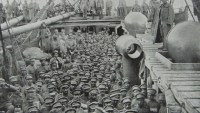
Equality in the trenches

From ‘War the leveller’, The Spectator, 12 February 1916: Strange as it may appear to the pacificist, war has levelled up, not down, as the Socialists aim at doing… In presence of a common peril the private and his officer have learned to understand one another better, and have discovered the good qualities which each possesses.

Podcast special: The Fourth Industrial Revolution

[audioplayer src="http://rss.acast.com/viewfrom22/podcastspecial-thefourthindustrialrevolution/media.mp3" title="Listen: Podcast special - The Fourth Industrial Revolution"] Listen [/audioplayer] In this View from 22 podcast special, The Spectator’s Editor Fraser Nelson hosts a discussion about whether the world is going through a fourth industrial revolution and what this means for workers around the world. Fraser is joined by Stefan Krüger, Partner at King & Wood Mallesons, Simon Collins, UK Chairman and Senior Partner at KPMG, and Ed Conway, Economics Editor at Sky News. The Fourth Industrial Revolution was the key theme at this year’s World Economic Forum in Davos. How will advances in technology affect how companies around the world operate?

Letters | 11 February 2016

What’s best for Europe? Sir: It seems that the British negotiations in Europe have produced little, and even at this late stage they would surely be more effective if the tone were based more on what is best for Europe as a whole (‘Fighting over the crumbs’, 6 February). If we leave, we will desert our friends among the nations of Europe and make them more beholden to the largest members. Surely the difficulties of immigration, the euro and muscle-bound regulation will sooner or later force Europe to make changes of the kind we wish to see, and we should be there to help make them happen. History teaches us that Europe is too large, and too near, for us to consider abandoning any influence over what they do there.