Books and Arts opener – 8 December 2016
From our UK edition
From our UK edition
From our UK edition
From a letter published under the heading ‘The religion of the ordinary soldier’, The Spectator, 23 December 1916: During a discharge of gas at the beginning of July along our front, one of the cylinders was displaced by the near bursting of an enemy shell. It turned the nozzle round, and the gas began to pour into our own trench. One of my lads, who was acting as orderly, heard from the communication trench that something was happening and ran into the front line… He ran forward unprotected, tugged at the cylinder, and pointed its nozzle outwards again before he fell unconscious. He died a few minutes afterwards. Those who saw it told me it was a quite spontaneous action. This boy would have told you that if his name was on a shell, it was no use running away.

From our UK edition
Justin Welby Archbishop of Canterbury There have been lots of wonderful answers to prayer over many years, including recently. One I remember was as a 15-year-old sitting in chapel with the prospect of three frightening tests that day, for which I had done no preparation, and praying that if I got through it then I would do anything for God. I did get through and did nothing about it, except forget about God. Another was praying about whether I should ask my future wife to marry me: I was sitting alone by a canal in Holland. I felt I should, did, and she said yes. It was a wonderful decision. The most recent was when I was going to see some incredible work done by a group of young women helping trafficked sex workers.

From our UK edition
Solving serious puzzles — to catch criminals and thwart terrorist plots — is what the men and women who work at GCHQ do round the clock. It’s hardly surprising that many of them enjoy setting and solving them in their own time, too, pitting their wits against each other. This selection is from The GCHQ Puzzle Book (Penguin), put together by GCHQ’s spies, containing a Christmas puzzle challenge, too, and raising money for the Duke and Duchess of Cambridge’s Heads Together mental health campaign. 1. A round of drinks What could follow Mojito, Eggnog, Riesling, Lemonade, Ouzo... ? 2. Composing a sequence What is the final entry in this sequence?

From our UK edition
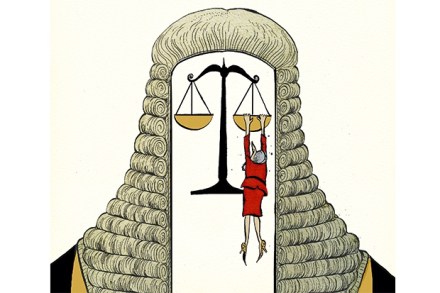
The second day of the Supreme Court hearing has seen the Government continue to put forward its case for why it should be allowed to pull the Article 50 trigger without the say so of Parliament. And Lord Pannick has been arguing why Parliament must give approval for the start of the process of Brexit. Here's how the day unfolded on our Spectator live blog: 4.30pm: Pannick’s main pitch is about the power of Parliament. He tells the Supreme Court that ‘Parliament is sovereign and only Parliament can remove that which it has incorporated into domestic law’ - meaning that Brexit cannot be started by the Government without the agreement of Parliament.
From our UK edition
Autumn Budgets Philip Hammond announced that in future the Budget will be held in autumn rather than spring. This is not as revolutionary as some have made out. — In his 1992 Budget Norman Lamont announced that there would be two budgets in 1993, one in spring and one in autumn, and that from then on the date would switch to autumn for good. — The Budget was delivered every November from then until 1996. In 1997, Gordon Brown held his first Budget in July, before reverting to a spring date. — Denis Healey also delivered a November Budget in 1974, soon after the second general election of that year. Tickets please The Department for Transport says it will force train companies to make passengers aware if there is a cheaper ticket available for their journeys.
From our UK edition
Irrational EU Sir: James Forsyth’s otherwise excellent piece on Brexit talks (‘Britain’s winning hand’, 26 November) suffers from the flaw of most British analyses of the EU: the presumption that the EU is a rational actor. If that were so, Greece would not be in the euro, Europe’s borders would not be guarded by Turkey, and David Cameron would have returned from his talks with a deal enabling the EU to keep one of the world’s most successful countries in the union. The recent EU history of perversity and intransigence suggests that whatever aces Theresa May holds, she should prepare to walk away from the table as empty-handed as her predecessor.
From our UK edition
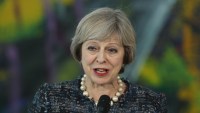
For months, now, a hunt has been on for the government’s Brexit strategy. Theresa May has quite rightly refused to disclose it. She knows that the European Union needs to be seen to make Britain suffer. She will have to ask for for a lot, only to back down so the EU can have its pound of British flesh. The hope is that she can then emerge with what she wanted all along. So a game of bluff is under way. This has created a rather unsatisfactory situation where Parliament wants to know where she will draw the line, and she refuses to say. Her every word is scoured for clues. None have been forthcoming.

From our UK edition
Home Paul Nuttall, aged 39, was elected leader of the UK Independence Party. He said: ‘I want to replace the Labour party and make Ukip the patriotic voice of working people.’ Theresa May, the Prime Minister, was rebuffed by Angela Merkel, the Chancellor of Germany, and by Donald Tusk, the President of the European Commission, when she proposed settling the status of British and EU expatriates even before Article 50 was invoked. She made another attempt in talks with Beata Szydlo, the Prime Minister of Poland. There was some interest in a note photographed on papers being carried after a meeting in Downing Street by Julia Dockerill, an aide to Mark Field, a Conservative MP, that said: ‘What’s the model? Have your cake and eat it.
From our UK edition
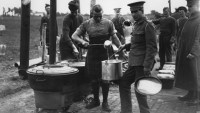
From ‘The food shortage and how to meet it’, The Spectator, 2 December 1916: A rise in prices, if properly understood and properly used, will be our salvation, not our injury. High prices help conservation, and, what is still more important, they help supply… If we artificially cut down prices here, we sterilise instead of stimulating the impulse to feed us from abroad. We are in effect saying to the world: ‘If you are such fools as to send us food, we warn you that you are not going to obtain inflated prices. You will get nothing more here than what we choose to tell you is a fair price. Our people, even if they want to do so, are not going to be allowed to pay you a penny more than we think suitable.
From our UK edition
Restaurateur Gavin Rankin enjoys a gastronomic trip to Belgium but wishes travelling companion, chef Rowley Leigh, had kept his mouth shut about the ox tongue. I recently lunched with two National Treasures - both Chefs - and was amused to see that their pointed bantering was every bit as spiky as might be expected from either the acting or the legal profession. Present were Rowley Leigh and Simon Hopkinson, both Titans of the Kitchen. 'So', said Rowley to Simon, what are you up to?' 'Well,' replied Simon, 'I was thinking of writing another recipe book'. 'Really darling, and what will you call this one - Fifty Shades of Gravy?' Occasionally I am asked which restaurants I like to visit as though I am an expert. I am not.

From our UK edition
Bucks for Bucks Buckingham Palace is to be renovated at a cost of £369m, funded through an increase in the sovereign grant. How much have home improvements to the palace cost over the years? — The original house was built by the Duke of Buckingham in 1706 for £7,000. — In 1761, George III spent £21,000 to buy it, and £73,000 on remodelling it. — In 1826, George IV hired John Nash to remodel the building for £450,000. He was fired in 1828, having spent £496,169. — In 1845, Queen Victoria complained it wasn’t big enough for her growing family and added the east wing, using £53,000 raised by selling Brighton Pavilion.
From our UK edition
Prisons and the public Sir: Your leading article on the sorry state of our prisons (19 November) was very welcome. However, you refer to the ‘public demand’ for sending offenders to prison. I have to query this. I cannot think of any occasion when the public has been consulted on prisons or sentencing policy or on the exceptionally high cost of incarceration. We currently have an unthinking and punitive culture, generated by tabloid newspapers and politicians competing to show how tough they are. It is hardly surprising that the coalition government’s search for savings targeted prison staff and community supervision, with results that can be seen today.
From our UK edition
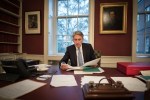
From the moment she arrived in 10 Downing Street, Theresa May has been commendably clear about her economic priorities for Britain. She wants the country to be a beacon of free trade, at a time when protectionism is on the rise the world over. She is annoyed at the way in which quantitative easing has manipulated asset prices, making property unaffordable. And while David Cameron was very successful in raising the incomes of those at the bottom, she is concerned that those in the middle have not fared as well. She wants a ‘country that works for everyone’ — that is to say, one where effort is always rewarded. This is, alas, no cliché.
From our UK edition
Home In his Autumn Statement, Philip Hammond, the Chancellor of the Exchequer, against an expectation of increased borrowing and slower growth, found an extra £1.3 billion to improve roads, which is 0.2 per cent of planned public spending next year, and £1.4 billion to promote the building of 40,000 houses. He improved the lot of some people on universal benefits and put £400 million towards provision of full-fibre broadband. The national minimum wage would rise from £7.20 to £7.50. The government would increase investment in research and development by £2 billion by the end of this parliament. Theresa May, the Prime Minister, had earlier pledged that the government would make Britain’s corporate tax rate the lowest in the G20.

From our UK edition
From our UK edition
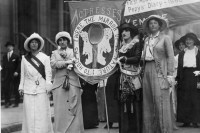
From ‘News of the Week’, The Spectator, 25 November 1916: We admit that before the war we should have placed, and indeed did place, Female Suffrage in the catalogue of ‘no compromise’ subjects. The war, however, has modified our view by altering our belief that some fundamental difference of opinion might arise between the sexes upon an issue where action must be confined to the male — i.e., military action. Our acknowledgment of mistake here does not of course exhaust our objections to Votes for Women, but, rightly or wrongly, it does in our opinion render them non-fundamental.
From our UK edition
From the moment she arrived in 10 Downing Street, Theresa May has been commendably clear about her economic priorities for Britain. She wants the country to be a beacon of free trade, at a time when protectionism is on the rise the world over. She is annoyed at the way in which quantitative easing has manipulated asset prices, making property unaffordable. And while David Cameron was very successful in raising the incomes of those at the bottom, she is concerned that those in the middle have not fared as well. She wants a ‘country that works for everyone’ — that is to say, one where effort is always rewarded. This is, alas, no cliché.

From our UK edition
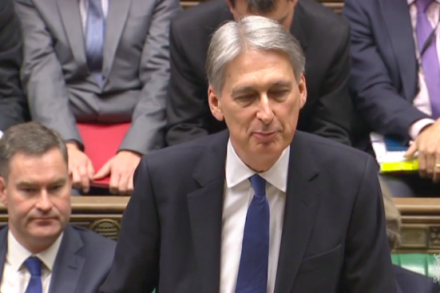
Mr Speaker, It is a privilege to report today on an economy which the IMF predicts will be the fastest growing major advanced economy in the world this year. An economy with employment at a record high – and unemployment at an 11 year low. An economy which, through the hard work of the British people, has bounced back from the depths of recession. And an economy which has confounded commentators at home and abroad with its strength and its resilience since the British people decided, exactly five months ago today, to leave the European Union and chart a new future for our country. That decision will change the course of Britain’s history.
From our UK edition
You already know that Coffee House serves up the best analysis, comment and insight into the day’s political events. Why wait for tomorrow’s papers when the best writing is already up online? But our emails – Lunchtime Espresso and Evening Blend – mean you don’t even have to wait until you can log on to Coffee House. Sent to your inbox twice a day, we give you the top stories, top analysis – as well as a diary of tomorrow’s debates, and the vital statistics of the day. To sign up, for free, enter your email address in the box below.