Books and Arts Opener – 27 October 2016
From our UK edition
From our UK edition
From our UK edition
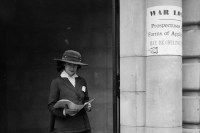
From ‘Secrecy and disease’, The Spectator, 28 October 1916: The war might have damned us, as Germany planned, but it will end in saving us. Afterwards we shall be a more highly organised nation than we once thought necessary or desirable, and we shall see all things rather differently, but we shall be much stronger. A very noticeable example of the change of heart and outlook is the attitude of people towards this question of venereal diseases. The war has brought us much too closely into contact with real and hard things for us to shrink blushing, as people too often used to do, from a question which concerns the health and safety of the whole nation. The matter, of course, was always too important for the kind of silence that mistook itself for modesty or decency.
From our UK edition
Since Nigel Farage’s latest resignation as Ukip leader, it has become clear that he is the only person who can hold the party together. Without him, Ukip has become a seemingly endless brawl between various hostile factions. Still, this leaderless mess has more supporters than the Liberal Democrats. That’s because Ukip, for all its flaws, has given a voice to those ignored in an overly centrist political debate — first Eurosceptic Tories, then working-class Labour voters. With decent leadership, Ukip could still do to the Labour party in the north of England what the SNP has done to it in Scotland. Steven Woolfe might have been able to supply that leadership, had he not been hospitalised by a fellow MEP. He has now quit, saying that Ukip is over.
From our UK edition
Ape escapes A gorilla got out of its enclosure at London Zoo and entered a keepers’ area, prompting an evacuation of visitors. Other gorillas who tried to emulate King Kong: — Casey, a 400 lb male, scaled a 15-foot wall and a four-foot fence at Como Zoo in Minnesota in 1994 and spent an hour at large before being coaxed back. — Little Joe, a 300 lb male, got out of Franklin Park Zoo, Boston, in 2003 and roamed free before being shot with a tranquiliser dart. Two people were injured. — Jabari, a 300 lb Western Lowland Gorilla, scaled 16 ft walls to escape at Dallas Zoo in 2004. He injured four people, including a boy of three, before being shot dead. A 19-year-old female gorilla escaped briefly at the same zoo in 2010.
From our UK edition
Russia’s war crimes Sir: In his article ‘Vanity Bombing’ (15 October), Simon Jenkins quivers with contempt at MPs digging ‘deep into the jaded rhetoric of a superannuated great power’ and ‘shouting adjectives and banging drums’. But he does Parliament and decent, careful motivation a deep disservice. I don’t know what preceded his splenetic outburst, but Syrian analysis deserves better. The position is very simple. The Russians are committing war crimes and using their position as a veto-wielding member of the United Nations Security Council to shield themselves from international humanitarian law.
From our UK edition
The Islamic State’s pretence to nationhood was based on the holding of territory. With the battle for Mosul this week, together with the loss of the land that it controlled in Syria, that pretence is becoming harder to maintain. The area involved is now limited to a few shattered cities, and corridors between them. The decline of this terror organisation is to be welcomed. But this is a war which can have no neat ending. If Isis were a genuine state, it would by now be forced to consider unconditional surrender. That is not going to happen. More probably it will dissolve, its leaders and lesser agents making an escape or going into hiding. There is a danger that many Isis fighters will attempt to return to the European cities from which they came and continue an underground jihad.
From our UK edition
Home Steven Woolfe, the MEP who spent three days in hospital after an altercation at a Ukip meeting, said he was resigning from the party, which was in a ‘death spiral’. Nicola Sturgeon, the leader of the Scottish National Party, told its annual conference that an independence referendum bill would be published for consultation this week. A decision on airport expansion in England was postponed again, and Downing Street said that ministers would be allowed to express their personal opinions. Olympic athletes in a parade in Manchester were joined on an open-topped bus by two young impostors wearing Team GB tracksuits and plastic medals. The annual rate of inflation measured by the Consumer Prices Index rose to 1 per cent in September from 0.
From our UK edition
From our UK edition
From ‘A Royal contribution’, The Spectator, 7 October 1916: His Majesty has passed through troublous times, in the constitutional controversy, in the Irish imbroglio, and in the war, when passion rose to its highest point. The temptation to go behind his Ministers, and to snatch popular favour at their expense, must have been tremendous sometimes. ‘Remember, I am not responsible for this!’ represents the attitude of many sovereigns who have called themselves constitutional. The King never by a hint, a suggestion, a word, or a gesture has taken the stage against his advisers.
From our UK edition
Cathedral going Sir: While I enjoyed much of Simon Jenkins’s analysis of why England’s cathedrals are thriving (‘Why cathedrals are soaring’, 8 October) his article misses the point. As a self-confessed non-worshipper, his understanding of these buildings and their significance lacks a crucial dimension. The raison d’être of our churches and cathedrals is faith and worship. By focusing exclusively on historical and aesthetic elements and ignoring their continuing important spiritual role, Jenkins risks behaving like a restaurant critic who never bothers to taste the food on offer.
From our UK edition
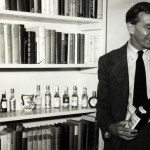
Home The pound fell against the dollar and the euro, weakening by 19 per cent against the dollar from its level at the time of the EU referendum to lows last seen in 1985. The FTSE 100 index almost beat its highest-ever closing level. There was much unrooted talk about what votes Parliament should have on the Brexit process and when. A spokesman for Theresa May, the Prime Minister, said: ‘Parliament is of course going to debate and scrutinise that process as it goes on’ and would then perhaps vote on the ‘final deal’. Cuadrilla was given permission by the government to drill four shale-gas wells in Lancashire that would employ hydraulic fracturing. Wolfgang Suschitzky, the photographer, died aged 104. Some Tory MPs called for the commissioning of a new royal yacht.
From our UK edition
Fears of a clown Professional clowns complained that the current craze for scaring people by dressing in clown outfits was damaging their trade. But why do some people find clowns frightening? — The effect was analysed in 1970 by Japanese professor Masahiro Mori as he researched robot faces. He found that the more lifelike faces induced increasing feelings of empathy until a critical point, at which point people began to find them scary. Then, as the face was made still more lifelike, empathy quickly returned. He called the effect the ‘uncanny valley’, after its shape on a graph. — Clown faces occupy a gap between primate and human, so the fear may originate from ancient aversion to breeding with near-human relatives.
From our UK edition
On the face of it, this year’s Nobel Prize awards have been a triumph for British scientists. No fewer than five laureates come from these shores: three physicists, one chemist and an economist. But before anyone starts praising our higher education system, there is one small snag: all five are currently working at US universities. David Thouless, who was awarded half the Physics prize, has followed a typical career path. After taking a degree at Cambridge, he took a PhD at Cornell University and a postdoc at the University of California before heading back to Britain, where he worked for 13 years at the University of Birmingham. There, he started the work that would eventually win him his Nobel prize.
From our UK edition
From our UK edition
From ‘Decisive victory at sea’, The Spectator, 7 October 1916: The only excuse for changing our views of the magnificent rightness of the strategy of continually searching out the enemy, forcing him to action, and destroying him — the strategy on which Britain has been built up — would be that submarines and mines have so changed the conditions that we have to begin to write the rules of our strategy on a fresh page. No sane man, however, is either unaware of the different conditions introduced by submarines and mines or unwilling to make reasonable allowance for them. The question is not whether the method of the British Navy is to change, but whether its spirit is to change.
From our UK edition
Studying grammars Sir: Isabel Hardman (Politics, 1 October) states that no reputable research backs up the belief that grammar schools promote social justice. I am not sure she is correct. For instance, Lord Franks’s 1966 report on Oxford University recorded an accelerating rise in the share of places taken by state school pupils at that university in the 1939–1966 period. This increased from 19 per cent to 34 per cent, excluding the semi-private direct grant schools. Include the direct grants and the figure rises from 32 per cent in 1939 to 51 per cent in 1965. This change, reversed in the comprehensive years after 1965, coincided with the introduction of a national system of academic selection throughout the United Kingdom.
From our UK edition
Tenement Scots John Cleese referred to the editor of this magazine as a ‘tenement Scot’. Do more Scots live in tenements? — The term tenement became associated in Scotland with 14-storey blocks built in Edinburgh in the 18th and 19th centuries. One collapsed in 1861, killing 35 residents and leading to an Improvement Act which largely did away with the old blocks. — Today, 38% of homes in Scotland are flats or maisonettes, markedly higher than the 21% in England and Wales. But only 14,900 (0.6%) are ‘buildings in multiple occupancy’, with shared facilities like the original tenements. More than a landslide Hungarians voted by 98% to 2% to reject the EU’s plan to resettle a share of refugees in the country.
From our UK edition
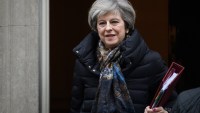
Home Theresa May, the Prime Minister, said at the Conservative party conference that hers was now the party of ‘working-class’ people and would occupy the ‘new centre ground’. She announced that Article 50 of the Lisbon Treaty would be invoked by next March, beginning the formal process for Britain to leave the European Union. The pound fell to a 31-year low and the FTSE 100 index rose above 7,000 to an 18-month high. Philip Hammond, the Chancellor of the Exchequer, said: ‘We will no longer target a surplus at the end of this Parliament,’ as his predecessor George Osborne had promised, but would spend on housing and transport. More than 500 people were stranded on the London Eye big wheel for three hours one evening by a mechanical fault. A No.
From our UK edition
The Conservative party conference in Birmingham this week seemed a remarkably relaxed affair. The European question has been settled. Seldom has victory in the next-election looked more secure. The Labour conference in Liverpool had been a debacle, as the hard left set about picking off the remaining moderates. Diane James has resigned as Ukip leader after 18 days. It’s quite possible that her replacement could transform Ukip into a new working-class party — and then do to Labour in the north of England what the SNP has done to it in Scotland. One cabinet member put it well: the Tory party, he said, was like a piece of elastic that had been stretched much too far under David Cameron but has now been allowed to revert to a more natural position.
From our UK edition