The Spectator

Letters | 30 March 2017

No blanket solution Sir: Paul Collier is right to say that the refugee crisis will not be solved with tents and food alone (‘The camps don’t work’, 25 March). But context is everything, and aid remains vital. In middle-income countries such as Jordan and Lebanon, getting refugees into jobs is essential. Businesses are part of the jigsaw. So is government legislation to ensure, for example, that refugees get work permits or can register as self-employed. So too are labour market interventions that generate incentives to get refugees working. However, in fragile and impoverished states that lack functioning markets and governments, different forms of aid are required.
Moving on | 30 March 2017

Most people are glad to see the end of a referendum campaign, but the losing side always wants to keep going. Nicola Sturgeon has this week demanded a second vote on independence, in defiance of public opinion. And as Brexit talks begin, the country is still divided, with many people wishing to see the negotiations break down and the referendum result be overturned. The Prime Minister will need to fight these two battles in different ways. In Scotland, she must take care not to fall into the nationalists’ traps. Ms Sturgeon ran for office promising not to call a second referendum unless it was ‘clear’ that a ‘majority of people wanted a referendum’. At the time, the SNP expected support for independence to rise.

Portrait of the week | 30 March 2017

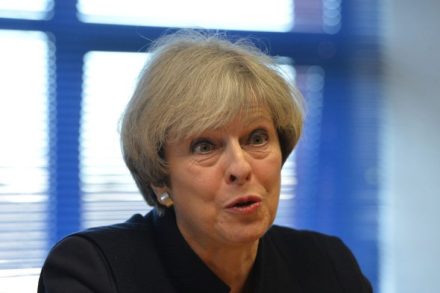
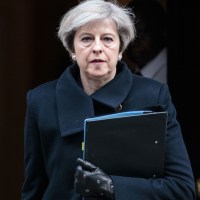
Home Theresa May, the Prime Minister, wrote a letter to Donald Tusk, the President of the European Council, with formal notification of Britain’s withdrawal from the European Union under Article 50 of the Lisbon Treaty. If no agreement is made sooner, Britain would cease to be a member in two years. The other 27 member states had celebrated the 60th anniversary of the Treaty of Rome. Asked by the BBC if Mrs May would be the ‘elephant in the room’ at the shindig, Jean-Claude Juncker, the president of the European Commission, said: ‘She’s not an elephant.

Ballots and bullets

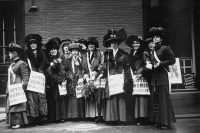
From ‘The golden opportunity’, 31 March 1917: The proposal not to give women votes till they are 26 might well be modified by making all persons come of age politically at 26, but with the proviso that any man who had served in His Majesty’s Forces, naval or military, during the war should be given a vote whatever his age. There can be no better basis for a vote than such service for the state. Those male persons who from the impediment of ill-health or engagement in a special trade failed to join the combatant forces should not enjoy the suffrage till 26. Those who have gone through the fire of war or prepared themselves to go through it deserve to come of age politically at 21.

Transcript: Andrew Neil’s Brexit interview with Theresa May

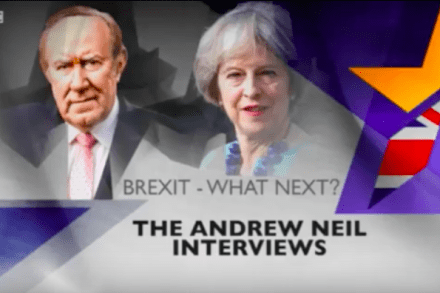
Andrew Neil: So, Prime Minister the negotiations to leave the European Union begin. It’s a historic moment for our country. In what ways will Britain be a better country for leaving the European Union? Theresa May: Well you’re absolutely right, Andrew, that this is a historic moment for our country. We’re putting into place now the decision that was taken in the referendum on the 23rd of June last year to leave the European Union and the formal process has begun. I’ve written to, as they say, invoke this Article 50 that people will have heard about which starts the process of formal negotiations. As we look ahead to the outcome of those negotiations I believe that we should be optimistic as a country about what we can achieve.

A generous, globally-minded Brexit could reunite a divided country 

Public opinion on Brexit remains evenly balanced, and there’s no point in any Conservative pretending otherwise.  About half the nation did not want their Prime Minister to trigger Article 50 today, and Theresa May should primarily concern herself with her fellow Remainers – especially in Scotland. Many of them will see, in Brexit, the triumph of ugly nativism or a nostalgic isolationism. Her Lancaster House speech in January laid out a compelling, globally minded vision of Brexit. Emphasising that message will be key to addressing the worst fears of Remain voters.  The triggering of Article 50 represents a great opportunity. We can now move on from whether Britain should or should not leave the EU: Article 50 has served irrevocable notice of our doing so.

Theresa May’s full Article 50 speech: ‘A day of celebration for some and disappointment for others’

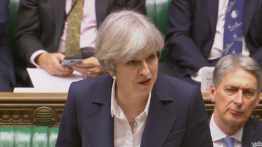
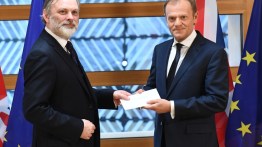
Mr Speaker, Today the Government acts on the democratic will of the British People. And it acts, too, on the clear and convincing position of this House. A few minutes ago in Brussels, the United Kingdom’s Permanent Representative to the EU handed a letter to the President of the European Council on my behalf, confirming the Government’s decision to invoke Article 50 of the Treaty on European Union.   The Article 50 process is now underway. And in accordance with the wishes of the British People, the United Kingdom is leaving the European Union. This is an historic moment from which there can be no turning back. Britain is leaving the European Union. We are going to make our own decisions and our own laws.

Article 50 letter: full text

On 23 June last year, the people of the United Kingdom voted to leave the European Union.  As I have said before, that decision was no rejection of the values we share as fellow Europeans.  Nor was it an attempt to do harm to the European Union or any of the remaining member states.  On the contrary, the United Kingdom wants the European Union to succeed and prosper.  Instead, the referendum was a vote to restore, as we see it, our national self-determination. We are leaving the European Union, but we are not leaving Europe – and we want to remain committed partners and allies to our friends across the continent.

Theresa May’s Brexit speech in Scotland, full transcript

It is very good to be with you here with you today, and particularly to be able to thank you all for the work you do on behalf of the Government and on behalf of the British people. Vital work that helps millions around the world and speaks strongly to the values that we share as a country. And it is vital work. Not just because the things you do here have a material impact on the lives of some of the poorest and most vulnerable people around the world. But also because the work you do here – in conjunction with your colleagues at the Department for International Development in London – says something important about Britain. It says that we are a kind and generous country.

Refugees deserve better than the Dubs scheme and Theresa May was right to end it

The argument over the recently-abandoned Dubs scheme for refugees encapsulates what is wrong with the debate about what is, perhaps, the worst humanitarian crisis of recent years. The actor David Morrissey was on the Peston show this morning saying he was "devastated" when Theresa May decided to stop plans to take a limited number child refugees from Europe and instead focus on settling 20,000 straight from the Middle East. Except, of course, her policy wasn't framed in that way on Peston's show. It never is, anywhere. We have heard the same point, made by well-intentioned people like Morrissey, for weeks. But no one mentions what the Prime Minister proposes instead.

Europe should follow Britain’s lead on refugees

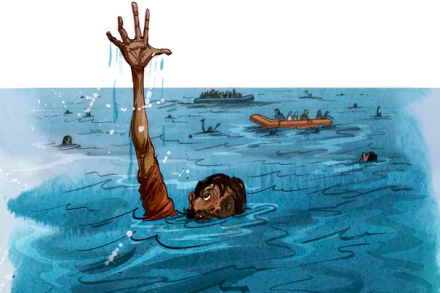
When a humanitarian tragedy disappears from our newspapers, there are two possibilities: that the crisis is over and life for survivors is gradually returning to normal — or that the human toll has become so routine as to no longer be considered newsworthy. Sadly, the deaths of migrants from North Africa and the Middle East as they attempt to cross the Mediterranean to seek a new life in Europe fall into the latter category. Eighteen months after the photographs of little Alan Kurdi’s body on a Turkish beach generated a huge swell of public emotion, entire families are still dying on a regular basis. In the first ten weeks of this year, some 525 people were lost crossing the Mediterranean. Europe is still no closer to ending this outrage.

Letters | 23 March 2017

Speaking for Scotland Sir: I wonder if it is wise of Charles Moore (Notes, 18 March) to assume — as so many do — that because they lost the independence referendum back in 2014, the Nationalists do not speak for Scotland? In the following general election Scottish voting virtually wiped out every political party north of the border, other than the SNP. Might it not be wiser to assume that the Scots had thought again? Ian Olson Aberdeen Birds, gangs and economics Sir: Simon Barnes is correct in his implication that the trapping and harvesting of small birds by criminal gangs in Cyprus is enough to make the average Briton squeamish (‘Little birds, big trouble’, 18 March). However, while this may be so, the current system of enforcement is clearly failing.

Saving the children

When a humanitarian tragedy disappears from our newspapers, there are two possibilities: that the crisis is over and life for survivors is gradually returning to normal — or that the human toll has become so routine as to no longer be considered newsworthy. Sadly, the deaths of migrants from North Africa and the Middle East as they attempt to cross the Mediterranean to seek a new life in Europe fall into the latter category. Eighteen months after the photographs of little Alan Kurdi’s body on a Turkish beach generated a huge swell of public emotion, entire families are still dying on a regular basis. In the first ten weeks of this year, some 525 people were lost crossing the Mediterranean. Europe is still no closer to ending this outrage.

Portrait of the week | 23 March 2017

Home Theresa May, the Prime Minister, said that on 29 March she would send a letter to Donald Tusk, the president of the European Council, under Article 50 of the Lisbon Treaty, triggering the process of the United Kingdom’s departure from the European Union. A summit of EU leaders was convened for 29 April, with the aim of briefing its negotiator, Michel Barnier. Nicola Sturgeon, the first minister of Scotland, elicited the support of the Scottish Parliament for her policy of seeking a second referendum on Scottish independence ‘within a short time of’ Brexit. Mrs May had dismissed her request, saying: ‘Now is not the time.’ Ms Sturgeon said an independent Scotland would seek membership of the EU and use sterling as a ‘starting point’.

Westminster terror attack: Theresa May’s statement to the Commons

Mr Speaker, yesterday an act of terrorism tried to silence our democracy. But today we meet as normal – as generations have done before us, and as future generations will continue to do – to deliver a simple message: we are not afraid. And our resolve will never waiver in the face of terrorism. And we meet here, in the oldest of all Parliaments, because we know that democracy, and the values it entails, will always prevail. Those values – free speech, liberty, human rights and the rule of law – are embodied here in this place, but they are shared by free people around the world. A terrorist came to the place where people of all nationalities and cultures gather to celebrate what it means to be free.

Up the revolution!

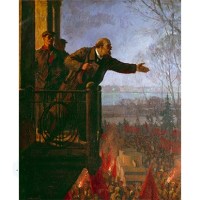
From ‘The Russian revolution’, 24 March 1917: Even now, though the Revolution is young, the Russians have proved that they are fit and worthy to exercise the full benefits of self-government. In the highest spheres of government they had hitherto been always thwarted, but no one who has watched the progress and expanding influence of the Zemstvos and the Municipalities can deny that Russians have long displayed the capacity for local self-government. Such a Revolution as has just occurred was inevitably born in violence, but the violence was much less than might have been expected.