The Spectator

Spectator Events: 5 ideas to change the world

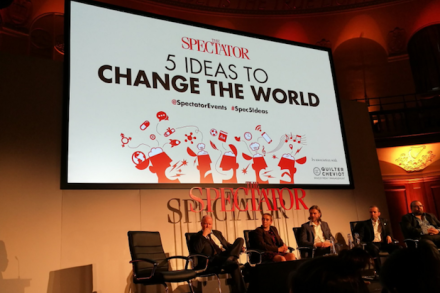
How best to challenge the status quo? A week after an election result that surprised just about everyone, today's best free thinkers descended on Church House, Westminster, to put forward their ideas to change the world. As Jo Coburn took a night off from BBC politics to chair Spectator Event's '5 ideas to change the world' in association with Quilter Cheviot, the first speaker Toby Young spoke of his relief to be welcomed on a friendly footing by Coburn – rather than the Daily Politics interrogation he had become accustomed to. Young's big idea related to education. The associate editor of The Spectator – and cofounder of three free schools – said its charter schools that hold the secret sauce to successful education.
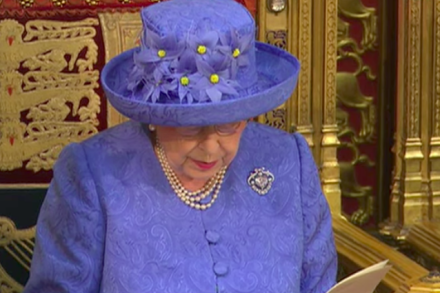
Queen’s Speech: Full text

My Lords and Members of the House of Commons. My government’s priority is to secure the best possible deal as the country leaves the European Union. My ministers are committed to working with Parliament, the devolved administrations, business and others to build the widest possible consensus on the country’s future outside the European Union. A bill will be introduced to repeal the European Communities Act and provide certainty for individuals and businesses. This will be complemented by legislation to ensure that the United Kingdom makes a success of Brexit, establishing new national policies on immigration, international sanctions, nuclear safeguards, agriculture, and fisheries.

No, the election was not a rebellion against Brexit – or ‘austerity’

The lessons to be learned from the Conservatives’ poor showing in the election could fill more pages than the national curriculum. Don’t unleash on the public a manifesto which has not even been tested among senior ministers. Don’t think you can get through a seven-week election campaign by endlessly repeating the same mantra, especially when you are being ridiculed for it. Don’t underestimate how quickly public opinion can change. Sell yourself, your party and its ideas, rather than just attacking your opponent. Yet there is a serious danger that Theresa May and the rest of the Tory party could pick up the wrong message.

Letters | 15 June 2017

Divining Rod Sir: Please congratulate Rod Liddle on being the only commentator who accurately forecast the uncertain general election result (‘This is the worst Tory campaign ever’, 27 May). His prediction of the ‘stickiness’ of the Labour vote and the likelihood that Ukippers would return to the Conservatives in the south, where they mostly were not needed, were especially prescient. Mr Liddle goes to show that instinct, common sense and a sceptical nous are worth more than all the pseudoscience of polling. Well done him. Poor old us! Dr Barry Moyse North Petherton, Somerset Our lefty deplorables Sir: An astonishing 41 per cent of the British electorate voted for Jeremy Corbyn to become prime minister.

Portrait of the week | 15 June 2017

Home Theresa May, the Prime Minister, spent the week confronting the consequences of the general election that she had called to bring ‘stability and certainty for the future’. It had instead surprisingly left the Conservatives with no overall majority. They won 318 seats (a loss of 13) and Labour 262 (a gain of 30). The Scottish National Party won 35 (a loss of 21), with the Conservatives gaining 12 extra seats in Scotland, even capturing Stirling. Labour won an extra five seats in Scotland. Angus Robertson, the SNP leader at Westminster, lost his seat, as did Alex Salmond. Nick Clegg, the former Lib-Dem leader, lost his seat, but Sir Vince Cable won back Twickenham.

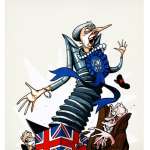
The thin blue line

The lessons to be learned from the Conservatives’ poor showing in the election could fill more pages than the national curriculum. Don’t unleash on the public a manifesto which has not even been tested among senior ministers. Don’t think you can get through a seven-week election campaign by endlessly repeating the same mantra, especially when you are being ridiculed for it. Don’t underestimate how quickly public opinion can change. Sell yourself, your party and its ideas, rather than just attacking your opponent. Yet there is a serious danger that Theresa May and the rest of the Tory party could pick up the wrong message.

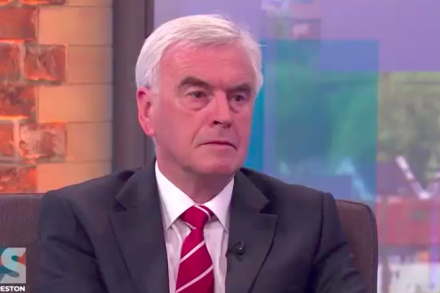
Full transcript: John McDonnell says Labour supports leaving single market

Labour's shadow chancellor, John McDonnell, has all but confirmed that the party is committed to leaving the single market. Here's the full transcript of his interview with Robert Peston this morning: RP: I’m joined by the shadow chancellor, one of Jeremy Corbyn’s closest confidants. Very good to see you, John McDonnell. John, first of all, if I could just start with where you go in parliament now. On Friday morning, you were talking in pretty explicit terms about how you thought you could end up in power even without a general election. How would that work? JM: Well, we put forward the proposal which was nothing special.

Full transcript: Graham Brady says there is ‘no appetite’ for Tory leadership contest

Here's the full transcript from Andrew Neil's interview with Graham Brady, the chair of the 1922 committee, on the Sunday Politics show: AN: Graham Brady, you think Mrs May should soldier on, why? GB: Well, there’s no other party that is in a position to form a government. Clearly these aren’t the circumstances that either the Prime Minister or I or any of my colleagues would have wanted to be dealing with at the moment but they are the circumstances the electorate has presented us with and I think it’s our duty to make the best of that. It’s our duty to try to offer a government as resilient as it can be in quite difficult times. AN: But, is she ever going to be more than a caretaker leader now?

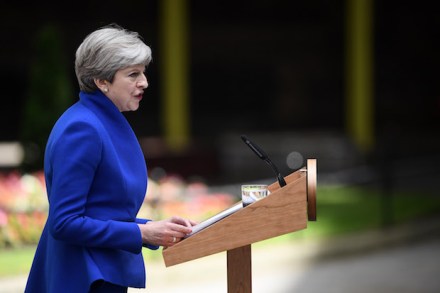
Theresa May’s Downing Street statement – ‘I will now form a government’

Theresa May has just appeared on the steps of Downing Street to give a statement following her meeting with the Queen. Here is the full text. I have just been to see Her Majesty the Queen, and I will now form a government – a government that can provide certainty and lead Britain forward at this critical time for our country. This Government will guide the country through the crucial Brexit talks that begin in just 10 days and deliver on the will of the British people by taking the United Kingdom out of the European Union. https://www.youtube.com/watch?

Election barometer: the debacle in figures

How the seats have changed: And how did the pollsters do? There will have been champagne corks popping at Survation last night – and sorrows being drowned at BMG and ICM: Labour recorded their biggest increase in the share of the vote since 1945: Turnout was up, with a widespread belief that young voters turned out en masse. But actually, turnout was the 5th lowest of any general election since 1945: Highest turnouts 1950 83.9% 1951 82.9% February 1974 78.8% 1959 78.7% 1992 77.7% Lowest turnouts 2001 59.4% 2005 61.4% 2010 65.1% 2015 66.1% 2017 68.

Catastrophe for the Conservatives as Theresa May blows her majority

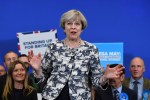
Tories lose their majority, falling eight seats short. Labour achieve 40 per cent of the vote, up 9.6pc. This is the biggest increase in vote share since Attlee in 1945. Theresa May has been to Buckingham Palace and sought permission to form a new government, working with the DUP... …in spite of personally engineering a cock-up of historic proportions. The main five Cabinet ministers have all retained their positions; no further appointments will be announced until tomorrow. Paul Nuttall has resigned as Ukip leader, stepping down with immediate effect. SNP lose 21 seats, as Scottish Tories take 12 seats, Scottish Labour takes 7 and LibDems 4. Ousted: Nick Clegg, Alex Salmond, Angus Robertson. Ben Gummer (who compiled the Tory manifesto).

Letters | 8 June 2017

Terrorists’ guilt Sir: A small contribution to the psychological war: when the next atrocity happens, could the BBC and other reputable news media please say that the Isis thugs have ‘admitted their guilt’ in respect of the murders rather than ‘claimed responsibility’ for them? The latter makes it sound like they might be expected to win a prize. Words matter. George Everard London SW1 Corbyn’s ‘principles’ Sir: With regard to Chris Mullin’s article (‘Corbyn for PM?’, 3 June), I disagree that Jeremy Corbyn has led a life consistent with his principles. As an avowed Marxist he clearly saw no future in the Communist party, so nailed his colours to Labour’s mast. Thence to the House of Commons.

May needs her party

As if we needed reminding, this past week has shown that the Islamist threat is a truly global problem. In the space of a few days, Isis claimed responsibility for attacks on London Bridge and Borough Market; and elsewhere, for the attack on the Iranian Parliament and the tomb of Ayatollah Khomeini in Tehran. It would be hard to think of more diverse targets than drinkers at London pubs on a Saturday night and the tomb of the theocratic Shia cleric who inspired the 1979 Iranian revolution. Yet for Isis there is logic. All are enemies: infidels, heretics, apostates. The Tehran atrocity shows again that what we are witnessing is a civil war within Islam. To the Sunni militant, the enemy could be a girl at a music concert or a worshipper at a Shia mosque.

Portrait of the week | 8 June 2017

Home Eight people were killed and 48 taken to hospital when three men, in a hire van travelling south shortly after 10 p.m. on Saturday, ran into pedestrians on London Bridge, then jumped out with knives and attacked people in pubs and restaurants around Borough Market. A policeman tackled one of the knifemen with a truncheon and was wounded. At 10.16 p.m., police firing 46 shots killed the men, who were wearing fake explosive vests with visible canisters. A bystander was wounded in the head by a police bullet. Police led people to safety and cleared a wide area. The Islamic State said it was behind the attack.

Election Barometer

Turnout was up, with a widespread belief that young people voted en masse. But actually, turnout was the 5th lowest of any general election since 1945   Highest turnouts 1950 83.9% 1951 82.9% February 1974 78.8 % 1959 78.7 % 1992 77.7 % Lowest turnouts 2001 59.4 % 2005 61.4 % 2010 65.1 % 2015 66.1 % 2017 68.7 % In spite of failing to secure a majority, Theresa May won a higher share of the vote than any party since 1997 – and the biggest Conservative share since Mrs Thatcher’s landslide victory in 1983.   Con vote share 2017 42.4% 2015 36.9% 2005 32.4% 2001 31.7% 1997 30.7% 1992 41.9% 1987 42.2% 1983 42.4% Labour vote share 2017 40.0% 2015 30.4% 2005 35.2% 2001 40.7% 1997 43.2% 1992 34.4% 1987 30.

The PM took voters for fools

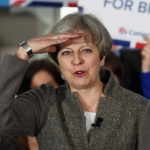
During the election campaign — or what passed for it — Theresa May would sometimes declare that Britain was facing its most important choice for a generation. If she lost just six seats, she said at one point, then Jeremy Corbyn would be heading to Brussels to negotiate Brexit. But if the risk was so great, why call an election in the first place? She was closer to the mark outside No.10 early this afternoon, when she declared this was a ‘critical time for our country’. All the more critical as a result of her calamitous handling of the election.   This was a needless election, intended to tighten Theresa May’s grip over her own government.