2723: Not like us – solution
Unclued lights are pairs of words as referred to in the UK and US: 1A/28, 10/26D, 14/40, 24/41 and 36/7.
Unclued lights are pairs of words as referred to in the UK and US: 1A/28, 10/26D, 14/40, 24/41 and 36/7.
Louvre incursion Jewellery once belonging to Napoleon’s family was sprung from the Louvre. In 1911 the ‘Mona Lisa’ was stolen by an Italian glazier, Vincenzo Peruggia, who worked there and who managed to slip the painting under his smock. Two years later he was caught when trying to sell it to an antiques dealer in Florence for half a million lire (€2.4 million in today’s money). He spent seven months in jail. Rough sleepers Which council areas had the largest number of rough sleepers in 2024?
In Silicon Valley there is a simple mantra that drives innovation: You Can Just Do Things. Wait for permission from the system, the bureaucrats or, worst of all, your lawyers, and nothing ever happens. Incumbents want inertia not challenge. Progress depends on movement. Nowhere does the PM seem so adrift than in the area he claimed to have made his own: law and order It is a lesson that seems lost on this government and this Prime Minister. They are a model of inactivity, none of it masterly. They proclaimed they would be a ‘mission-led’ government. In December last year, Keir Starmer promised that these missions ‘must be felt tangibly in the health, wealth and security of working people and our country’. His ‘missions’ have been all but abandoned.
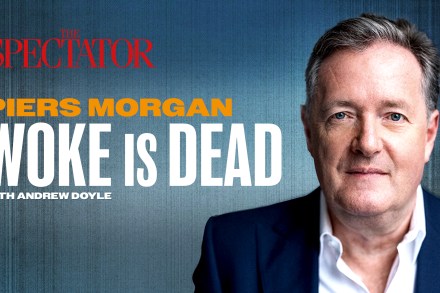
Watch the live recording of Piers Morgan in conversation with Andrew Doyle. They discuss Piers’s provocative book, Woke Is Dead, and share their unfiltered views on the state of the world today. Rather than celebrating the death of woke, Piers’s book advocates for the return of common sense and a less divided, more sensible society. Piers Morgan: Woke Is Dead with Andrew Doyle will explore why Piers believes woke culture is on its way out, what a return to common sense might look like, and how the cultural tide is shifting across politics, the media and everyday life.
Rough justice Sir: The Church Commissioners’ plan to establish a £100 million (rising to £1 billion) fund for ‘reparative justice’ is indeed ‘the most egregious example of lanyard Anglicanism’ as your leading article says (‘Laud’s prayer’, 11 October). It is deeply flawed in conception, substance and process – and is especially ill-judged when parish clergy are atrociously paid and many parishes face an existential crisis. The critique made by the Policy Exchange paper ‘The Case Against Reparations’, written by Professor Lord Biggar, Dr Alka Sehgal Cuthbert and me, is reasonably well known.
King’s speechless There will be no state opening of parliament this year and consequently no King’s speech. This is only the seventh year since 1900 in which this has happened: the others were 1915, 1925, 1949, 2011, 2018 and 2020, though 2019 saw two state openings in just over two months, on 14 October and 19 December. The controversial proroguing of parliament in September 2019 – later ruled unlawful by the Supreme Court – came at the end of what was the longest session of parliament since 1900: it lasted 352 sitting days against an average of 143. Nobel calling What are the nationalities of all Nobel Peace Prize winners since 1901 (individuals only, excluding organisations)?

‘SWEAR’ ( 31D) is uttered thrice by the ghost of King HAMLET (3D) who was the victim of ‘MURDER MOST FOUL’ (37A/34D/9D) where his FRUIT (14A) grew (his orchard). His son, whose tragic friend was OPHELIA (36A), addresses the ghost as ‘OLD MOLE’ (18D). See Hamlet I.v.145-162.
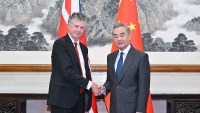
Exactly a year ago, this magazine warned that ministers were showing a dangerous naivety towards China. We revealed that the Chancellor, the Foreign Secretary and the Prime Minister were all intent on cosying up to Beijing. They were scornful of the wariness Conservative ministers had shown towards the Chinese Communist party. The Labour leadership believed that their pursuit of growth could be supercharged by Chinese investment. They hoped one of their missions – the drive to decarbonise the grid – could be facilitated by Chinese tech. They thought Tory attitudes to China were warped by ideology and a more pragmatic line towards Beijing would be economically rewarding.

Home Sir Keir Starmer, the Prime Minister, praised President Donald Trump for the Gaza ceasefire agreement while in India accompanied by a trade delegation of 126. He then flew off to Egypt for the summit at which the peace declaration was signed. Sir Keir asserted that the dropping of a prosecution against two men for spying for Beijing (which they deny) was because China had not been a ‘threat to national security’ when they were accused of espionage between December 2021 and February 2023; Lord Case, the former cabinet secretary, said it definitely had been, and two former heads of MI6 agreed. Kemi Badenoch, the Conservative leader, was seen to be more cheerful since her well-received speech at the party conference proposing the abolition of stamp duty.
I am floating on heather again. A fleece unshorn for fifty years slips off me, rolls down the hill. Its tumbleweed won’t stop till the village where Gary and Bill wait for me and Emmy unlocks the corrugated hall and Stahl repairs his Morris outside Nancy’s shop. It’s early May. The bleating fields and the drone of Glyn’s tractor rise. The sunlight brims with larks. I am not the man I became but inside a song, a dazzling stream, the laughter of friends on the breeze.
Watch Spectator chairman Charles Moore and assistant editor Isabel Hardman discuss Charles’s new Centenary Edition of Margaret Thatcher’s biography. Charles reflected on Thatcher’s legacy, drew sharp parallels with today’s political landscape and asked where conservatism – with its split between the Conservatives and Reform – goes from here. Beforehand, Charles, along with Kate Ehrman, presented their short semi-dramatisation The Fall of Margaret Thatcher: A Whodunnit, a retelling of Thatcher’s last three days in office.
Zero chance Sir: In Tim Shipman’s wide-ranging article on Kemi Badenoch (‘I have a lot of self-belief’, 4 October), she claims that net zero has become just a slogan and that we can’t tackle climate change alone. In that she is right, but she fails to recognise that unless we can be seen to be world leaders in reducing emissions, then we will never be in a place to lecture other countries – many of whom just want what we have already had. By being the ‘goody-two-shoes’ in the fight against climate change, we will have the very best chance of bringing the rest of the world with us, without exposing ourselves to neo-colonialist aspersions.
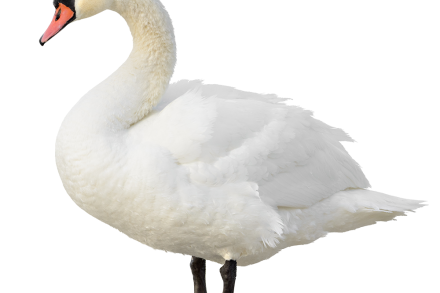
Out of office French prime minister Sébastien Lecornu resigned after just 27 days – making his time in office 22 days shorter than that of Liz Truss. But even Lecornu doesn’t hold the record for Europe’s shortest-lived PM. – That honour belongs to Magdalena Andersson, elected Swedish PM on 24 November 2021. She lasted just 7 hours before resigning – although a few days later she did come back as PM leading a minority administration which lasted nine months. – Pedro Lascurain’s presidency of Mexico lasted 45 minutes on 19 February 1913. He was appointed only to give an appearance of legitimacy to leaders of a coup.


The list of 21 letters comprises abbreviations, listed in Chambers.

There have been 106 Archbishops of Canterbury since Gregory the Great declared Augustine his ‘Apostle to the English’ in 597. Their number has included Catholics and Protestants, progressives and traditionalists, academics, politicians, even a tank commander. But none had ever been a woman. Sarah Mullally’s appointment is a historic moment for the Church but it comes at a moment of peril for Anglicanism. The Church of England seems to be in a state of perpetual crisis. Few would argue that it serves the world’s more than 100 million Anglicans well or that it sits at the heart of public life.

Home Two men at a synagogue at Heaton Park in Manchester were killed on Yom Kippur when Jihad al-Shamie, 35, drove a car at bystanders and went on the attack with a knife. He was a British citizen of Syrian descent, on bail after being arrested on suspicion of rape. He was bravely prevented by those present from breaking into the main building. Police shot him dead; they also accidentally shot a worshipper who died, and wounded another. Six people were arrested on suspicion of terrorist offences. Shabana Mahmood, the Home Secretary, appealed for a pause in pro-Palestinian protests but police arrested 488 people around Trafalgar Square demonstrating on Saturday in favour of Palestine Action – proscribed as a terrorist organisation.
Moscow mule Sir: While visiting Russia, James Delingpole learned from the patriarchate’s press officer that under communism the Russian Church wasn’t allowed to exist (‘Letter from Moscow’, 27 September). However, that doesn’t accord with my own experience of being in the USSR during the Brezhnev era. As a student, I visited the 14th-century Zagorsk monastery complex just outside Moscow one Sunday and was spellbound by the heavenly chant of the Orthodox liturgy which lifted my soul. The church was full of babushkas as well as younger believers crossing themselves and kissing the icons. For all his faults and human-rights violations, Brezhnev, unlike Vladimir Putin, had not been indicted by the International Criminal Court for war crimes.
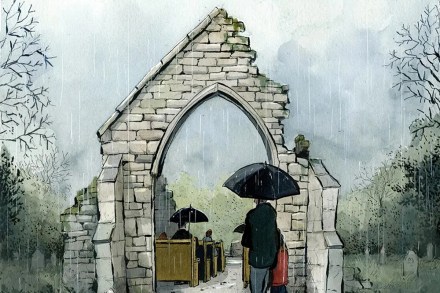
Park life Locals were angered by the closing off of 1,500 acres of Windsor Great Park to create a secure area around Forest Lodge, the new home of the Prince and Princess of Wales. Medieval residents of Berkshire would have been in sympathy, as William I had the entire park closed off to the public under his Forest Laws. Large parts of the park were eventually opened to the public by William IV in the 1830s, though it wasn’t good enough for some. In 1972 anti-monarchists set up what they called the People’s Free Festival trying to reclaim the park for the public, claiming it had been illegally enclosed by George III. The festival was repeated for the following two years before being broken up by the police.
Home Sir Keir Starmer, the Prime Minister, addressed delegates at the Labour party conference in Liverpool who had been issued with little flags of the home nations to wave. He said Nigel Farage, the leader of Reform UK, ‘doesn’t like Britain, doesn’t believe in Britain’. He had earlier put forward the difficult argument that Farage’s party was ‘racist’ in its migrant policy while Reform supporters were not racist but ‘frustrated’. Asked seven times whether there would be VAT rises, he repeated that ‘the manifesto stands’. Rachel Reeves, the Chancellor of the Exchequer, promised to keep ‘taxes, inflation and interest rates as low as possible’. Ofgem raised the energy price cap by 2 per cent.
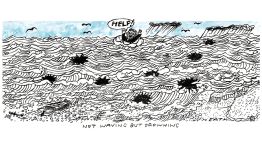
Unclued lights all follow MAGIC. (41A MOUNTAIN and 42A FLUTE should be preceded by ‘The’).
