The Spectator

The rise of Sajid Javid

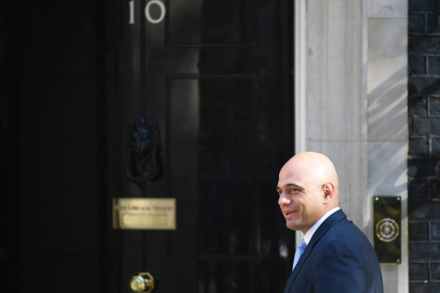
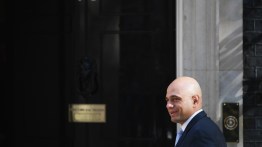
Since being appointed Home Secretary, Sajid Javid has taken a series of bold and overdue decisions. On immigration, he understood that most people would like skilled doctors and nurses to come and work for the National Health Service, so he removed them from the cap that Theresa May had imposed on skilled workers coming to this country. In his response to the case of Billy Caldwell, the severely epileptic boy whose fits were eased by cannabis oil, Javid brought political nous to a department that all too often lacks it. He recognised that if heroin could be prescribed for medical purposes without further undermining prohibition, the same could be true for cannabis.
Letters | 6 September 2018

Chinese burn Sir: Your leading article last week ended up saying ‘It is unrealistic to expect that we can achieve what China has in Africa over the past decade.’ If we were to have done that, I for one would wish to resign my British nationality. What they have done there for the past 30 years is to systematically rape and pillage the continent. China has insidiously worked its way into Africa by establishing ‘private’ contractors who then bid for building work and underbid all local opposition by being state-funded. Many local firms were thus put out of business. Their ‘aid’ projects — starting with the ill-fated TanZam railway — were funded not by grants but by loans accepted by weak and venal governments.

Barometer | 6 September 2018

Origins of Wonga The payday lender Wonga has gone into administration. How did ‘wonga’ come to be used as slang for money? — The term is believed to have derived from the Romany word ‘wangar’ which, although used as a term for money, in fact means ‘coal’. This in turn has Indo-Iranian origins. — In English, too, ‘coal’ or ‘cole’ were used as slang for ‘money’ in the 17th and 18th centuries, when the possession of coal really did equate to wealth. Shrinking economies The Venezuelan economy is estimated to have shrunk by half over the past five years. How does that compare with the most severe economic crises of the past 150 years? Chile, 1920s -46.6% Uruguay, early 1930s -36.

Portrait of the Week – 6 September 2018

Home Mark Carney kindly said he would stay on as governor of the Bank of England if it helped the government ‘smooth’ the Brexit transition. Lord King of Lothbury, Mervyn King, a former governor of the Bank of England, said that ‘incompetent’ preparation for Brexit had left Britain without a credible bargaining position. Paul Pester announced his resignation as chief executive of TSB after seven years, following the computing failure at the bank. Chris Evans announced on air that he would be leaving the Radio 2 breakfast show at the end of the year; he is to host Virgin Radio’s equivalent. David Watkin, the architectural historian, died aged 77. Lord Melchett , the former chairman of Greenpeace, died aged 70.

The case for Sajid Javid

Since being appointed Home Secretary, Sajid Javid has taken a series of bold and overdue decisions. On immigration, he understood that most people would like skilled doctors and nurses to come and work for the National Health Service, so he removed them from the cap that Theresa May had imposed on skilled workers coming to this country. In his response to the case of Billy Caldwell, the severely epileptic boy whose fits were eased by cannabis oil, Javid brought political nous to a department that all too often lacks it. He recognised that if heroin could be prescribed for medical purposes without further undermining prohibition, the same could be true for cannabis.
2372: Spot-on | 6 September 2018

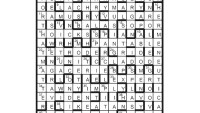
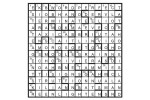
The key phrase is LIKE A TANSY (39). The scientific name of the tansy is TANACETUM VULGARE (4A 12); remaining unclued lights are synonyms of tan (4D, 34), ace (25, 33) and tum (3, 19).   First prize Eileen Robinson, Sheffield Runners-up Peter Moody, Fareham, Hants; Mrs L.

School portraits | 6 September 2018

    Bath Academy  Based in the beautiful city of Bath, this tutorial college is one of very few in the south-west to offer flexible academic programmes for a wide range of students. As well as being a sixth-form college, Bath Academy also offers GCSE courses, revision courses and resits in a wide range of subjects. The Academy’s University Foundation Programme was the UK’s first independent foundation programme. Equivalent to A-levels or the International Baccalaureate, it is designed primarily for international students who want to study at a British university. The focus is on a personalised approach to learning, with small class sizes and regular meetings between students and their personal tutors.

School report | 6 September 2018

    MAKING THE GRADES  When he was education secretary, Michael Gove took it upon himself to reform the GCSE exam system. The A* to G grading system was replaced by a numerical one, with the aim of making it easier to differentiate between the top candidates — A* and A grades were, for example, replaced with three grades: 7, 8 and 9. These new exams were supposed to be harder than the previous ones, with former Harrow headmaster Barnaby Lenon commenting that they ‘contain questions of a level of difficulty that we have not seen since the abolition of O-levels in 1987.’ Despite all of this, GCSE results improved this year. The proportion  of students achieving the pass mark (previously a C, but now a 4) increased by 0.

Letters | 30 August 2018

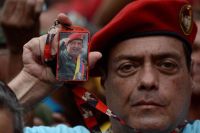
Venezuelan sanctions Sir: Contrary to the impression given by Jason Mitchell, Venezuela does not have a socialist economy (‘Maduro’s madness’, 25 August). It has a ‘mixed’ economy (and therein lies some of its problems; such as food hoarding by private companies hostile to the regime). The private sector is large, and involved in numerous sectors within the economy; food distribution, pharmaceuticals and so on. The US sanctions against Venezuela have always been about regime change, and these sanctions amount to a blockade of the country.

Into Africa

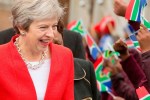
On her tour of South Africa, Nigeria and Kenya, Theresa May finally made a positive case for Brexit. For too long her government has tried simply to salvage what they can of Britain’s trading relationship with the EU, overlooking the possibilities that Brexit offers to build trading relations with the wider world.  The tone of this week’s tour, however, was different: a pitch for how Britain can make new alliances. This country will soon have the freedom to do so — no longer bound by its role as the most reluctant member of a 28-nation bloc. The opportunity is to treat African nations as partners and equals, not as risks or charity cases.

to 2371: In a paddy

The unclued lights and those clued without thematic definition (2, 11, 26, 33 and 42) are Irish forenames. Nuala Considine’s crossword compiling career spanned over 70 years. Doc was privileged to meet her five years ago when Saga magazine invited five British compilers to a photoshoot to accompany an article about the hundredth anniversary of the British crossword.

The facts about the Venezuelan economy

Contrary to the impression given by Jason Mitchell, Venezuela does not have a socialist economy (‘Maduro’s madness’, 25 August). It has a ‘mixed’ economy (and therein lies some of its problems; such as food hoarding by private companies hostile to the regime). The private sector is large, and involved in numerous sectors within the economy; food distribution, pharmaceuticals and so on. The US sanctions against Venezuela have always been about regime change, and these sanctions amount to a blockade of the country. US and European banks have refused to handle Venezuelan payments for medical supplies, and pharmaceutical companies have refused to issue export certificates for cancer drugs — therefore stopping them being imported into Venezuela.

Britain’s economy is not suffering as much as the doom-mongers insist

This piece first appeared as the leading article in The Spectator.  Economies run on confidence — as Franklin D. Roosevelt observed when he told Americans, in his first inaugural address during the depths of the Great Depression in 1933, that they had ‘nothing to fear except fear itself’. If that confidence is lost, if people collectively start drawing in their horns, squirrelling money away because they fear turbulent economic times ahead, then recession can all too easily become a self-fulfilling prophecy. No serious economist would dispute this theory. The puzzle is why the UK economy, riddled with Brexit anxieties, is in such good health. The Dutch prime minister said we were ‘collapsed’.

Letters | 23 August 2018

Not up to snuff Sir: The country is indeed crying out for expertise, as James Ball and Andrew Greenway wrote last week (‘The rise of the bluffocracy’, 18 August). But the main problem is with the civil service, not politicians. The civil service has traditionally wanted experts to be ‘on tap, not on top’. This attitude has done immense damage to Britain. Since 1970 the scientific civil service has been abolished in a series of reductions and privatisations. The result in 2001 was that there was nobody in government who had any clue about the epidemic of foot and mouth disease. In the education department there seems to be nobody who understands what a standard deviation is; nobody who appreciates the bottom one-sixth of the ‘Bell Curve’.

Barometer | 23 August 2018

Cultured tastes Dawn Butler accused Jamie Oliver of ‘cultural appropriation’ for coming up with his own recipe for jerk rice. Some other culturally appropriated dishes she might find hard to swallow: Chop suey is said to have been invented in 1896 — during a visit to New York by China’s US ambassador Li Hung Chang — to appeal to American and Chinese tastes. Balti was invented in Birmingham in the 1970s by restaurants to appeal to a clientele beyond the local Pakistani population. Fish and chips were first recorded in the East End in the 1860s, derived from the Jewish method of frying fish.

When fear fails

Economies run on confidence — as Franklin D. Roosevelt observed when he told Americans, in his first inaugural address during the depths of the Great Depression in 1933, that they had ‘nothing to fear except fear itself’. If that confidence is lost, if people collectively start drawing in their horns, squirrelling money away because they fear turbulent economic times ahead, then recession can all too easily become a self-fulfilling prophecy. No serious economist would dispute this theory. The puzzle is why the UK economy, riddled with Brexit anxieties, is in such good health. The Dutch prime minister said we were ‘collapsed’. The New York Times publishes frequent reports saying that Britain is falling apart, even that our country has ‘vanished’.

Portrait of the week | 23 August 2018

Home Government finances were in surplus by £2 billion in July. Public sector net debt rose to £1,777.5 billion, equal to 84.3 per cent of GDP, £17.5 billion more than a year before, but less as a proportion of GDP than last year’s 86 per cent. Jeremy Hunt, the Foreign Secretary, flew to Washington and made a speech urging the European Union to take stronger sanctions against Russia. President Vladimir Putin of Russia danced with Karin Kneissl, the new foreign minister of Austria, at her wedding, and then met Chancellor Angela Merkel of Germany at the Meseberg Palace near Berlin.