The Spectator
Thursday
Thursday
Where’s Boris?
Before Boris Johnson became Prime Minister there was widespread expectation that his government would be chaotic. It was thought that he would be good at articulating the broad sweep of government policy, but that his administration would quickly sink into turmoil. In the event, the opposite has happened. Three weeks on, the government appears to be running with almost military precision. Preparations for no-deal Brexit seem to be well under control, to the alarm of Philip Hammond, who had thought the task impossible. Yet the Prime Minister himself seems to have gone underground. He is not on holiday — his government is working all hours. But he has not been as big a feature of it as many expected.
Barometer | 15 August 2019
Girls only Polish village Miejsce Odrzanskie was reported not to have had a single boy born in the past decade, though 12 girls have been born in the same period. However, such an imbalance is far from a freak occurrence: — Assuming a 50-50 chance of a baby being male or female, the probability of 12 girls born in succession is one in 4,096. Given that there are 10,000 parishes in Poland, you would expect at any one time for there to be two to three whose last dozen births were all female. — There is an equal chance that 12 boys will be born in succession. Powerless A million British people were reported to have been left without electricity when a gas power station and wind farm both failed.

Letters | 15 August 2019
God Sir: In his defence of Christianity (‘Losing our religion’, 10 August), Greg Sheridan writes as if Christianity and religion are interchangeable terms. His claim that the vast majority of people who have ever lived have believed in God may be true, but most of them were or are not Christians. And when he mentions that Christianity is the most persecuted religion, he fails to observe that much of this persecution is from adherents of other religions. As a non-believer, I look at the harm done by followers of different religions fighting each other — and at the years of sexual and emotional abuse of children by religious orders. I cannot feel that all this is outweighed by the few virtues claimed by Mr Sheridan.

Portrait of the Week – 15 August 2019
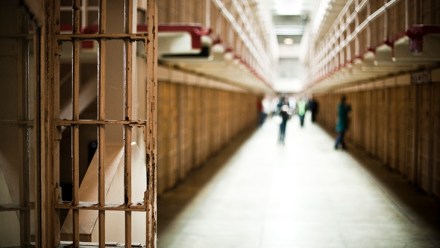
Home Boris Johnson, the Prime Minister, proposed an extra 10,000 prison places and the expansion of stop-and-search powers. PC Stuart Outten, 28, was cut in the head with a machete after he stopped a van in Leyton, east London, in the early hours; Muhammed Rodwan, 56, of Luton, was charged with attempted murder. While trying to make an arrest, PC Gareth Phillips, 42, was run over in Moseley, Birmingham, by someone driving his own car; Mubashar Hussain, 29, was charged with attempted murder. The RAF is to allow recruits to wear beards. John Bercow, the Speaker, said that he thought parliament could stop Britain leaving the EU without an agreement.

Books and Arts – 15 August 2019
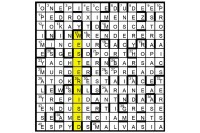
to 2418: Sweet
Unclued lights are all sweet wines. WESTERNISED, an anagram of DESSERT WINE, was to be highlighted.   First prize Erin Barrack, Beeston, Nottinghamshire Runners-up Jane F.
Wednesday
The Spectator, the oldest magazine in the world, to launch US edition
The Spectator, which has published weekly out of London since 1828, will launch a US edition this fall. Spectator USA has had a successful digital-only presence in America since the spring of 2018. It will publish its first monthly US print edition on October 1, only 191 years after the launch of the London edition. ‘Better late than never,’ says Andrew Neil, Chairman of The Spectator worldwide. ‘With our unparalleled success in the UK and our happy experience in Australia, we’ve decided it’s time to bring our unique brand of magazine journalism to the US. Like its mothership back in London, The Spectator’s US edition will be no dour, dull, run-of-the-mill political magazine.


Full text: Boris Johnson’s ‘People’s PMQs’ debut
Good afternoon. I'm speaking to you live from my desk in Downing Street for the first-ever People's Question Time, People's PMQs, and at the moment I'm afraid MPs are all still off on holiday. But I can take questions unpasteurised, unmediated from you via this machine. So I'm going to go straight away to Luther in Cheshire. And Luther says, 'I'd like to know how you intend to leave the EU on the 31st of October with no movement from the EU on their terms and still so much opposition in Parliament.' Luther, you've asked the crucial question and there's a terrible kind of collaboration, as it were, going on between people who think they can block Brexit in parliament and our European friends.
Tuesday
A US trade deal is good news for Britain
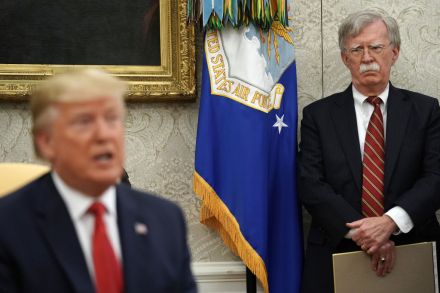
Now that America is offering a trade deal – or as John Bolton says, a series of mini deals – can the Brexiteers handle it? And ought the internationalist Remainers to welcome it? The topic tends to send leading figures from both sides into a spin, raising questions as to how prepared they are for what might follow. Many of those who are keenest to assert the importance of free trade with the EU tend to retreat in fright whenever the prospect of a trade deal with the US is raised. Exit the single market, they tell us, and Britain will face a shrinking economy, along with shortages of food and medicine.
Thursday
Letters | 8 August 2019
We don’t cut God Sir: The Revd Dr Peter Mullen suggests (Letters, 3 August) that Boris Johnson told him my BBC Great Lives programme had cut from our broadcast treatment of Samuel Johnson an extended discussion of Christianity’s role in Dr Johnson’s life. Boris J championed Samuel J for our programme, and your correspondent has been persuaded that Mr J argued at length the centrality of religion to the great lexicographer. I am fascinated by religion. My producers would not relegate a person’s faith where it was claimed as central to their greatness.

Trading places | 8 August 2019
Comments by the former US Treasury Secretary Larry Summers this week, claiming that Britain will come off poorly in negotiations for a trade deal with the US, should not be surprising. He has previously declared that Britain’s vote for Brexit was ‘the worst self-inflicted policy wound that a country has done since the second world war’ so he would not want to be proved wrong by Britain doing well out of leaving the EU. But the reaction to his intervention has emphasised a peculiarity in attitudes towards free trade, from both Brexiteers and Remainers. Many of those who are keenest to assert the importance of free trade with the EU tend to retreat in fright whenever the prospect of a trade deal with the US is raised.

Portrait of the Week – 8 August 2019
Home If the government lost a confidence motion when parliament sits again in September, it could call an election for after 31 October, by which time Britain would have left the European Union, according to a briefing attributed to Dominic Cummings, the special adviser to Boris Johnson, the Prime Minister. Opposition MPs plotted to prevent this. Diplomats from the other 27 EU member states were told by EU officials that the United Kingdom wanted to avoid a no-deal Brexit by their agreeing to substantial changes to the draft withdrawal agreement; the officials told them that there was no basis for ‘meaningful discussions’ with Britain. Michael Gove said he was ‘deeply saddened’ by the EU stance.
Barometer | 8 August 2019
Dams, lives and statistics The town of Whaley Bridge, Derbyshire, was evacuated after heavy rainfall caused the partial collapse of a reservoir slipway. No one has been killed in a dam collapse in Britain since 1925, but the worst incidents up to that date were: — Dale Dyke, Sheffield, 1864. Puddle clay core of dam fractured while the reservoir behind it was being filled for the first time. 244 were killed. —Biberry Dam, Holmfirth, W. Yorkshire, 1852. Dam had settled since construction 17 years earlier. Water overtopped the dam during a storm, causing collapse. 81 died. — Whinhill Dam, Greenock, 1835. Embankment had been undermined by burrowing rats and moles. 31 died. — Dolgarrog, N. Wales, 1925. Leak in upper dam caused its failure.

Books and Arts – 8 August 2019
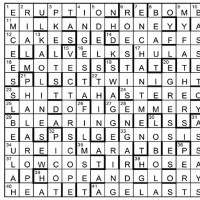
to 2417: Six nations
The unclued lights are LAND OF (25A): MILK AND HONEY (11A), CAKES (12A), HOPE AND GLORY (39A), ENCHANTMENT (7D), MY FATHERS (9D) and BEULAH (29D). First prize Adam Hughes, Liverpool Runners-up Richard Stone, Barton under Needwood, Staffordshire; J.P.
Spectator writers on the UK’s best beaches
Tom Holland Trevone, Cornwall Pretty much every summer, my family and my cousins head for a farm in north Cornwall, strategically situated for visits to our favourite beach: Trevone. A beautiful cove with breakers, cliffs and an unobtrusive shop, its chief appeal is the opportunity it provides for building colossal sandcastles. Each year, our ambitions grow ever more Babylonian. This summer we excelled ourselves. It was my nephew’s 21st birthday, and to mark his coming of age he wanted to build a sandcastle on a truly lunatic scale. His dream was fulfilled.
Thursday
Barometer | 1 August 2019
Growing fanbase A photograph of the Queen meeting Boris Johnson revealed that she uses a Dyson electric fan. How many of us own fans? — Sales of electric fans rose from 471,403 in 2008 to 648,829 in 2017, according to Prodcom figures collected by the Office for National Statistics. — The retailer AO.com reported that sales rose six-fold during last week’s heatwave compared with a week earlier. — Fans are popular in Britain because so few homes have air conditioning. A Mintel survey from 2009 revealed that only 0.5% of homes have air conditioning. In the US the figure is 87%. — The use of air conditioners and electric fans currently accounts for 10% of all global electricity consumption, according to the International Energy Agency.


Letters | 1 August 2019
Poppycock Sir: Last week’s lead article (‘Boris begins’, 27 July) suggested that if we leave without a deal, ‘the Johnson government will have another huge challenge on its hands — how to avert large-scale economic damage’. I have some experience of the conduct of economic policy, and I hope you will forgive me for saying that this is poppycock. Leaving the EU without a trade deal will cause some short-term disruption, but the essence of good government is to do what is best for the medium and long term, whatever the short-term difficulties. And although the main purpose of Brexit is political — i.e. self-government — the economic consequences will be hugely positive, not least through regaining our regulatory autonomy.

Sterling effort
In his first week as Prime Minister, Boris Johnson has shocked those who had assumed that he is a joker incapable of making any more progress than his predecessor. During his leadership campaign, he said that he would not settle for a modified version of the Brexit deal that Theresa May agreed and Parliament rejected three times. In office, he has been as good as his word and is refusing to start negotiations until the EU says it is willing to compromise. If it doesn’t, then we leave without a deal on 31 October. If many politicians are still in denial about this, the currency markets are not. A no-deal Brexit would put the UK economy in transition from being part of a European bloc into one governed by yet-to-be-signed free trade agreements, under World Trade Organisation rules.