The Spectator

Spectator writers on the UK’s best beaches

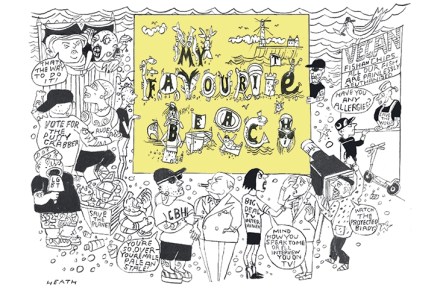
Tom Holland Trevone, Cornwall  Pretty much every summer, my family and my cousins head for a farm in north Cornwall, strategically situated for visits to our favourite beach: Trevone. A beautiful cove with breakers, cliffs and an unobtrusive shop, its chief appeal is the opportunity it provides for building colossal sandcastles. Each year, our ambitions grow ever more Babylonian. This summer we excelled ourselves. It was my nephew’s 21st birthday, and to mark his coming of age he wanted to build a sandcastle on a truly lunatic scale. His dream was fulfilled.

Barometer | 1 August 2019

Growing fanbase A photograph of the Queen meeting Boris Johnson revealed that she uses a Dyson electric fan. How many of us own fans? — Sales of electric fans rose from 471,403 in 2008 to 648,829 in 2017, according to Prodcom figures collected by the Office for National Statistics. — The retailer AO.com reported that sales rose six-fold during last week’s heatwave compared with a week earlier. — Fans are popular in Britain because so few homes have air conditioning. A Mintel survey from 2009 revealed that only 0.5% of homes have air conditioning. In the US the figure is 87%. — The use of air conditioners and electric fans currently accounts for 10% of all global electricity consumption, according to the International Energy Agency.

Sterling effort

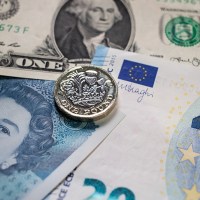
In his first week as Prime Minister, Boris Johnson has shocked those who had assumed that he is a joker incapable of making any more progress than his predecessor. During his leadership campaign, he said that he would not settle for a modified version of the Brexit deal that Theresa May agreed and Parliament rejected three times. In office, he has been as good as his word and is refusing to start negotiations until the EU says it is willing to compromise. If it doesn’t, then we leave without a deal on 31 October. If many politicians are still in denial about this, the currency markets are not. A no-deal Brexit would put the UK economy in transition from being part of a European bloc into one governed by yet-to-be-signed free trade agreements, under World Trade Organisation rules.

Portrait of the week | 1 August 2019

Home  The Conservatives’ poll ratings went up and the pound went down after a week of the prime ministership of Boris Johnson, as the government reiterated its commitment to leaving the European Union by 31 October. David Frost, the Prime Minister’s chief Brexit negotiator, told his EU counterparts of the commitment and Rishi Sunak, the Chief Secretary to the Treasury, said: ‘We are turbo charging preparations for no deal.’ When Mr Johnson visited Scotland, Nicola Sturgeon, the First Minister of Scotland, said he was ‘really pursuing a no-deal Brexit’. Ruth Davidson, the leader of the Scottish Conservatives, said: ‘I don’t think the government should pursue a no-deal Brexit.

A poll of the people

The Need For A Poll Of The People, 2 August 1919: ‘It is not to be wondered at that during the anxious public discussions about nationalisation, proposals should have been made that the great issue should be decided by means of a Referendum or, as we prefer to call it, a Poll of the People. It is noticeable that this suggestion has received support in quarters where the Poll of the People has not hitherto been favourably considered. The idea seems to be that an exceptional and very grave problem might be solved by exceptional means.

How Boris can silence his critics again

It’s hard to think of a prime minister who has reached No. 10 with lower expectations. Boris Johnson has been dismissed as a philandering clown, a joker calamitously miscast as prime minister in a moment of national crisis. Obloquy has been hurled at him every time he has taken a new job — from mayor of London to foreign secretary. When he became editor of this magazine, his critics said putting The Spectator into the hands of such an oaf was like asking an ape to look after a Ming vase. At every stage, however, Boris’s critics have been confounded. His jobs change, but his style remains. His belief is that achievements speak for themselves, and voters understand that. He has been happy to be judged on his time as London mayor and on the Vote Leave campaign.

Letters | 25 July 2019

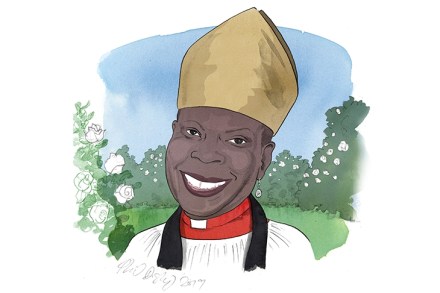
Rose is the right choice Sir: Every Wednesday for the past nine years, it has been my privilege to attend the lunchtime Eucharist services in the Parliamentary Chapel, conducted by the Speaker’s Chaplain Rose Hudson-Wilkin. These routine acts of worship are not public, but are attended by parliamentary staff, MPs and peers. Central to them are Rose’s homilies and prayers, which are spiritual life-support to those of us who serve and navigate our increasingly fraught politics.

Barometer | 25 July 2019

Losing confidence The government may soon face a vote of no confidence, the second this year. How often do these votes happen — and succeed? — Since 1945, UK governments have faced votes of no confidence on 23 occasions. Only one of these has been successful — when Jim Callaghan lost by a single vote on 28 March 1979, precipitating the election which brought Margaret Thatcher to power. — There have been 24 successful votes of no confidence in history, 13 of which were in the latter half of the 19th century. — Since 1900 there have been only three — that in 1979, and two in 1924 which brought down Stanley Baldwin and Ramsay MacDonald respectively.

Portrait of the week | 25 July 2019

Home Boris Johnson became Prime Minister after being elected the leader of the Conservative party by its members, with 92,153 votes to Jeremy Hunt’s 46,656 and a turnout of 87.4 per cent. Philip Hammond got his resignation as chancellor of the exchequer in before he could be sacked, as did David Gauke as justice secretary and Sir Alan Duncan as a Foreign Office minister. Plots were afoot to undermine Mr Johnson’s promise to leave the European Union by 31 October, with or without an agreement. David Frost, a former chief executive of the Scotch Whisky Association, was appointed to the job of liaising with the EU over Brexit, relinquished by the civil servant Oliver Robbins.

Boris begins

It’s hard to think of a prime minister who has reached No. 10 with lower expectations. Boris Johnson has been dismissed as a philandering clown, a joker calamitously miscast as prime minister in a moment of national crisis. Obloquy has been hurled at him every time he has taken a new job — from mayor of London to foreign secretary. When he became editor of this magazine, his critics said putting The Spectator into the hands of such an oaf was like asking an ape to look after a Ming vase. At every stage, however, Boris’s critics have been confounded. His jobs change, but his style remains. His belief is that achievements speak for themselves, and voters understand that. He has been happy to be judged on his time as London mayor and on the Vote Leave campaign.

Full text: PM Boris’s first speech in the Commons

Mr Speaker, I with permission, shall make a statement on the mission of this new Conservative Government. But before I begin, I am sure the whole House will join me in paying tribute to my Rt Hon Friend the Member for Maidenhead - for all that she has given in the service of our nation. From fighting modern slavery to tackling the problems of mental ill-health – she has a great legacy on which we shall all be proud to build. And our mission is to deliver Brexit on the 31st of October for the purpose of uniting and re-energising our great United Kingdom and making this country the greatest place on earth. And when I say the greatest place on earth, I’m conscious that some may accuse me of hyperbole.

Winemaker Lunches – 2019 dates

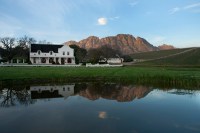
Join us in the boardroom at 22 Old Queen Street, London SW1H 9HP for the following Spectator Winemaker Lunches where a delicious, cold four-course lunch provided by Forman & Field will be served; arrive at 12.30pm for a 1pm start. To buy tickets, head to the Spectator Shop. Friday 6 September: Journey’s End  Since the Shropshire-based Gabb family took over Journey’s End in 1995, the estate has grown greatly in both size and reputation. The warm days/cool nights of the coastal Schapenberg Hills of Stellenbosch, the low yields and the sustainable approach to winemaking produce exquisite wines.

Winemaker’s Lunch with Château de Pommard – Friday 11 October

To buy tickets, head to the Spectator Shop. Join us in the Spectator boardroom on Friday 11 October for the next in our series of Spectator Winemaker Lunches with Château de Pommard. Château de Pommard – founded in 1726 in the heart of the Côte d’Or and now owned by the Carabello-Baum family – is the largest private Clos in Burgundy. Château de Pommard produces some truly incomparable red and white burgundies and, in the company of brand ambassador Olivier Bouchard, we will taste many examples which are likely to include the Meursault, Echezaux, Clos Marey Monge and the great Corton Charlemagne itself. This promises to be a wonderful occasion and we encourage you to book early to avoid disappointment.

Winemaker’s Lunch with Glenelly Estate – Friday 25 October

To buy tickets, head to the Spectator Shop. Join us in the Spectator boardroom on Friday 25 October for the next in our series of Spectator Winemaker Lunches with Glenelly Estate. Glenelly Estate in Stellenbosch is an outstanding winery, founded by May-Eliane de Lencquesaing (former owner of Château Pichon-Lalande) in 2003. Export director, Nicolas Bureau (Mme de Lencquesaing’s grandson) will take us through a mouth-watering selection of the estate’s wines, including the Glass Collection Chardonnay, the Glenelly Estate Reserve Chardonnay, the Glass Collection Shiraz and the stunning, flagship wine: Lady May. This promises to be a wonderful occasion and we encourage you to book early to avoid disappointment.

Winemaker Lunches with Joseph Phelps Vineyards – Friday 8 November

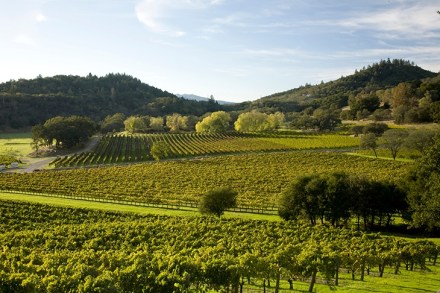
To buy tickets, head to the Spectator Shop. Join us in the Spectator boardroom on Friday 8 November for the next in our series of Spectator Winemaker Lunches with Joseph Phelps Vineyards. Joseph Phelps is a name to conjure with in California and under the expert tutelage of export director, Robert Baxter, we will enjoy the winery’s Freestone Chardonnay, Napa Valley Sauvignon Blanc, Freestone Pinot Noir, Napa Valley Cabernet Sauvignon and the remarkable, highly sought-after Bordeaux blend that is Joseph Phelps Insignia, the first ever so-called icon wine of California, whose first vintage was 1973. This promises to be a wonderful occasion and we encourage you to book early to avoid disappointment. For more on Joseph Phelps Vineyards visit www.