The Spectator

How many people have swum the Channel?

Journey’s end Holidaymakers are being flown home after travel company Thomas Cook failed. The idea might have horrified the company’s eponymous founder, whose first excursion was a temperance outing from Leicester to Loughborough on 5 July 1841, on a charter train from the Midland Railway Company. All 500 tickets were swiftly sold. A holiday from Leicester to Liverpool and North Wales followed in 1845, including several nights in temperance hotels and a night-time ascent of Snowdon. Thomas Cook went on to organise trips to the 1851 Great Exhibition for 150,000 from the Midlands. Financial health A Labour activist and parent of a patient accused the Prime Minister on a visit to a London hospital of ‘destroying’ the NHS.
The balance of power in our constitution has been lost

Until recently, we used to comfort ourselves with the thought that the United Kingdom’s uncodified constitution was a great national strength. We didn’t need guidance laid down in one document because precedence, compromise and common sense were enough to ensure the smooth operation of power. As soon as a document is written, power passes from democratic institutions to courts where activist judges can interpret these documents in a political way. In Britain, this is not meant to happen. Our legal system has been seen, world over, as politically neutral, one of the most trustworthy in the world. So what are we to make of a Supreme Court granting itself powers over the government? The courts used to refuse to adjudicate political squabbles, so why have they started now?

to 2424: Poem V

The poem is La Belle Dame sans Merci by John Keats. ATONY (2), CORYZA (3), LOCKJAW (6), ENTERITIS (8) and NEUROMA (13) are examples of WHAT CAN AIL THEE (1A), while AND NO BIRDS SING might be a comment on GOOSE (26), MARABOU (28), CRANE (38) and RAVEN (39). JK, upwards in the tenth column, was to be shaded.   First prize David Threasher, London W5 Runners-up Chris Edwards, Pudsey, Leeds; Mrs J.

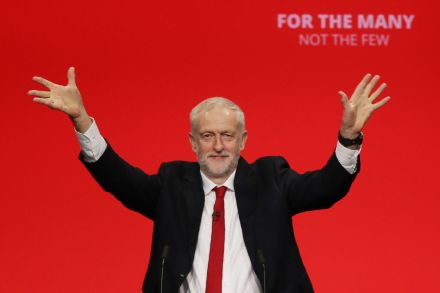
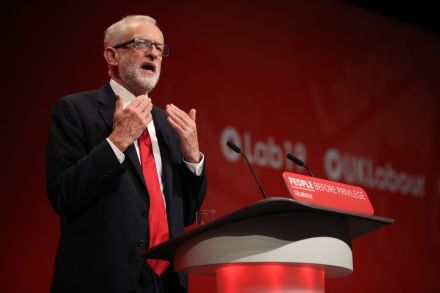
Full text: Jeremy Corbyn’s conference speech

This is an extraordinary and precarious moment in our country’s history. The Prime Minister has been found to have acted illegally when he tried to shut down parliament.The highest court in the land has found that Boris Johnson broke the law when he tried to shut down democratic accountability at a crucial moment for our public life. The Prime Minister acted illegally when he tried to shut down opposition to his reckless and disastrous plan to crash out of the European Union without a deal. But he has failed. He will never shut down our democracy or silence the voices of the people. The democracy that Boris Johnson describes as a “rigmarole” will not be stifled and the people will have their say. Tomorrow parliament will return.

What’s on today at Labour conference: The Spectator guide | 24 September 2019

There is no love lost between Jeremy Corbyn and Tom Watson, so the Labour leader will have to grin and bear it as his deputy takes to the stage this afternoon. Here is the pick of today's events in Brighton: Labour events:  8:30: Policy Seminar 9:45: Morning Plenary Session: Tackling The Climate Emergency 12:35: Votes 12:45: Break 14:00: Afternoon Plenary Session: Tackling The Climate Emergency Tom Watson MP Speech 16:45: Policy Seminars 17:20: Votes   Fringe events:  10:30: Students Against Climate Change: What Can We Do? Ambassador, Hilton Brighton Metropole 12:00: Diversity in the Law – Room for Improvement?

Letters: parliament has a responsibility to stop Brexit

Parliament’s responsibility Sir: I always enjoy reading the intelligent and outspoken Lionel Shriver. But her latest article (14 September) puts forward an invalid argument. As Ms Shriver points out, no one in the USA seriously argued that the disaster of Trump’s election, and the damage it could cause the country, meant the result should be contested. She compares this with the fact that many in the UK want to overturn the EU referendum result; and concludes from this that our political system is ‘broken’. But had an election been fought here, with one party promising Leave and the other Remain, few would be seriously arguing for the overturn of the outcome — whatever it was. Elections are, rightly I believe, taken more seriously than referendums.

Portrait of the week: EU negotiations, genderless babies and Brexit in court

Home ‘I will uphold the constitution, I will obey the law, but we will come out on 31 October,’ Boris Johnson told the BBC, adding that the EU ‘have had a bellyful of all this stuff’. After a lunch of chicken and pollock at the Bouquet Garni in Luxembourg with Jean-Claude Juncker, the President of the European Commission, he found noise from British protesters made it impossible for him to join Xavier Bettel, the Prime Minister of Luxembourg, in an open-air press conference, so Mr Bettel continued on his own, gesturing angrily to an empty podium and saying what a ‘nightmare’ of uncertainty Britain had left Europe in.

Why would Britain want to be a member of a club like the EU?

The past three years of agonising non-progress on Brexit have damaged Britain in many ways. Our political institutions have looked ridiculous and, through endless uncertainty, unnerved markets. But we have also learned much about the EU. Its behaviour, and that of its officials, has served to reassure those who were uncertain about their Brexit vote that the UK could never be happy as part of this club. Better to be the EU’s greatest ally than its most reluctant and disruptive member. But post-Brexit relations will be shaped, in no small part, by the process of leaving. The Prime Minister’s trip this week to Luxembourg was a good example of what can go wrong.

Does the outcome of the Ashes dictate who wins a general election?

Party speak Should the next Speaker of the House of Commons be a Labour MP on the basis that John Bercow was a Conservative before taking the chair? There has been a tradition in recent decades that the two main parties alternate in filling the role. But it doesn’t go back far — Michael Martin, Labour MP for Glasgow Springburn, succeeded Betty Boothroyd, also Labour, in 2000, not least because the Conservatives had only 165 MPs at the time and didn’t want to lose one. Between 1928 and 1965 a succession of four Speakers had been Conservative MPs. Between 1835 and 1905, by contrast, the Commons had two Whigs followed by four Liberals. Prior to that, four Conservatives were elevated to the Speaker’s chair between 1789 and 1835.

Britain’s jobs miracle proves there is no reason to fear technology

Another week, another set of economic figures that suggest the country is showing remarkable resilience while politics implodes. Rather than fall into recession, as so many predicted, the economy leapt forward in July. We now have the lowest unemployment for 45 years, an extraordinary figure. Income inequality is near a 30-year low. The confidence crisis that politicians are experiencing is not reflected outside of Westminster. There is little evidence to suggest that machines are taking people’s jobs. Instead, they are being used to do low-end tasks, freeing up humans to work in more complex, better-paid roles. We now have machines taking restaurant orders, checking people in at airports and fulfilling other functions inside various businesses.

Letters: There is more to village life than shutters, benches and paint

Shambles at sea Sir: On 19 July Iranian Republican Guard forces captured the UK flagged tanker Stena Impero, as described by former defence secretary Penny Mordaunt in her Spectator Diary (3 August). It was a national humiliation and it needn’t have happened. As was made clear at the House of Commons Defence Committee hearing on 9 September, warnings were being given about possible Iranian actions as early as mid-June. The UK naval presence in the area comprised only one frigate, HMS Montrose, and more ships were needed to protect UK shipping. The HCDC was surprised to discover from Mordaunt that she had been trying to stimulate a response, but had her requests for a Cobra meeting refused on at least five occasions.