The Spectator

Letters: Just how should you pronounce vermouth?

Down to zero Sir: Paul Collier’s siren call to take advantage of near-zero interest rates to go on a massive government infrastructure splurge is one Jeremy Corbyn might welcome but Conservatives should resist (‘Back to Plan A+’, 16 November). Japan tried what he is proposing when its bubble burst in 1990. The result: $6.3 trillion debt and two wasted decades. As Harvard’s Edward Glaeser has noted: ‘No one can look at the Japanese numbers and conclude that the money has ramped up the growth rate.’ Apart from anything else, politicians are poor allocators of capital.

Portrait of the week: Chief Rabbi speaks out, Uber loses its licence and police draw tasers at the cinema

Home The Chief Rabbi, Ephraim Mirvis, intervened in the election campaign by declaring that anti-Semitism was a ‘poison — sanctioned from the very top’ of the Labour party, whose claim to have dealt with cases was a ‘mendacious fiction’.The Archbishop of Canterbury, the Most Rev Justin Welby, said: ‘That the Chief Rabbi should be compelled to make such an unprecedented statement at this time ought to alert us to the deep sense of insecurity and fear felt by many British Jews.’ Jeremy Corbyn, the Labour leader, insisted that ‘rapid and effective’ action had been taken against offenders, and refused to apologise. Chris Moncrieff, a longtime lobby correspondent of the Press Association, died aged 88.

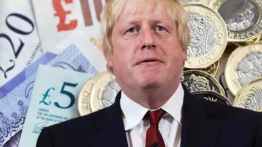
Does safety-first Boris Johnson have any ambitions on the world stage?

There is a large vacuum at the heart of this general election campaign. Aside from the topic of our relations with the EU, and Nicola Sturgeon’s statement that she would decline to press a nuclear button which is never going to be hers to press in any case, no leader has had anything of interest to say on foreign policy. This is not for want of matters to discuss. The elections in Hong Kong at the weekend presented an ideal opportunity to bring up foreign policy. A small political earthquake occurred in a former British colony, with reformers triumphing at the polls just as they had drawn huge support on the streets.

to 2433: House and garden

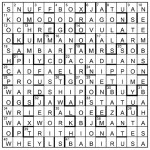
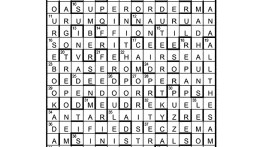
The painters were Millais (suggested by BOXING MATCH/SLOTHS: 1A/9D), Constable (GYP/FIRM: 7A/35), Gainsborough (EARNS/BROOKLYN: 29/24) and Landseer (NATION/SOOTHSAYER: 30/19).   The title suggested Hogarth.   First prize R.J.

Koo detat

From 16 October 1982: Prince Andrew’s Caribbean holiday with Miss Koo Stark (following, perhaps prompted by, months of all-male company in the Falklands) has reassured the nation that its royal family is ‘normal’.The Prince’s conduct is hallowed by tradition. Indeed, the difficulty is in finding a single heterosexual prince… who confined himself to the woman he married. Over the past centuries, only King George VI seems to qualify with anything approaching certainty. Like Andrew, King William IV was a sailor… he visited the West Indies, where he unluckily contracted venereal disease. Mrs Jordan, an actress, bore him ten children. Similar examples are too numerous, or too shameful, to mention. We have seen it all before.

Full transcript: Jeremy Corbyn grilled by Andrew Neil

Jeremy Corbyn took part in The Andrew Neil Interviews on BBC One this evening. Neil grilled the Labour leader on everything from anti-Semitism to Vladimir Putin. You can read the full transcript from the interview here: AN: Jeremy Corbyn, the Chief Rabbi says a new poison of anti-Semitism, anti-Jewism, has taken root in the Labour Party and it’s sanctioned by you, he says. He questions you’re fit for office. What’s your response? JC: I’m looking forward to having a discussion with him because I want to hear why he would say such a thing. So far as I’m concerned anti-Semitism is not acceptable in any form anywhere in our society and obviously certainly not in my party, the Labour Party.

Letters: The Politically Homeless Party are now a force to be reckoned with

Nowhere to turn Sir: Like Tanya Gold and Matthew Parris (9 November), I too am feeling politically homeless. Over the decades my vote has wandered along the mainstream party spectrum but today that seems wider than ever and its constituents increasingly unappealing. A vote for the Conservatives would be to endorse utter incompetence in government of several years, whereas Labour’s neo-Marxist tendencies are not to be countenanced in power. As a Remainer, in ordinary times I might, as previously, be attracted to the Liberal Democrats, but their policy on revocation makes them no longer democrats. It is disingenuous of Matthew Parris to not worry about this just because they will never be in a position to implement it.

The Tories must be careful not to pave the way for Corbynism

To say one thing for John McDonnell, he shows a refreshing preparedness to use a general election to lay out big ideas. While so many candidates for high office will retreat into platitudes rather than risk upsetting some target group of voters, the man who could be Chancellor of the Exchequer in three weeks’ time made a speech on Tuesday signalling what would amount to an even sharper change in Britain’s economic direction than that brought about by Mrs Thatcher’s first election victory in 1979. It is the most striking contribution to the election campaign — and one which the Conservatives need to challenge far better than they have done so far.

Portrait of the week: The leaders’ debate, the Duke’s interview and the gilet jaunes’ birthday

Home In a television debate Boris Johnson, the Prime Minister, was jeered by the studio audience when he was asked about the importance of truth and Jeremy Corbyn, the leader of the opposition, was jeered when he refused nine times to say whether he thought Britain should leave the EU. Neither dealt a knock-out blow and polls ranked them as neck and neck. The Liberal Democrats failed in an appeal to the High Court to include their leader Jo Swinson in the debate. But polls by YouGov indicated that the more voters saw of Miss Swinson, the less they liked her. Labour promised everyone free internet broadband, by nationalising Openreach and other parts of BT.

to 2432: Getting dry

The DODO (30) organised the CAUCUS RACE (12) to get dry. Participants included ALICE (2), EAGLET (7), DUCK (17), MOUSE (31) and LORY (42). EVERYBODY (33) won, and the prizes were COMFITS (10) and a THIMBLE (39).   First prize  John Fahy, Thaxted, Essex Runners-up  A.M.

Jeremy Corbyn’s manifesto launch speech: Full transcript

Thank you for coming to help launch our manifesto and a special thanks to Birmingham City University for hosting us in this wonderful building. Labour’s manifesto is a manifesto of hope. A manifesto that will bring real change. A manifesto full of popular policies that the political establishment has blocked for a generation. But you can’t have it. At least, that’s what the most powerful people in Britain and their supporters want you to believe. Over the next three weeks they are going to tell you that everything in this manifesto is impossible. That it’s too much for you. Because they don’t want real change. Why would they? The system is working just fine for them. It’s rigged in their favour. But it’s not working for you.

The winners of the Economic Disruptor of the Year Awards 2019

Who are the companies that are rewriting the rules, the game-changers that are redefining their own marketplace? The Spectator and Julius Baer have once again come together to present the Economic Disruptor of the Year Awards – a celebration of creative entrepreneurship throughout the UK. In front of more than 120 guests from across the business world, the awards were announced on Wednesday 13 November at a gala dinner at the Postal Museum in London, chaired by Spectator chairman Andrew Neil. The winners were drawn from nearly 150 nominations from across the UK. The entrants have all been innovators, driven by real passion for what they do, and represent each of the different regions of the UK.

How many countries have been ruled by a Boris?

Leaders called Boris How many countries have been ruled by a Boris? — Russia has had two Borises in charge. Boris Godunov was tsar between 1598 and 1605, during the Time of Troubles, and was credited with improving education in the country, importing foreign teachers and sending Russian children abroad for schooling. Boris Yeltsin was president of Russia from July 1991 to December 1999, becoming the first post-communist leader of the country. — Bulgaria had three King Borises. Boris I, ruler between 852 and 889, introduced the country to Christianity. Boris II (969-977) fought the Byzantine Wars and was accidentally shot by one of his own border guards. Boris III (1918-43) has been praised for resisting the rounding-up of Bulgarian Jews demanded by Hitler.

Letters: Why I’ll vote for Boris

A bad idea Sir: Your editorial in favour of an amnesty for illegal immigrants (‘The case for amnesty’, 9 November) flies in the face of extensive evidence. Italy, Spain and France have, between them, granted any number of amnesties; almost without exception, each one prompted further waves of illegal immigration. In 2005 the French Interior Minister said further amnesties were out of the question. His German counterpart in the same year said that ‘wide-ranging campaigns to legalise illegal immigrants such as in Spain mean more illegal immigrants are drawn to Europe’. Your editorial avoids any mention of the potential risks to life highlighted by the recent tragic events, and suggests that a ten-year rule would have little effect on inflows.

Our flood defences aren’t fit for the climate we have now

This week’s political fuss over whether the floods in Yorkshire constitute a ‘national emergency’ misses the point. It is too easy to declare an emergency for political purposes, to give the impression that the government is taking an issue seriously. It’s quite obvious that the scenes we have seen this week represent an emergency — the question is whether, once the helicopter visits and photo opportunities have ceased, all is forgotten and the political world moves on to the next emergency. What has happened in Yorkshire over the past week is a symptom of chronic failure to manage the threat of flooding. We keep suffering these events. In 2015, it was Cumbria; a year earlier it was Somerset.