Terry Barnes

Terry Barnes

Terry Barnes is a Melbourne-based contributor for The Spectator and The Spectator Australia.

Erin Patterson’s mushroom murder case is Australia’s Trial of the Century

Since its general election a month ago, Australia’s politics have endured their biggest upheaval in fifty years. Its Labor government was re-elected by a massive majority, when just months ago it was in danger of being tossed out, and the conservative opposition parties are in existential turmoil and even briefly severed their coalition. Erin Patterson is a a frumpy, middle-aged woman, with a mien unfortunately drawn by nature as a mask of permanent misery Yet Australia’s epicentre of interest this past month hasn’t been the nation’s capital, Canberra. Instead, it’s been Morwell, a dying industrial town in the Gippsland region of the state of Victoria. There, Australia’s Trial of the Century is playing out a sordid tale of love, hate, lust and intrigue. And mushrooms.

Australian election: Trump helps topple second conservative leader

Tonight, Australia voted decisively for continuity. The Labor government of prime minister Anthony Albanese has not merely been re-elected. It has absolutely thumped the conservative Liberal-National party coalition, headed by Liberal leader Peter Dutton. At the close of counting tonight, Labor achieved a majority in the 150-seat parliament, winning 77 seats and leading in another five. The coalition has been decimated, reduced from an already-low 55 seats to winning just 29 and leading in another eight. Frontbenchers and talented up-and-comers around the country have been swept away in seats deemed safe.

Will Australia’s angry voters punish Labor at the polls?

Australia goes to the polls today, pitting the first-term Labor government of prime minister Anthony Albanese against the Liberal-National party coalition headed by Liberal leader Peter Dutton. As the election campaign for the federal election entered its final week, the agenda-setting Newspoll in the Australian newspaper asked voters whether Albanese’s government deserves re-election. Damningly, less than two-fifths said yes; well over half said it deserves throwing out. It’s no wonder voters feel angry about Labor Yet Newspoll, and all other opinion polls, have Labor on track to win today, either in a narrow majority in the 150-seat House of Representatives, or in minority supported by a left-leaning crossbench. It’s no wonder voters feel angry about Labor.

Do young Australians still care about Anzac Day?

Today is Anzac Day, arguably the most solemnly sacred day in the Australian calendar. At dawn on this day in 1915, as part of an Anglo-French operation, men of the Australian and New Zealand Army Corps landed on a rocky beach on Turkey’s Gallipoli peninsula in the face of murderous fire from Turkish defenders. Many died then and there. Many more were doomed to fight, suffer and die in a losing campaign, pitted against an enemy they scarcely knew, in a European war that could have, should have, been averted in July 1914. The greatest Anzac military achievement of the Gallipoli campaign was a masterly overnight withdrawal, without a single casualty, after eight months of bloody stalemate.

Could Trump cost Australia’s Liberals victory?

Since Australia’s general election was called by Labor prime minister Anthony Albanese at the end of March, the contest for the 3 May poll has been an uninspiring one. Voters must choose between a mediocre Labor government that overpromised and woefully underdelivered since coming to office in 2022, and an underprepared and underpowered conservative opposition. Just two months ago, it seemed the electorate’s anger with Labor was going to do what has not happened in Australia since the height of the Great Depression: turf out a first-term federal government.

Australia is bracing itself for a chaotic general election

Early this morning, even before dawn broke, Australia’s Labor party prime minister, Anthony Albanese, asked the country’s governor-general to call a general election for Saturday 3 May. Albanese’s short drive to Government House in Canberra capped a week when his government brought down a budget, in response to which Liberal opposition leader Peter Dutton set out his stall as prime minister in waiting. Effectively, both leaders gave their critiques of each other, and outlined their policy manifestos. It’s only day one, but the signs so far are it will be a bare-knuckle, five-week election campaign This will be one of the closest and most unpredictable elections for years.

Is a criminal gang orchestrating anti-Semitism in Australia?

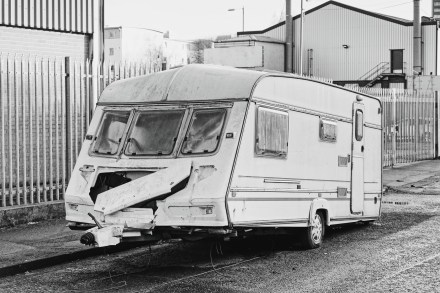
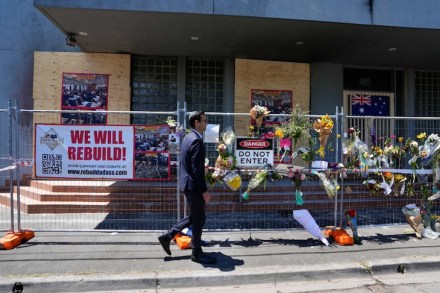
In late January, Australians were convulsed out of their summer holiday torpor by what appeared to be an elaborate anti-Semitic terror plot. Following a series of vandalism and firebomb attacks on synagogues, and cars and private property in suburbs with significant Jewish populations, details of the New South Wales police’s discovery of a caravan laden with plastic explosive were leaked to the media. This caravan was found parked in a street on Sydney’s rural fringe. The explosive had no detonators, but reportedly was accompanied by plans of Sydney’s Great Synagogue, which is located in a busy and narrow city centre street that would have magnified greatly the destruction and casualties caused by any blast.

Meet Clive Palmer – Australia’s answer to Donald Trump

Imagine Screaming Lord Sutch with hundreds of millions of pounds to spend. That probably best sums up the flamboyant Australian mining billionaire and serial election candidate, Clive Palmer. Palmer is best known internationally as the entrepreneur who promised to build the ‘Titanic II’– a full-scale replica of the original Titanic. That project was launched ten years ago and work still hasn’t begun on the supposed ship, although Palmer has promised to secure a shipyard this year. When it comes to his electoral efforts, it’s a similar story. Having fallen out with the National party, the junior partner in Australia’s conservative coalition, in 2013 Palmer founded the Palmer United party, which is now called the United Australia party.

Australia’s Jews are living in fear

Just when it seemed Australia’s anti-Semitism crisis couldn’t worsen, it has. This week, it was disclosed that a caravan loaded with plastic explosive was found in Sydney’s rural fringe. The explosives are of a type commonly used in mining operations and, along with the explosives, papers were discovered that named a Sydney synagogue – reportedly the Great Synagogue in central Sydney – presumably as an identified target. Police estimated that, if detonated, the caravan’s deadly cargo would have created a 40-metre blast wave: if parked outside the synagogue, the explosion would have destroyed it and surrounding buildings, likely with very heavy human casualties and loss of life. The owners of the caravan, a man and a woman, have so far not been charged.

Australia Day has been hijacked by activists

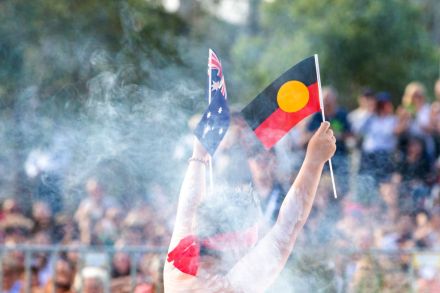
Australia’s national day, which falls today, has two purposes. It is an opportunity for Australians to celebrate who they are and how fortunate we are to live in a stable democracy, thousands of miles from terror, strife and conflict. But it also marks the end of Australia’s languid summer when it’s time to get back to work and for children to start a new school year. It’s a timely excuse to have a long weekend, blessed by late summer sunshine.  Unfortunately, however, Australia Day has become an ideological plaything of Australia’s professional grievance industry.

Australia can’t blame foreign actors for its anti-Semitism shame

Australia is supposed to be a nation of tolerance and acceptance – the one place in a troubled world where people of different ethnicities, cultures and faiths can get along. That no longer feels like the case. Since the Hamas atrocities of 7 October 2023, and the conflict in Gaza and Israel, Australia has been exposed as a simmering hotbed of ethnic and religious hatred. The ugliest strain of all is anti-Semitism. It may have been breathed into life by Hamas’s evil, but it has been latent in Australia’s communities, as they have become ever more ethnically and religiously diverse, for some time. To many Jewish Australians, our city centres have become no-go zones.

Why is Novak Djokovic getting so tetchy?

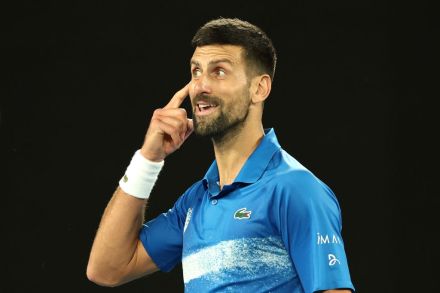
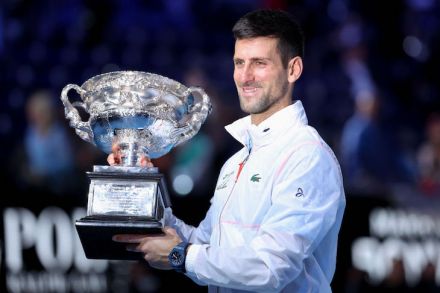
On his record, Novak Djokovic deserves to be rated as the greatest singles tennis player of the last 50 years. Twenty-four Grand Slam titles. An Olympic gold medal. Ninety-nine tournament wins overall. Goodness knows how many finals appearances. Some say he’s the greatest of all time: the Goat. Contrast that with Tony Jones. A veteran Australian sports journalist and broadcaster specialising in Australian Rules football, he’s little known outside Melbourne, let alone Australia. As the local sport presenter for Australian Open host broadcaster, the Nine network, Jones is at Melbourne Park fronting a morning magazine-style programme and doing live crosses to Nine’s national news bulletin. Could it be that the great champion is feeling less secure and infallible?

I became a father at 56. Now I feel guilty

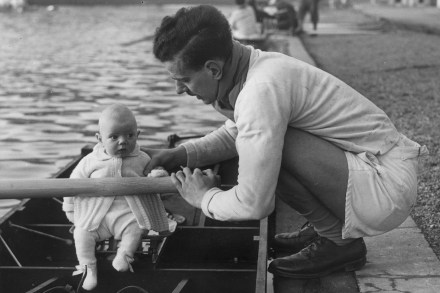
I was a late starter at everything. After drifting through my youth, and numerous false starts in life and work, I only found a committed relationship in my thirties and married in my forties. Even my second career as a writer waited until my fifties. So, too, did my unexpected third career, as a parent. For years, my significantly younger wife and I ached for a child. When it didn’t happen naturally, we embarked on a long, uncertain, painful and stressful IVF journey to fulfil our longing. When we accepted that we had reached the end of that road – or rather our endurance of its rockiness was exhausted – to our amazement and joy, a precious embryo decided to stay, and our daughter was born after a smooth and trouble-free pregnancy.

Sydney’s G-string swimwear row is nothing but hot air

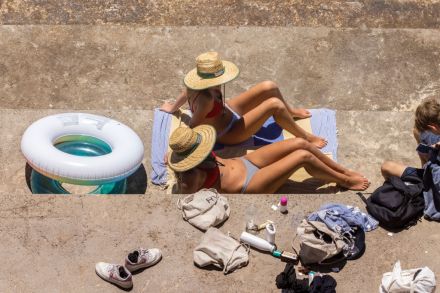
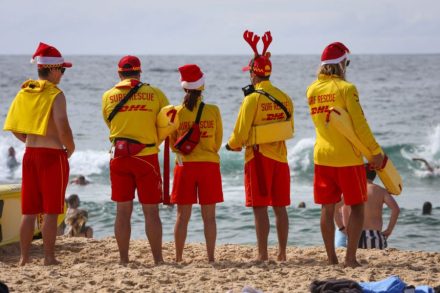
As the hot Australia summer rolls on, so too do the summer silly season stories. The latest is a Sydney council imposing bans on G-string bathing costumes at its public swimming pools.  When it comes to swimwear, Australia has had a long tradition of community standards conflicting with personal freedom. In the early years of the 20th century, anything not neck-to-knee got you ejected from Sydney beaches. In the fifties, as bikinis became popular, patrolling beach inspectors actually measured women’s bikini tops and bottoms to ensure they retained the requisite degree of modesty. Whatever happened to good taste and decorum?

Djokovic must forgive and forget his shoddy Covid experience in Australia

Another Australian Open tennis tournament, another Novak Djokovic media sensation. As play gets under way at Melbourne Park, Djokovic the showman has been working the Australian media, as well as doing a glossy spread for the upmarket US magazine, GQ. The common thread of his media commentary is his experience coming to the 2022 Australian Open when, as the Covid-19 pandemic still raged, the unvaccinated Djokovic was detained and deported after seeking to enter Melbourne, the city oppressed by arguably the most draconian lockdown and vaccination mandates in the world, let alone Australia.

Beach turf wars are dividing Australia

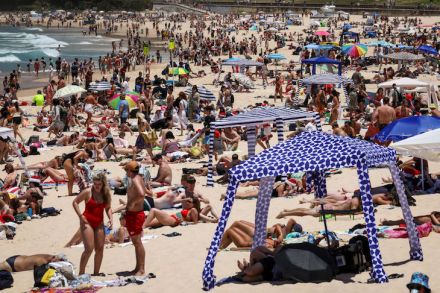
At a time when Donald Trump threatens to annex Greenland and the Panama Canal, China is flexing its military and economic muscles, Britain is in a state of seemingly permanent political crisis, Los Angeles tragically burns, and murderous conflicts still ravage Ukraine and the Middle East, here in Australia just one issue dominates public debate this week: whether a true Australian has the right to reserve beach space by setting up an American-style beach shelter – a cabana – to stake a claim, whether or not it’s occupied. Even the country's prime minister, Anthony Albanese, has waded in on the subject – and finally found popularity by condemning the canvas structures.

Australia’s godless Christmas

As Christmas comes around again, we will discover that Australia is no longer a Christian country. According to the most recent census in 2021, Christianity is not a majority faith here and, of its denominations, none has declined more rapidly than Anglicanism – which has lost more than a third of its declared adherents since the turn of this century. Meanwhile, steadily growing non-Christian faiths are headed by Islam, which claimed over 3 per cent of Australians in 2021. Muslims in Australia now outnumber Jews by more than eight to one. Furthermore, the main Anglican and Catholic denominations are more C and E – Christmas and Easter – than C of E, as their adherents mostly are no longer churchgoers.

Jamie Oliver shouldn’t have cowed to some Aboriginal offence-takers

The celebrity cook Jamie Oliver has a sideline as an author. Not all his books are about cooking and food: Oliver has written two children’s books as well, Billy and the Great Giant Adventure and its sequel, Billy and the Epic Escape. Oliver’s books sell very well, thank you, and have presumably made a fortune for him and his publisher, Penguin Random House. But Billy and the Epic Escape will no longer be an earner for them. Thanks to a handful of Australian Aboriginal offence-takers, the book has suddenly been withdrawn from sale, not uncoincidentally while Oliver is in Australia on a promotional tour. It’s a work of fantasy fiction, for heaven’s sake One chapter of Oliver’s latest novel caused complaints.

Could Kevin Rudd’s Trump tweets cost him his career?

If British Labour ministers and officials find dealing with President Donald Trump 2.0 a formidable challenge, their Australian Labor cousins may find the task of working with a president with an elephantine memory for slights even more daunting. As ministers – including Foreign Secretary David Lammy – are rediscovering to their chagrin, you can delete embarrassing social media posts, but they never disappear. That’s something that may cost former Australian prime minister, and now Australia’s ambassador to the United States, Kevin Rudd, his diplomatic career. Rudd has been posted to Washington for the best part of two years as current Labor prime minister Anthony Albanese’s envoy to the Biden administration.

Lidia Thorpe has emboldened protests against King Charles

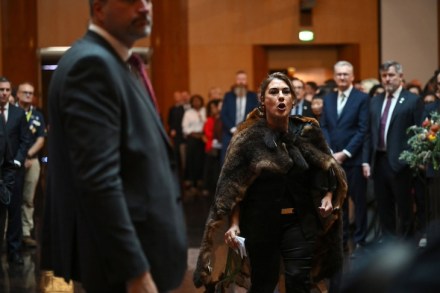
King Charles and Queen Camilla flew to Samoa for the Commonwealth leaders’ meeting early on Wednesday, after completing their visit to Australia the previous day. Not, however, without again being confronted by the historic grievances of Aboriginal community leaders. It was a disgraceful display of look-at-me exhibitionism, but Monday’s one-woman disruption of the King and Queen’s formal welcome by part-Aboriginal firebrand senator and full-time activist, Lidia Thorpe, gave others licence to express their concerns directly to King Charles. It was no surprise that they took the heavily indigenous-flavoured last day of the royal itinerary to do just that. Unlike Thorpe’s outbursts on Monday, those remonstrations were very polite and low-key. But they were made nonetheless.