Tanya Gold

Tanya Gold

Tanya Gold is The Spectator's motoring critic

Murder most romantic: Burgh Island Hotel reviewed

From our UK edition

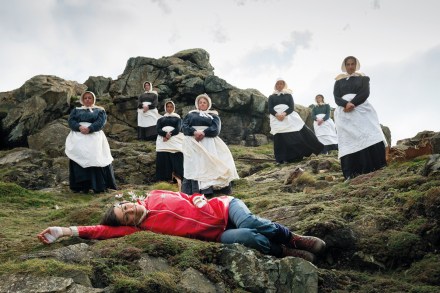
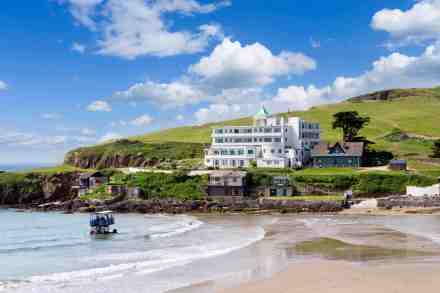
The Burgh Island Hotel lives on a tidal island in a deserted part of south Devon. The directions for visiting are very detailed. You drive along the deserted country road, and at a certain point – just before you lose mobile telephone reception – you must stop to telephone the hotel, and they tell you where to park your car on the mainland, and they will send the car across the beach and meet you in Bigbury-on-Sea. You drive on and eventually you see a brightly lit Art Deco palace under a cliff. It was built by a filmmaker called Archibald Nettlefold (Human Desires, The Hellcat), the heir to an engineering fortune. I think he was a very odd man. There is very little information about him, but he left this hotel, and there is probably an old monastery underneath it.
Still thrilling: the Wolseley reviewed

From our UK edition

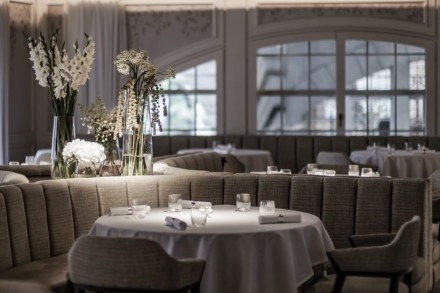
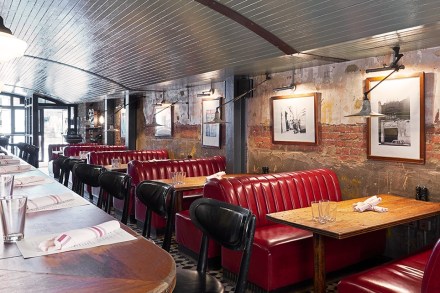
Restaurant and dog years are similar, and so the Wolseley, which is 20 this year, seems as if it has always been here. Other restaurants fall so swiftly you have only fragments of impressions. Breakfast on Bond Street in what feels like a one-bedroom flat belonging to Patrick Bateman. Pasta in a cellar with art, and they only care about the art. Salad at an Aslan-style stone table without mice. Nudity and berries. The original Wolseley was so good it spawned a slew of bad impersonators It was opened by Chris Corbin and Jeremy King, the best restaurateurs of the age, in the old Wolseley building at 160 Piccadilly, between Caviar House and the Ritz hotel. Wolseley is a forgotten brand of motorcar, and this was its preening showroom.

Better than the original: Scott’s Richmond reviewed

From our UK edition

Scott’s, Richmond, is a fish, champagne and oyster bar, and a new branch of Scott’s, Mayfair. The original Scott’s was part of what became the Trocadero Centre. (Ian Fleming was a regular. He would take captured U-boat officers there to get them drunk and chatty. James Bond visited too.) It moved to Mount Street and was bombed by the IRA in 1975. This Scott’s is on the Thames at Richmond and is part of a development by the King’s favourite architect Quinlan Terry, who managed, in the mid 1980s, to throw up a Domestic Revival village on the water. It looks very weird, but I’ve always liked it because the alternative is worse.

Petrol, seawater and blood: the horror of Cornwall

From our UK edition

Penwith isn’t an island, but it feels like one. The heathland above the cliffs is filled with mine workings and Iron and Bronze Age relics: menhirs, fogous and quoits. To most visitors Cornwall is as simple as the GWR posters: gaudy pastels, happy children, ice cream. This Cornwall exists for six weeks in the summer holidays, the setting for a visitor’s bourgeois childhood – Enid Blyton’s Cornwall, principally – but it’s not the essential one. There are multiple real Cornwalls, and they have nothing to do with the tourist aesthetic, which the visitors bring with them. In this spirit, Cornwall’s famous writers are usually from outside: Virginia Woolf (Kensington); Daphne du Maurier (Hampstead); John le Carré (Dorset).

Rich pickings: Alex Dilling at Hotel Café Royal reviewed

From our UK edition

Alex Dilling at the Hotel Café Royal is a minute restaurant above Regent Street, which has the type of British imperial architecture that looks most like a cake: that is, the most preening, deceptive and pale. For someone who did almost no exercise, the Prince Regent built quite a lot of roads and there my interest in him ends, like the road itself. In this hotel, which is very fine, stone cake vies with the tepid luxury of this age, which indicates invisibility, and with it guilt. There’s not much to do in central London nowadays beyond watching wealth aesthetics fight it out. The Hotel Café Royal used to be more interesting. This is the hotel where Oscar Wilde decided to sue the Marquess of Queensberry for libel. I think he was drunk. I hope he was.

Beyond satire: Richard Caring’s Bacchanalia reviewed

From our UK edition

Bacchanalia is the new restaurant from Richard Caring – I sense he would like me to call it a ‘landmark’ or ‘super-restaurant’, so I won’t – in the old Porsche showroom on the corner of Mount Street and Berkeley Square, and all nightingales have fled. Caring, who has doused Britain with his metal Ivys, is the Ludwig of Bavaria of Mayfair. If he hasn’t bought the silver swan tap at Neuschwanstein Castle, he should open negotiations. I will review his interpretation when it appears: what will he do with the Bavarian Alps? Marshmallows I suppose. Or mashed potato.

The best Ukrainian restaurant you will find: Mriya reviewed

From our UK edition

Mriya lives at the end of Old Brompton Road where South Kensington turns into Earl’s Court and, as if by some alchemy, becomes interesting. It is a Ukrainian restaurant, but something more touching too: a memorial and a retreat. It opened in August, in the sixth month of Putin’s war. Twelve of its 15 staff are displaced Ukrainians and their stories are common immigrant stories of renewal and loss. The kitchen porter is a mathematics teacher, the waiter is an English teacher, and the chef, Yurii Kovryzhenko, is one of the most famous in Ukraine. Mriya is the name of the largest cargo aircraft ever built, designed by Ukrainian engineers, which was destroyed by the Russians at the beginning of the war.

The new vandals

From our UK edition

31 min listen

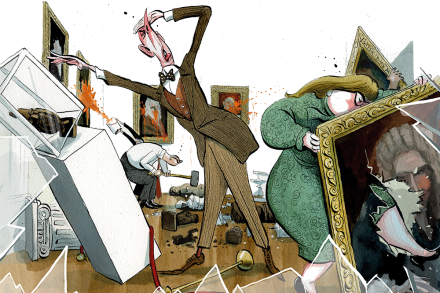
This week: In his cover piece Douglas Murray writes that museums are turning against their own collections. He is joined by the historian Robert Tombs to discuss whether a culture of self-flagellation is harming British museums (00:56). Also this week: For the magazine The Spectator’s assistant editor Cindy Yu writes that the tune is changing in China. She is joined by Professor Kerry Brown, director of the Lau China Institute at King’s College London to consider what the recent protests could mean for the Chinese Communist Party (13:24). And finally: Nicholas Lezard writes in The Spectator about how to beat London's expanding Ultra Low Emissions Zone. He is joined by journalist Tanya Gold to investigate an elegant loophole in the plans (24:56).

The rich complexity of Britain’s Jewish population

From our UK edition

Of all the European countries that Jews have lived in, none has been so welcoming as Britain. There is a caveat: the first blood libel was in Norwich, of all places, in 1144, and after Edward I expelled us in 1290 we had to wait almost 400 years for Oliver Cromwell to ask us back. Jewish immigration to Britain was severely limited in the 1930s, as was immigration to British-controlled Palestine. Even so, Anglo-Jewry was – a handful of casualties from the occupied Channel Islands aside – the only community in Europe not ravaged by the Shoah, and Anglo-Jews are both peculiarly fortunate and haunted. My grandfather, a highly rational man, bought poison in 1940. He was going to kill his family if the Nazis reached them.

Another wasteland lost: Battersea Power Station reviewed 

From our UK edition

The rude fingers of Battersea are repointed, and barely rude at all. The power station by Giles Gilbert Scott and J. Theo Halliday is no longer a wasteland to contemplate as you sit on the Waterloo to Shepperton night train. It has become a small town with shopping centre, restaurants and a pier on the river, so a middle-aged woman can get on an Uber Boat by Thames Clippers and pretend to be Cardinal Wolsey without others knowing it. I have only ever known it as a ruin and so approaching it from its Underground stop feels subversive, but then all subversion ends. It is glossy, tinny: a dinosaur skeleton painted in glitter with glass apartments stacked on the head and satellite glass apartments all around for fellowship.

Mark Galeotti, Katja Hoyer and Tanya Gold

From our UK edition

19 min listen

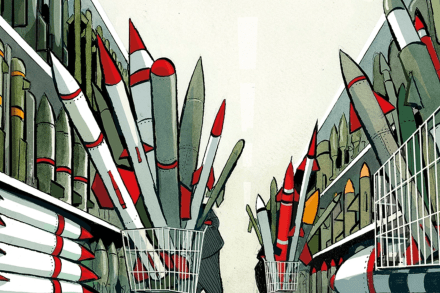
This week: Mark Galeotti tells us why Ukraine has become a weapons testing ground (00:53), Katja Hoyer discusses Germany’s extreme monarchists (09:12), and Tanya Gold reads her Notes on … espressos (15:24).  Produced and presented by Oscar Edmondson.

Theme of despair: Drop’N Chicken at Chessington reviewed

From our UK edition

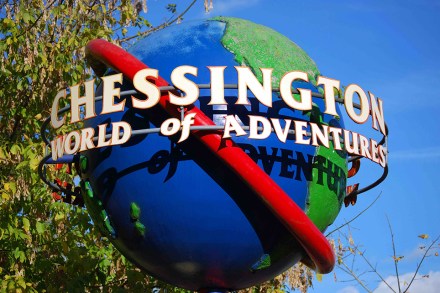
Chessington World of Adventures sits in a bowl near the A3. I went in the 1970s when it was a zoo, home to some unhappy orangutans who lived in a cage which made me scream. Being a lonely sort of child, I hugged concrete dinosaurs in the rain. Now it is owned by Merlin Entertainments – a sort of National Trust for people who prefer rollercoasters to country houses – which is owned by a hedge fund that employs teenagers. We are here to feel fear because my son, who is nine, has never really felt it, which is a good thing: and Merlin Entertainments monetises this, offering fear for a price, with parking. I am Jewish, and queuing for fear isn’t my thing, but I like to consider myself a loving mother so here we are.

What Liz Truss’s coffee habit says about her

From our UK edition

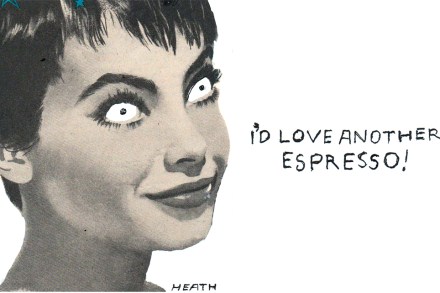
According to excerpts from Out of the Blue, the cursed biography of Liz Truss by Harry Cole and The Spectator’s James Heale, Truss is dependent on two things for comfort: Instagram and espresso. On a trade delegation to New Zealand, she’d ‘had so much coffee and just wasn’t interested in meeting the ambassador’. Coffee is from Ethiopia. Its origins as a foodstuff are murky, but the best legend is about a goatherd called Kaldi who in the mid-9th century noticed that his goats ate black beans and became manic and sleepless: essentially, they started dancing. From there, coffee spread to Egypt, Syria, Turkey and Persia. But when coffee met Christianity there was the moral panic that reliably comes when a powerful new stimulant is found.

Echoes of John Lewis: Piazza at Royal Opera House reviewed

From our UK edition

The Piazza is not a piazza – a realisation which is always irritating – but a restaurant in the eaves of the Royal Opera House, now restyled and open to those without tickets to the opera or ballet. If it were honest, Piazza would name itself Attic or Eaves, but the Garden, as idiotscall it, has long been a slave to delusions of the most boring kind. (It is no longer a garden in the wreckage of Inigo Jones’s square. I wish it were.) I would be happy to dine in a restaurant called Eaves – my favourite hotel is a hole in a wall by the Jaffa Gate in Jerusalem and my favourite restaurant was a man with a fish in Jamaica – but, in London, even attics are not what they ought to be.

If Blairism were a carvery: the Impeccable Pig reviewed

From our UK edition

Labour is 30 points ahead, and in honour of this I review the Impeccable Pig in Sedgefield (Cedd’s field), a medieval market town and pit village south of Durham. It is Tony Blair’s former constituency and Camelot, but nothing lasts for ever. Blairism had pleasingly flimsy beginnings. Sedgefield had yet to choose a Labour parliamentary candidate when a young lawyer sat in a borrowed car outside the house of John Burton, head of the Trimdon Labour Club, on 11 May 1983, thinking he should drive back to London.

Fine food in a sinister Weimar wine cellar: Bardo St James’s Restaurant reviewed

From our UK edition

Bardo St James’s Restaurant – a name which reads like a map – is a vast new Italian restaurant in one of the pale imperial palaces off Trafalgar Square, near Pall Mall and The Phantom of the Opera, which goes on because snobbery and sado-masochism are among the many things that never die. You might think Bardo (I am not typing all that again) would fold down and fold up in a night, like Cinderella’s coach – it feels flimsy – but these restaurant palaces by Pall Mall are surprisingly robust. The last time I ate in this district it was at the Imperial Treasure, a gloomy and magnificent Chinese restaurant where a performative duck was £100. I thought it wouldn’t last – it was just us, the waiting staff and the duck – but it did.

What Soho House has got right: Electric Diner reviewed

From our UK edition

Electric Diner is from the Soho House group, which has done terrible things to private clubs, luckless farmhouses, domestic interior design and even its own restaurants. The Ned, its City hotel with ten restaurants, is genuinely insane, like Thorpe Park for people who are scared of roller-coasters; and no restaurant for adults should sell fishfinger sandwiches, even at Babington House, a Soho House hotel which is Clown Town for grown-ups but near trees. But Electric Diner is much finer: the sort of restaurant that attacks its parent with a spade, like Oedipus.

Drama queens: the return of Harry and Meghan

From our UK edition

36 min listen

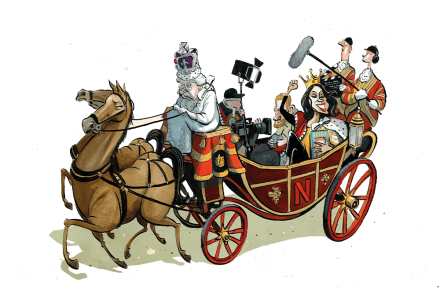
In this week's episode: We look ahead to Harry and Meghan’s UK tour next week, how will they be received? Freddy Gray and Tanya Gold join the Edition podcast to discuss (01:01). Also this week: In the Spectator magazine, our Economics Editor Kate Andrews sat down with the three economists, or 'Trussketeers', that are informing the would-be PM’s economic plan. She joins us along with Julian Jessop, one such economist that has been advising Liz Truss (13:51). And finally: can successful writers be friends with less successful ones? Cosmo Landesman asks this question in the magazine this week and is joined by the author Ian Rankin (27:07). Hosted by Lara Prendergast and William Moore. Produced by Oscar Edmondson.

Among the best puddings I’ve ever eaten: Richoux reviewed

From our UK edition

Cakeism is offering the voters everything they desire, knowing you will never give it to them because you live in a haunted mirror in which the only thing that matters is your survival. This duplicity is important to understand, because the road from Cicero to Caesar is so short it may lack potholes. Cake is less urgent, but at least cake won’t lie to you. And here is Richoux, still filled with cake, if you can afford it. It is, for many people, marvellous and theoretical cake. Richoux was a cake shop on Piccadilly – a street I can never eat in without thinking of Alexander Litvinenko sitting, doomed, in Itsu, when it still pleased Vladimir Putin to kill people individually – for so long it was forgotten. It is 113 years old, or one seventh of Yoda.

In praise of character actors

From our UK edition

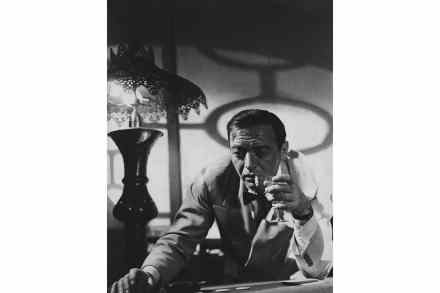
The star system is a false hierarchy: the best rarely make it to the top. I thought of this recently when it was announced that David Warner had died. Few outside acting could name him, though you may have seen his head flying off in The Omen, a film in which heads are cheap. Warner was a Manchester-born jobbing actor: a character actor, better defined by what he is not, which was a star. I could write pages about why a star is a star, and a character actor remains a character actor, but the most significant reason is simple. Warner was brilliant but he was not handsome.