Tanya Gold

Tanya Gold

Tanya Gold is The Spectator's restaurant critic.

Sentenced to chicken: NoMad reviewed

From our UK edition

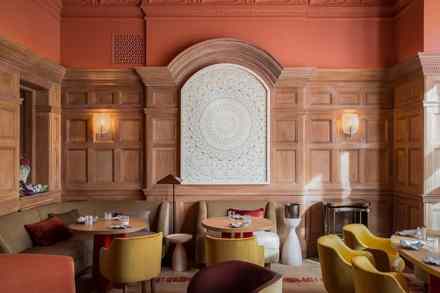
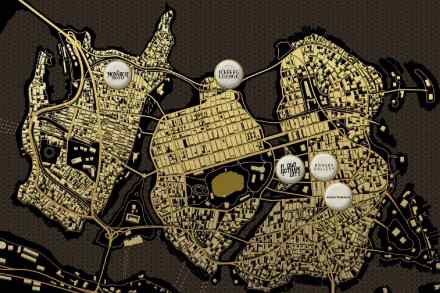
NoMad is a new hotel in what used to be Bow Street Magistrates’ Court: a preening piece of mid-Victorian classicism opposite the Royal Opera House that is clearly too fine for the half-hearted criminal classes these days. I was judged in this court once for the very boring crime of cannabis possession (I think I did it), as was Giles Coren for something else (he says: ‘I never done nuffink’), General Pinochet, Dr Crippen (VeryMad) and Oscar Wilde. It heard its last case in 2006: the breaching of an Asbo by a man called Jason. Now it sells cocktails. NoMad has a restaurant named, as if in homage to a public relations panic attack, the NoMad Restaurant. (I thought NoMad was named after a refugee but I checked and I was wrong.

How to get drunk on tiramisu

From our UK edition

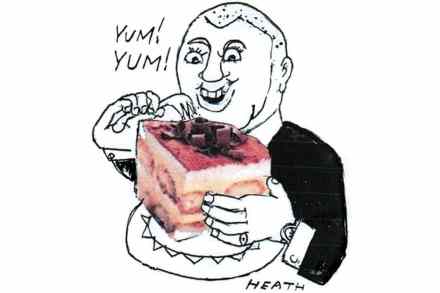
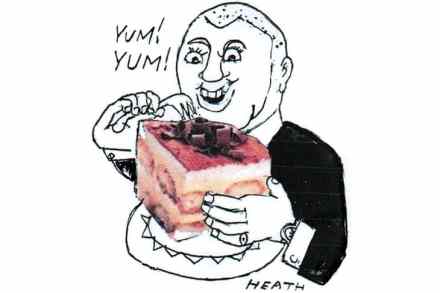
You can get drunk on tiramisu. I have done it. It takes two portions at least. You drink (I mean eat) the Marsala wine and the rum — and then must be escorted, tenderly, to the bus stop. I don’t usually drink alcohol. If I did, I would smash up restaurants. But I do eat tiramisu. You have to eat a lot of tiramisu to be hospitalised. That is my reasoning. Tiramisu means ‘lift me up’. Like Caesar salad and the world, it has a detailed creation myth with its own pretenders, factions, expert witnesses and conspiracy theories. There is a website, the Tiramisu Academy, devoted to the mystery of its origin. (‘Since 2011 we have been transmitting the culture of tiramisu.

Dregs of fake Provence: Whitcomb’s reviewed

From our UK edition

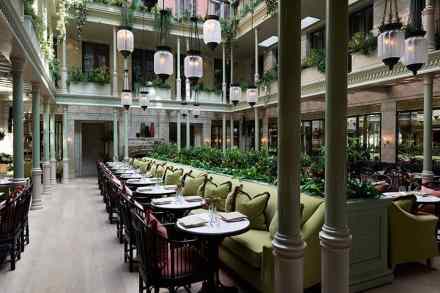
Whitcomb’s is in The Londoner hotel on the south-west corner of Leicester Square. The Londoner calls itself ‘the world’s first super boutique hotel’, which may mean that it is the world’s biggest small hotel. Or its smallest big hotel. I don’t know. Whatever its existential status, the developers destroyed an art deco cinema — the dour and lovely Odeon West End — to make it, and it looks like a piece of bright blue infant Lego with lesions for windows. Heritage organisations objected to the cinema’s destruction. Westminster council replied: who cares? We need Lego with lesions, or anything that looks like Lego: look at the Hotel W round the corner. That looks like a giant Lego fridge!

Douglas Murray, Paul Wood, Tanya Gold

From our UK edition

19 min listen

On this week's episode, we’ll hear Douglas Murray on how the pandemic has made cynics of us all. (00:50)Paul Wood on why after 10 years he and his family are leaving Lebanon. (08:02)And finally Tanya Gold gives her review of a Batman-themed restaurant.

The Batman restaurant that’s totally bats: Park Row reviewed

From our UK edition

There is a Batman restaurant in London, or rather there was: Savini at the Criterion on Piccadilly Circus. Savini was a haunted grey Italian restaurant that closed in 2018 and was artistically dependent on salt. It appeared in The Dark Knight, in which Batman, who is Bruce Wayne to everyone but himself (I have a theory that everyone knows Bruce Wayne is Batman, but they pretend not to because he is an orphan), owned this restaurant, in which case he should have fixed the telephone lines. (Savini was plagued by a dispute with BT.) But because you cannot ever have enough of a strange thing, there is a new Batman restaurant to the north on Brewer Street, Soho, under a calm Edwardian wedding cake which was once Marco Pierre White’s Titanic.

Matthew Lynn, Tanya Gold, James Innes-Smith

From our UK edition

13 min listen

On this week's episode, we’ll hear Matthew Lynn’s thoughts on how the gas shortages could lead to a very cold winter. (00:51) Then, Tanya Gold with a critical take on critics. (04:41)And finally, James Innes-Smith bigs up the bungalow.

Has Covid killed criticism?

From our UK edition

The pandemic was bad for criticism with its universal dogma of ‘kindness’. Restaurant, theatre, film and book critics felt compelled to be kind, as if criticism itself was coughing at a death bed. But who does this kindness benefit? Last year I reviewed Michael Rosen’s book about his Covid-19-related coma: Many Different Kinds of Love. I liked it, but I suggested that publishing the notes people had written to him as he lay in the coma was a waste of both their time and ours. Rosen didn’t like this and moaned on Twitter: ‘I think they are the power and the beauty of the ordinary. And how extraordinary that this is ordinary.’ But surely the function of criticism is to try to separate the ordinary from the extraordinary?

The problem with dining on gold

From our UK edition

When I was young, I watched a television show about a man who, possessed of the spirit of greed, ate gold and died. I recognised hubris then, and I recognise it now. In a country filled with foodbanks people are hungry to eat gold, which is, in food standard circles at least, called something less miraculous: E-175. E-175 usually comes in flakes, leaves or powder. It has no nutritional value. It passes through you, though of that there is no evidence on Instagram, which is a shame. They should really follow through. E-175 is big on Instagram, which is the engine of the fashion for eating gold. It is an entirely visual thing.

The real Greek: Lemonia reviewed

From our UK edition

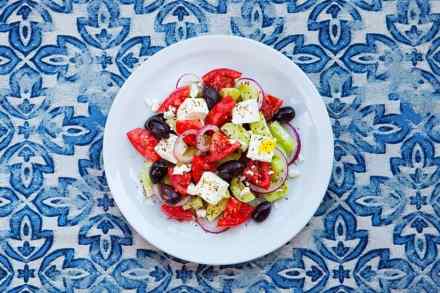
Lemonia lives in the old Chalk Farm Tavern in Primrose Hill, which is better known as the set of Paddington. It is not surrounded by fields filled with duellists under a hill of primroses these days, but it is still vast, pale and beautiful: a survivor in the sprawl. There has been a tavern on this site for so long — it was first recorded in 1678 when a corpse was carried to it — that it is possible John Keats drank here. I hope so. It is not a beaker of the warm south – it is slightly too near Camden and its stink of pigeon and bleach for that — but it is close enough. Some restaurants hold memories of pleasure: this is one such place.

Why The Sopranos remains the greatest gangster drama of all time

From our UK edition

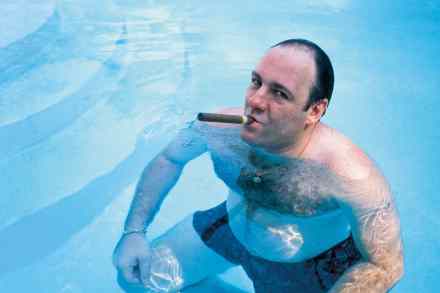
The Sopranos is called the greatest television show in history. It is the tale of Anthony ‘Tony’ Soprano, a middle-aged man in psychotherapy who also happens to run a New Jersey crime family. Anthony means ‘priceless’; the choice of name is surely deliberate. The Sopranos is complex — all masterpieces are — but it is fundamentally about greed: for money; for sex (the crew inhabit the Bada Bing! lap-dancing club, where breasts are landscape); for alcohol; for power; for the base drug of food. In the first episode Tony, who is played by James Gandolfini as a human devil, all need and charm (he is defiantly sexy with his fat hands and dachshund’s eyes), is almost human-looking. By the end, he is immense.

Dining in nowhere: Bar des Prés reviewed

From our UK edition

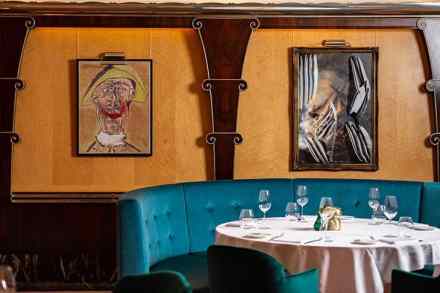
The residents of Mayfair are misnamed: they do not really live here. They live in Mayfair like I live on the A30 roundabout near Morrisons or in dreamland. I am sometimes on the A30 roundabout near Morrisons and sometimes in dreamland but only -sporadically. It would be ludicrous to suggest that either is my permanent address, even if pretending it means that the people I stole my money from can’t steal it back. Mayfair is a district with an itinerant population and when they are here, tidally like plastic, they dine conservatively, almost fearfully, in a series of restaurants so generic and dispiriting that they either righteously hate themselves, righteously fear us, or have — as anyone who’s ever been to a yacht show will know — absolutely no taste.

Scarface’s lair with nibbles: Louie reviewed

From our UK edition

A French creole restaurant rises in the sullen ruins of London. It is called Louie, for French king or trumpeter, depending on your wish. It is next to the Ivy — now a private members’ club and franchise stretching to the London suburbs bearing small bowls of shepherd’s pie — and it is infinitely preferable. That is, I can get a table, and no pastiche medieval windows or tabloid photographers are involved. It’s a terrible thing being jostled into a gutter so someone can photograph the former cast of Crossroads. The Ivy is the Love Island of grand restaurants. It is for the spuriously famous, which is now everyone. The zeitgeist cries: we’re going to need a bigger Ivy. Or at least it used to. Louie is a small, golden rebuke.

When will James Bond drive an SUV?

From our UK edition

I once read that after watching a James Bond film men speed in their Honda Civics: they might do 35 mph in a built-up area. If this is so, it is due to the Aston Martin Bond has driven since 1964 (the DB5 in Goldfinger, a man with 'a cold finger'). The DB5 has appeared in six Bond films so far; and some kind of Aston Martin has appeared in twelve Bond films. Is it, I wonder, contemplating Bond’s internal wasteland of sex addiction, murder and laundry, the only real home he ever had? Is it his wife? When the DB5 was revealed in Skyfall, waiting calmly in a garage, it seemed it was. The face of Bond – he is named after an ornithologist - may change.

‘Lifeless and necrotic’: Native at Browns is an ode to joylessness

From our UK edition

Browns is a famous fashion boutique in deepest Mayfair. It occupies a curved cream townhouse on Brook Street, which seems sunken and shuttered. Perhaps it is the lingering effects of the pandemic or because it’s late summer, but the interior — carefully designed over multiple eyries over many floors, like gold teeth fallen on a garden — feels lifeless and necrotic. High fashion needs joyful people to wear it (or at least people pretending to be joyful, which is more usual) and here there are none. Perhaps they are all in the south of France? Perhaps they never existed and were invented so the rest of us, regarding their perfection, would buy cheap moisturiser and cheap knickers?

High on the hog: The Pig at Bridge Place reviewed

From our UK edition

The Pig at Bridge Place is not a pig in possession of a country house, but I would be for it. You cannot have enough pigs, or any edible fauna. It is, rather, a hotel inside a Jacobean mansion — or, rather, part of a Jacobean mansion, the rest burnt down, and is all the better for it — in a pleasingly unkempt part of Kent, just beyond Canterbury. There are ten Pigs, dotted across the south coast as if in homage to Armada beacons. They are the successor to the Soho House brand, which is looking increasingly dusty, and in velvet. My main objection to Babington House is that it is for people with Peter Pan Syndrome: children who cannot grow up. They served fish-finger sandwiches and I think I saw a giant inflatable unicorn in the pool, but I have may have imagined it.

A Damascene moment in London: Imad’s Syrian Kitchen reviewed

From our UK edition

Imad’s Syrian Kitchen is an eyrie off Carnaby Street, a once-famous road which seems to exist nowadays to sell trainers to tourists who have fallen, as if by wormhole, out of the Liberty homeware department with its pathological dependence on florals. No matter. Nearby, in Kingly Court, which is like Covent Garden before it fell to Dior and Apple, more interesting things happen: the sort of things that London, so sunken, needs. Kingly Court is charming because it invokes an ancient coaching inn — London was once filled with them — and it is, due to the presence of independent eating houses, still palpably bright, pleasing and alive. The restaurant is likewise cheerful: wooden floors; pale walls; blue windowsills; blue tiles; a beamed ceiling; photographs of Damascus.

Olivia Potts, Rory Sutherland and Tanya Gold

From our UK edition

14 min listen

On this week's episode, Olivia Potts says angry chefs could soon get their comeuppance. (00:56) Then, Rory Sutherland says over-qualification is leading to collective idiocy. (06:28) And finally, Tanya Gold wonders why people eat lobsters.

The politics of eating lobster

From our UK edition

Lobsters like to live in gullies on the sea floor, or under sand, and I understand how they feel. But you can’t hide from politics. An amendment to the Animal Welfare (Sentience) Bill will make it illegal to post shrink-wrapped lobsters alive, or boil them alive, which turns them from blue to Father Christmas scarlet. In Switzerland, Norway and New Zealand it is already illegal to boil them. It is considered kinder to freeze them or pierce them or shoot them with an expensive lobster-stunning gun which you can probably buy in Hampstead Village. And then boil them. Lobsters were once food for the destitute near the sea, so plentiful they would wash ashore in piles. Then the trains came, and it was possible to transport them inland. The price shot up.

An utterly convincing dreamworld: The Ritz reviewed

From our UK edition

The Ritz is still here, and still gaudy. No grand hotel in London feels quite so complete, if pink; as if it landed like a Tardis on Green Park. There is no real life here, and there shouldn’t be. Each guest travels with their own novella. There are jewels in the window and brides on the stairs. Lady Thatcher died here, in a corner suite. Don’t ask which one. They won’t say, to discourage ghouls, party hacks and perverts. You cannot know if you are sleeping in her bed, and that is not even the oddest thing about the Ritz. The staff, who dress like toy soldiers, are charming in that way you don’t find outside Judith Krantz novels. That is, you believe them, and that is rare. The Ritz is a myth, and it is dedicated to itself.

Wally Funk: meet the 82-year-old jetting into space with Jeff Bezos

From our UK edition

The moon would be more interesting with Wally Funk on it, and clearly Jeff Bezos agrees: the entrepreneur has just invited the 82-year-old female aerospace pioneer to join him on his inaugural space flight later this month.  In 1961, when she was 22, Wally took the physical tests to become an astronaut. They were grisly - ice-cream was dripped in her ears and she stayed in a floatation tank for almost eleven hours. She performed better than John Glenn - the vainest of the original Mercury 7 astronauts - but the tests were cancelled. No American woman entered space until Sally Ride in 1983. But Funk is too interesting to reduce to a fable about misogyny. Spacemen were sexist - who knew?