Tanya Gold

Tanya Gold

Tanya Gold is The Spectator's motoring critic

The dark side of Soho

Each suburban soul yearns for the Soho of their youth. It isn’t that Soho was better in the 1990s when I invaded the Colony Room, twitching, and took a fag off Sarah Lucas. It is that I was. This was the view of a friend after I last wrote on Soho restaurants. We once ran holding hands through the sprinklers in St James’s Park laughing at Peter Mandelson, who was passing with his dog, and that is my memory of the Blair years. So Soho, which is thick with metaphor anyway — its very name is a hunting call: death for one and ecstasy for another — is a district to measure your age. The new buildings barely matter in this reasoning, even if I hate them. The stones — and the possibilities — remain. You can’t erase the energy of that much bad sex.
Top brass

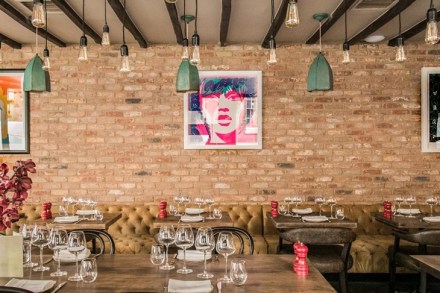
Bellamy’s is a Franco-Belgian brasserie in Bruton Place, a dim alley in the charismatic part of Mayfair; the part that has not been ruined. There isn’t much you can do with an alley except blow it up. It feels like a survivor from a more ancient time: 2004. Its rivals from that time are broken or gone. Annabel’s is now enormous. The Ivy is a franchise like KFC. The new generation of fashionable restaurants have glittering statuary by cretinous artists, professional PRs and spin. They are ideas. What use is an idea when you want three courses of French--Belgian cuisine for £29.50 a head in central London? Bellamy’s is named for the club in Evelyn Waugh’s Sword of Honour trilogy.

Garlic and easy listening

I grew up in south-west London in the 1970s when Italian restaurants had exposed brick walls and paper tablecloths in red and white squares and giant pepper pots and were owned by people called Franco who slapped your father on the back. The lasagne came in individual dishes, oozing deep red tomato sauce so hot it stuck to the edges of the dish and burnt your tongue. You cried the first time, but not again, because you loved Spaghetti Junction more than your own home. The perfect Italian restaurant was fixed for me then, in 1979, and that was it, because restaurants are about joy, not food. And so I never liked their high-street descendants: Carluccio’s and Jamie’s Italian. The first was too pale and interesting, and the second too sloppy and disinterested.

Chop off the old block

I love the drug of television, which is slightly less awful than the drug of social media because the conversation is one way, and so I have been rewatching Whitechapel. It’s a drama series about murder, and possibly the supernatural, set in Whitechapel, and it is slightly rude to its residents because it posits the idea that Whitechapel is the gateway to hell. It is mostly set in the coalition years, but it has an ancient aesthetic. People in hipster suits are butchered horribly; the east London churches of Nicholas Hawksmoor lurk wonderfully; murders take place in courts and alleys which I am certain have been glassed over in life, and sold on. Is anywhere in east London remote enough for murder now?

Ducks and bills

Imperial Treasure is a restaurant in the part of St James’s where Leopold von Hoesch, the German ambassador to George V, buried his dog Giro after Giro electrocuted himself by eating a cable. (Everyone is a food critic. Giro was merely an unlucky one.) And this seems apt. Because it’s rare to see people in St James’s these days. Dog bones and tourists and BBC crews shooting dramas in which actors are spying or arguing about politics are multiple. I wouldn’t be at all surprised to see Benedict Cumber-batch pretending to be Liz Truss pretending to be Josip Tito. But not real people. They have all gone, presumably to Zone 3. Or they have died of Brexit-related ennui and despair. Not that this is a column about alienation disguised as a restaurant review.

‘Brexit shows democracy doesn’t work’: An interview with Titania McGrath

Titania McGrath, 24, is a radical intersectionalist vegan activist, feminist slam poet and the author of Woke: a Guide to Social Justice. She won’t meet me in person for security reasons – she fears doxxing – or send me a photograph of her face. Rather, she consents to an interview by email from her gîte in the Buis-les-Baronnies district of France, where she is “working on a new anthology of slam poetry which will end the patriarchy” in the nude. This is from her poem Cultural Appropriation: Plunderbeast of history. My ancestors scream in your hollow wigwam, Ghostrolling in the ectoplasm of your hate. I staunch the flow of simpering tribal sauce, A digital sombrero clings deafblind To a face falsely smeared in a coalish hue.

Notting Hill misanthropy

A serious restaurant for serious times: the Ledbury in Notting Hill. It’s a good time to do it, as the dreams of the Notting Hill set crumple to dust and Jacob Rees-Mogg rides out in his stupid hats. It has sat in its former pub on Ledbury Road since 2005. It won — and has held for seven years — two Michelin stars. It has featured in the gruesome S. Pellegrino World’s 50 Best Restaurants List, which is, among other things, a rebuke to tap water. Its most interesting moment was during the riots of 2011, when the nation conspired to make David Cameron return from his summer holidays early. Annoying David Cameron is always fun, because he takes himself very seriously.

Candace Owens and the rise of the know-nothing public intellectual

From our US edition

Adolf Hitler ruined nationalism for everyone, says Candace Owens, which is something of a niche complaint. (She had nothing to say about the toothbrush mustache which, in the 1920s, was a sign of moral seriousness.) Owens is African-American, and a rising star in Trump circles in the way that if you are African-American, or gay, and a Trump supporter, you become a rising star, because the pool of talent is thin and the airwaves – I mean Twitter and Instagram - are fat. ‘Whenever we say “nationalism,”’ Owens said, like a woman reciting a wonky Wikipedia page from memory, ‘the first thing people think about, at least in America, is Hitler.

candace owens turning point usa

Cakes, bubbles and whimsy

Cakes & Bubbles is an unhappy woman’s restaurant. I thought it was a child’s restaurant, but I took a child there and he hated it and begged for a Double Decker. It is a patisserie and champagne bar inside the Hotel Café Royal on Regent Street. It sells sugar wound and smashed and spun — that is, it sells traumatised sugar — in front of a picture window featuring people looking for less inedible redemptions. It is, therefore, a place for people to get very slightly wasted after shopping at Liberty. Last time I went to Liberty I met Jeremy Corbyn’s head of strategic communications James Schneider on the stairs. I always thought Liberty was Tory. Shouldn’t he be in Equality?

The way we dine now

The 1930s aesthetic is not quite as fun as it used to be. You can enjoy the detritus of fascism quite happily when you’re living in a secure liberal democracy, but when that liberal democracy begins to look unsafe, it feels more like threats in the form of tableware. Still, the art deco style is everywhere, an oblivious pathway from decadence to something worse. It dictates restaurant design. It is as if the food knows something we don’t yet, and that makes us very stupid indeed — if, for now, not hungry. The Holborn Dining Room is a gloomy barn brasserie in London WC1, a filthy postcode at the best of times. I think I would like this restaurant if Tony Blair — or even John Major — were still prime minister.

Bob, booths and buttons

In January, you could go to Bob Bob Ricard in Soho. I do not know why it is called Bob Bob Ricard; and I do not really care. I am currently reviewing cars for another magazine and cars’ names make restaurants’ names sound reasonable. Perhaps Bob Bob Ricard is always slightly drunk and needs to mumble its name — ‘Bob?’ — for fear of forgetting it, like the people in the VIP field at Glastonbury. I do know that it is a restaurant for affluent halfwits, of which there is an infinite supply in Soho. I wonder if it might have been Jimmy Savile’s favourite restaurant. It occupies the ground floor of a dull brown block on Upper James Street, in the ‘functional’ part of Soho. It may be Edwardian, but probably isn’t.

My magic Fortnum’s moment

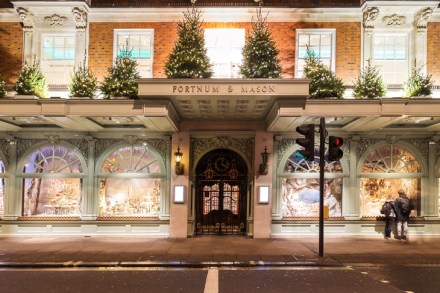
I admit I had a falling out with Fortnum & Mason a few years ago over its new brasserie on Jermyn Street. It replaced a restaurant that looked like a toilet-roll cover or wedding dress, and although I had never eaten there, I felt protective of it. Why was she blown away and on what wind? Why can’t London resemble, always, something unseen in a Graham Greene novel, because I want it to? It was replaced by a smooth and very expensive restaurant for rich people, which looked like every other brasserie that has opened in London since 2000. I remember it had orange banquettes. It was too Mayfair — that means too Zurich, today — and not enough St James’s.

Love hurts

There is very little art about modern poverty, because who wants to know? It is barely acknowledged, unless there is redemption, or salvation, as in A Christmas Carol. Those most suited to make it — those who are actually poor — are usually too busy doing something else, such as surviving. So, it is remarkable to learn that Alexander Zeldin’s play LOVE, a success at the National Theatre in 2016, is now a film and will air this weekend on BBC2. The closest thing to it recently was Benefits Street, which was exploitative and, therefore, an instant hit. Zeldin is 33. He read French at Oxford University and is artist-in-residence at the National Theatre. His work is plain and understated. He listens, rather than writes, and there are no diatribes, just calm despair.

A great Venetian confection

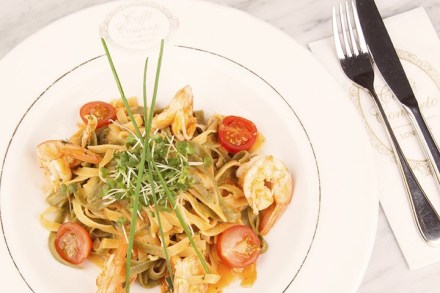
Caffè Concerto is a chain of Italian cafés sprouting, lividly, across London and the world. There is one on Piccadilly, one on Regent Street, and one on the Haymarket. There is one in Birmingham, and one in Westfield. (The precise address is an ungaudy unit 2000a, but presumably it is hidden behind florist-ry). There is one in Qatar. There is one in Saudi Arabia. There isn’t one in Venice, although the website has a photograph of Venice. It’s too Venetian for Venice. The style is very Italian, in that it is a combination of great style and no style at all. (Not bad style. Just an absence, something forgotten or dropped.) It is a homage to the Italian custom of scrubbing your front step in a full-length fur coat.

Nova kosher

Tish is a new grand café in Belsize Park, north London, but kosher. There are not really enough Jews to fill a kosher restaurant in London, and they tend to fall into dust, like the ten tribes, and the temple. 1701, the unwise and subtle restaurant by Bevis Marks synagogue, has gone; Bloom’s in Golders Green has gone, too. Most British Jews aren’t kosher because chicken without butter isn’t worth having, even if you do believe that bushes speak and people want to kill you. Mostly, the food will kill you. But not always. The north London restaurant most favoured by Jews is Oslo Court, which is actually a specialist in seafood, plus cream cakes. Oh Jews! What do you want — really?

Pigging out

The Pig at Combe is a restaurant in a country house hotel in a valley in Devon. I actually went to the Combe when it was only a country house hotel but, unlike Martha Gellhorn looking around a hotel function room in Spain and realising it had been an operating theatre in the Civil War, I did not recognise it. I spent three hours eating there, and I missed it until I looked it up and realised I spent a slightly haunted night here 15 years ago, after covering something Jane Austen-related nearby. That is an occupational hazard of the female newspaper feature writer, and that cold blue-and-white wall-paper will be dead now too. It was swallowed by a suave pig. There are multiple Pigs; it is a growing brand in country house hotels.

We need to talk about Kevin

The sixth and final season of House of Cards has begun without Kevin Spacey, who played the murderous Democratic American president Frank Underwood. Netflix fired Spacey when he was accused of multiple sexual assaults last year, although he is not yet charged with any crime. The longed-for dénouement of Frank Underwood — the moment when he realises his crimes have been in vain — never came. Instead his wife Claire, so lovely in looks, is now president. (It’s TV.) When the trailer for the final season appeared, Underwood was already in his grave, with Claire, played by Robin Wright, standing over it. Wright gave an interview saying that she had never known Kevin Spacey, which made me smile, because it is exactly what Claire would have said.

Breakfast for idiots

I couldn’t find Gazelle. I walked up and down Albermarle Street, in which Oscar Wilde once plotted his own doom in the Albermarle Club, and I couldn’t find it. I had to go to Caffè Nero opposite the Ritz Hotel and email my dining companion — where are you? Are you there? Does Gazelle exist? Or is it a modern European restaurant and cocktail bar so exclusive that it exists only in the imaginings of the International Private Jet Set who have turned Mayfair into something so ugly it could only be purchased at Harrods? Is it an imago that serves breakfast? It’s not an imago that serves breakfast, he replied, via Caffè Nero’s free wifi, which is always useful when you wonder if restaurants are semi--mythical.

Cora Pearl’s conundrum

Cora Pearl is the new, and second, restaurant from the people who made Kitty Fisher’s in Shepherd Market, Mayfair. Kitty Fisher was a celebrated 18th--century courtesan, as the saying goes, and Cora Pearl, whose shrine is in Covent Garden, was likewise the happy and well-paid whore of myth. (Her real name was Emma Crouch, she was from Ply-mouth and she died broke and working as a common prostitute, with not a pearl, if you will, to her name.) I suppose the raging second-wave feminist in me should mind that fashionable restaurants are named for women whose daily work was so bitter and intimate I can’t even detail it here, and that is fair enough, because I am reviewing dead, not living flesh.

Cuisine for cadavers

Politicians are having a terrible time of late, along with the rest of us — it’s not much fun watching the remnants of the post-war consensus shatter — and so here is Albert Roux consoling them with a new, glossy restaurant on the door-step of their rotting legislature palace. Food at the Palace of Westminster is not the best, although Corbynistas think it is. They think peers bathe in champagne while laughing and that MPs don’t have to butter their own toast. Well they will learn post-Revolution. They will learn to use a butter knife and how to talk righteously to a nationalised media. It’s called Roux at Parliament Square, and it is, of course, from Albert Roux of Le Gavroche, the proudest and fustiest of Mayfair’s French restaurants.