Tanya Gold

Tanya Gold

Tanya Gold is The Spectator's restaurant critic.

Above – and beyond

From our UK edition

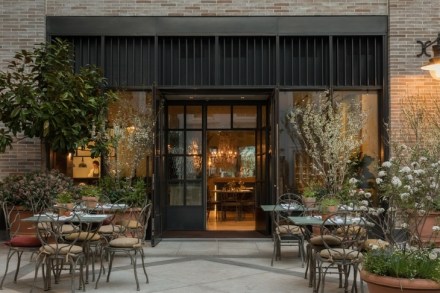
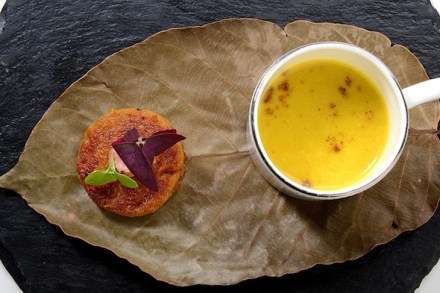
Hide is a £20 million restaurant at the Green Park end of Piccadilly, on the three lower floors of a brutalist box by Clarges Street. From outside it looks like an illustration from a storybook: people eating while illuminated in glass boxes. It is a restaurant to be looked at from outside, a restaurant with no skin. Hide is the fourth restaurant from Ollie Dabbous, who is the most talented British chef of his generation, even if you think that dowsing food in flowers is very irritating. Dabbous, which opened in 2012, offered fairy food near Tottenham Court Road, which needs it badly: strange decapitated eggs, a carpet of flowers, nuts, hay. It was glintingly metaphorically, instantly famous, then it closed.

Curry heaven

From our UK edition

Indian Accent is an Indian restaurant in Albermarle Street, deepest Mayfair, on the site of Rohit Khattar’s Chor Bizarre (‘thieves market’). It follows branches in New York and New Delhi, which featured at no. 9 in the 2016 Asia’s 50 Best Restaurants List, sponsored by S. Pellegrino and Acqua Panna. Apparently you have to mention that, or they shut the water off. The chef is Manish Mehrotra, praised in the New York Times, and a man of growing fame. Indian Accent offers ‘progressive’ Indian cuisine, which, translated, means you cannot summon the waiter and ask for a secret chicken balti. I call this the Howard Jacobson Experiment, because he does this with more success than I do.

Dishes heavy with history

From our UK edition

Le Gavroche is named for ‘the urchin’ in Victor Hugo’s Les Misérables and lives in a basement on Upper Brook Street, Mayfair. It is the most famous French restaurant in London, and the first to win three Michelin stars. It was opened by Albert and Michel Roux in 1967 in Lower Sloane Street, moved in 1981, and was taken over by Michel Roux Jr., Albert’s son, in 1991. It has nurtured — or the opposite — Marco Pierre White and Gordon Ramsay in its kitchens. The website is a garland of awards, self-worship and the minutiae of the dress code. The involvement of lawyers, at some time, is hinted at. No reservation may be given as a prize in a competition and you may be refused entry, even if you comply with the dress code.

Too grand to be joyful

From our UK edition

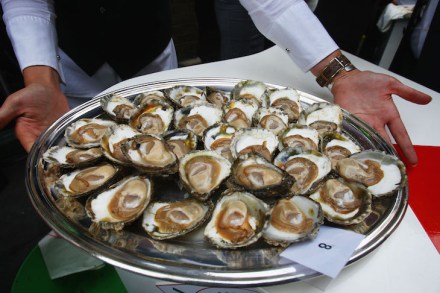
Bentley’s Oyster Bar & Grill is on Swallow Street, an alley between Piccadilly and Regent Street, which swallowed most of Swallow Street in the early 19th century. But that did not give it the name. Property developers only memorialise their crimes accidentally and Swallow Street is named for Thomas Swallow, about whom I know nothing else. He does not appear in Ed Glinert’s The London Compendium. Bentley’s is both inside and outside a squat, ugly and very interesting yellow brick house. It preens like an ugly clever man. It has fine large windows with angry brick eyebrows. Outside, diners sit under square black umbrellas and behind a partition, with glass, in a parody of a private members’ club, but in the middle of a street.

The fall of Milo Yiannopoulos

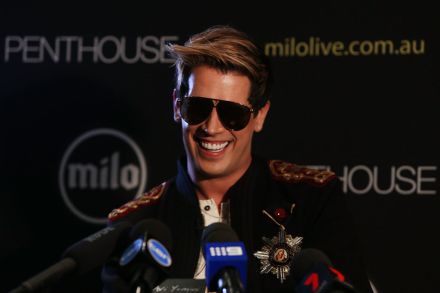
It seems the phenomenon of Milo Yiannopoulos - the brief, bright arc of his invention - is over. I do not want him to fall without being understood so I will tell you the strange tale of our encounters last year. Monsters should be understood, and pitied, for our own sakes. It is midsummer and he is staying at the W Hotel on Times Square, close to where a $35,000 billboard of his face will soon appear to publicise his book Dangerous. Milo’s real face can, therefore, check on his paper face simply by looking up at the sky. The W is a slick pseudo-celebrity hotel for tourists. Milo has checked in under the name Emmanuel Goldstein, after the character in 1984. Few British journalists recover from George Orwell. Milo is very tall, handsome, and broad in the shoulder.

How Soho became so-so

From our UK edition

Sometimes I fret that Soho House & Co is doing to this column what it does to London. It places its smooth tentacles in my prose and suddenly the column has a pointy beard and is playing table tennis, while doing something monstrous in advertising. But I have no choice. I cannot hide in ghostly seafood bars for ever. (Next time, Bentley’s.) Because now Soho House & Co has invaded Kettner’s, which has duly gone the way of the Odeon West End in Leicester Square, a lovely art deco cinema that these days is only a void. It will become something else — a hotel and maybe a cinema again — but it will remain a void. The transformation of Soho into the kind of advertorial you find in an airport lounge in Dubai goes on.

Too good for kleptocrats

From our UK edition

In 2007 Mikhael Gorbachev starred in a Louis Vuitton advert. He was driven past the Berlin Wall with Louis Vuitton luggage and the photograph was printed in Vanity Fair. It was baffling and reassuring, but nothing lasts forever. A few years ago I went on the Kleptocracy Bus Tour. It is run by a man called Roman Borisovich and it tours London — and sometimes Oxford —identifying kleptocratic crimes, feuds, housing, anxieties and behaviours. During a recent tour, a neighbour of Andrey Guryev, the fertiliser magnate who bought Witanhurst in Highgate, testified that a voice from a security box had asked him to stop strimming his own hedge.

The big fat truth

Sofie Hagen is a young Danish comic I admire. I didn’t see her most recent show, Dead Baby Frog, but I saw her win the best newcomer award at Edinburgh in 2015 and I was happy for her. I liked her sweet face and her fury. The audience treated her as a benign oddity. Because Sofie is fat. I say this with no judgment, for I am fat myself, but I am not as upset about it as she is. I make no attempt to spin my fat into a matter for universal sympathy and something to be admired. It is, as the adult self says, what it is. Even so, I used to write about being fat so often that other columnists told me to stop it, for fear I was monetising self-hatred. To which I say — what else are you supposed to do with it?

Italian without the heat or drama

From our UK edition

Jilly Cooper’s fictional hero Rupert Campbell-Black has ‘never been to Hammersmith’. I have but I wish I hadn’t. I love the Westway because it takes you away from Hammersmith. Even so, it possesses the River Café — it is not a café — a famous and influential Italian restaurant. It was ten when Tony Blair came to power, but inside it is as if he were still here, playing air guitar while chatting about PPP. It is inaccessible, taunting its clientele to go to Hammersmith. It feels as if it takes more than an hour to get to the River Café from anywhere that is not Hammersmith. How do they get there — by helicopter? There is a heliport at Battersea but what then? The 295 bus, apparently, and then a short walk.

Fake sisterhood

From our UK edition

I have not trusted a celebrity activist since 2014, when I read the headline ‘Angelina Jolie and William Hague tackle Bosnia war rapes’. They didn’t really tackle Bosnia war rapes — that is still pending — but Hague got to meet Jolie and Jolie got to meet the Queen and collect a damehood for the activism ‘I wish to dedicate my working life to’. It was a classic example of what the writer Paul Theroux calls ‘mythomania’, a condition that afflicts celebrity activists ‘who wish to convince the world of their worth’. The obvious rebuttal is that such campaigning ‘raises awareness’.

Poor cows

From our UK edition

Sophie’s lives in an old pornographic cinema at the south end of Great Windmill Street, Soho. It is opposite McDonald’s and the Windmill International (‘Probably the most exciting mens club in the world [if you don’t mind paying women to expose their breasts when they might do it for nothing if you were charming]’). Is it so exciting that the patrons do not care that they have been given a semi-consensual sexual experience but denied an apostrophe? It is also pleasingly close to the venue of the Second Congress of the Communist League, which took place in 1847, and prompted the commission of the Communist Manifesto, and all on the first floor of the Red Lion pub which is now a cocktail bar called Be At One. Quite so.

Jamie Oliver should have stuck to recipes – he’s just no good at restaurants

From our UK edition

I am not surprised that Jamie Oliver is closing twelve of his twenty-seven branches of Jamie’s Italian, and his flagship restaurant on Piccadilly, Barbecoa, which I reviewed last year, and damned, because the food was bad and the atmosphere non existent. (Well, it was almost empty; you cannot create joy in a void). I knew Oliver was in trouble before that when I ate – reluctantly, but not everyone is a food critic – at Jamie’s Italian in Victoria in late 2016. It was, like Barbecoa, queasily large, the food was bad, and, again, it was almost empty. The punters may have been buying Oliver’s cookery books but they weren’t dining at his restaurants. Or if they did, they only went once, and there is no lower praise.

Tel Aviv it ain’t

From our UK edition

Café Hampstead is a new café in — big reveal! — Hampstead, the gaudiest of the old villages on the hills around London. Hampstead was once, mysteriously, home to progressives too many to type; refugees from Belsize Park carrying their most precious back copies of the LRB in plastic sacks. Why did they live in Hampstead? What for? They have moved out now, or died, and the truth died with them. We will never know what it was that they thought they wanted, or saw; whether it was always betrayal, or the wife made them do it. You can mock, and I do, but Hampstead is less interesting without them; there is little to laugh at these days, even if it is usual to see James Corden and Ricky Gervais in the street, looking for things to put in their mouths.

Theatrical dining

From our UK edition

There is a restaurant on the stage at the National Theatre in London. It is called Foodwork, and it is part of the set of Network, an adaptation of Paddy Chayefsky’s 1976 masterpiece about a news anchorman called Howard Beale who goes mad and is given a new show — The Howard Beale Show — to preach the gospel of despair. If you think this sounds dull, imagine Huw Edwards threatening suicide after an item about ducks. Beale is played by Bryan Cranston — Peter Finch in the film — and the restaurant will close when the run ends. Ephemera, then; chase the art, chase the cake. I do not know why they built a restaurant here; some critics have complained that the set, which is Foodwork and a television studio, is too noisy: an oddity, a mistake.

Tea in the hallowed grounds

From our UK edition

As dreams of winning the Ashes became, well, the only word is ash, for 4-0 is not a number even I would minimise, there is a place — a restaurant actually — where you can hold the Ashes in your hands. Calm down. What, as I imagine myself telling Chris Grayling all the time, would your cardiologist say? They may not be the real Ashes — the person looking after them was vague, like a parent telling a child that Father Christmas would probably come down the chimney on Christmas Eve, they couldn’t really say, but it’s quite likely. This restaurant is the Long Room at Lord’s Cricket Ground, the home of Maryle-bone Cricket Club. I don’t have a sport — just arguing — but if I make mistakes, please write in like angry birds.

Gorge on syrup pud and be glad

From our UK edition

Rules looks as if it voted for Brexit, and now finds itself inside an eternal Christmas Eve, where it is always Christmas, and always Brexit. And what a gay Brexit, with swags and flounces and light bouncing through the windows on to Maiden Lane, like a child’s vision of hope. Or is it illusion? Does a chimney contain Arron Banks as Father Christmas with gifts in his sack marked ‘depression’, ‘delusion’ and ‘starvation’? Will he get stuck and go shouty-crackers on Twitter? Is Nigel Farage sipping a pint of lager, pretending to be a good elf?

Drama queen | 7 December 2017

From our UK edition

If cinema is propaganda, Elizabeth II can be grateful to it. Film is a conservative art form, and almost nothing has attempted to thwart or mock her. (The Daily Star once printed that Princess Margaret would appear in Crossroads, but Crossroads was not cinema, and it was not true. Instead the award for tabloid lie of the year was named the Princess Margaret Award.) I could not find an art film with the Queen weeping under a table in her nightgown, although she did appear in The Naked Gun: From the Files of Police Squad! (1988), and was mounted by Leslie Nielsen. She also appeared in the disaster film 2012 (2009), attempting to flee a tsunami in an ark built by China, with the dogs. This is less preposterous than the Leslie Nielsen scene. She would not go to China to die. But that is it.

Henrietta without a hairband

From our UK edition

Henrietta is a restaurant in a boutique hotel on Henrietta Street, Covent Garden, around the corner from the actors’ church St Paul’s, which is very plain. It is as if, when actors die, their feathers are put away and they die as they really are: plain. As Uncle Monty might say: I choose the Doric. Henrietta Street is full of tall, sad houses — the kind London does so well in fiction and in life. They are grand and desolate; you can imagine misery behind them. This one is red brick and, because it is a boutique hotel, they have tried to build a fairyland behind the façade: wealth and whimsy are unwilling collaborators but I can see the attraction, and it is all denial. London is so Edwardian in looks, but now it has the Candy Brothers to shower it in glass.

What will Katie do next?

From our UK edition

In her memoir Rude, the former Mail Online columnist Katie Hopkins reveals her true self. She does this by accident, because she has no self-awareness, but it is there, on page 233: It may we’ll [sic] be that by the time you are reading this I will be going through a dominatrix phase… a fierce bedroom warrior, nipples pinched tight by clamps, an orange in my gob, more buckles than a boot store, locked into a metal girdle with only my front bottom on show. Oh Katie! Don’t you know anything? The dominatrix doesn’t wear the nipple clamps; she doesn’t suck the orange; she isn’t locked into a metal girdle. This is the costume of the masochist.

The worst food in London

From our UK edition

Farmacy, which opened last year, is London’s most fashionable ‘clean eating’ restaurant; it is, therefore, a restaurant for people who hate food. This ‘clean eating’ epidemic grows as we fall into decadence and see food, rather than our own mouths, as the source of our calamity — how can we be saved from food? It is Bunyadi, the pop-up naked hobbit restaurant again, but without wit: same food, less fun, and no tree stumps at all except metaphorically, on the tops of people’s necks. It is owned by Camilla Fayed, the daughter of Mohammed Fayed, and there is probably much to divine about that family dynamic here, had I stayed, but I didn’t.