Tanya Gold

Tanya Gold

Tanya Gold is The Spectator's restaurant critic.

Feasting on memories of Venice

From our UK edition

Dining in catastrophe used to be more interesting: but we must be fair. It was a smaller (and wetter) catastrophe: the Acqua Alta in Venice. That is when the sea rises and you put bin bags on your legs; and people push you off the duckboards while other people waltz in the water, sweetly and poorly; and inexperienced tourists turn to hotel managers and say, with loss in their eyes: when can we go outside without bin bags on our legs? The experienced hotel manager will reply, with mirrored grief: ‘Madam, it is the sea [and what do you want me to do about it, you imbecile]?

Dull food for dull times: the Morrisons family food box reviewed

From our UK edition

The Compass Group boast of serving 5.5 billion meals a year, so you might think they would be good at it. Rather they walked into the most grotesque crisis of the pandemic with their subsidiary Chartwells: catchphrase ‘Eat, Learn, Live’. I might steal that. I am stockpiling one syllable words. When deputised to provide a week’s worth of school lunches to children eligible to receive free school meals, Chartwells sent food boxes so meagre that parents posted photographs of lonely carrots online. Perhaps the Compass Group was compensating for an operating profit of a mere half a billion pounds in 2020 when they are used to three times that. The cruelties of pandemic are so many! The boxes were supposed to contain £30 worth of food.

The joy of driving a superfluous SUV

From our UK edition

Now, in an anxious time, I have an SUV, and this is apt. There is something very comforting about an SUV if it’s yours (though less so if it isn’t). They are designed to dominate any landscape they can fit inside and, if that is a hollow fantasy of control it doesn’t feel like one from the driving seat. The advertising shows them climbing mountains and navigating deserts and investigating forests and this is truthful: they really can do this. It is also true that they rarely do this – their owners are the urban rich, segueing to late middle-age, and are as likely to be found in St John’s Wood as the Gobi Desert– but they can, and that is the joy in it. Owning a luxury SUV is like having a leg you do not need.

Piccadilly Circus, delivered: the Wolseley’s home dining reviewed

From our UK edition

The Corbin & King dining and home entertaining box includes dishes from the Delaunay, the Wolseley and Brasserie Zédel ‘delivered to your home and finished by you’. My husband doubts it, because it comes from London, of which some Brexiters are more suspicious than the whole of France, and because it is not ‘cooked from scratch’. He claims he never heard this phrase before he married me, but he had the sort of rural Wiltshire childhood where he would roam the fields chasing hot air balloons while his mother stood in the kitchen in an apron with a spoon waiting for him. ‘It’s like being a latchkey kid,’ he moans, as I stroke the box with tiny whimpers of joy. Then he says: ‘What’s a latchkey kid?

Sub-ready-meals of salt and tears: Simply Cook reviewed

From our UK edition

Welcome to the sunlit uplands which, for me, contain small plastic tubs of stock, which is just the opening to the year I wished for. Even local restaurants are closed for takeaway now and I cannot face my husband’s excellent British cooking (roasts, stews, pies, like a speaking Regency cookbook). When each day is Christmas Day its lustre declines; it is like being bored and rich. I should not have ordered two ribs of beef for three people. Even Virgil Dog is off beef now, and that is disgraceful. So I subscribe to Simply Cook, a bestselling meal kit that is delivered by post. We are in danger of existing by post, and I am taken in with a pretty website and the promise of that which is lost: spurious variety.

Food to absorb alcohol: Christmas hampers reviewed

From our UK edition

There is straw inside the Fortnum & Mason Christmas Treat Hamper (£100). As the straw drifts through the house, it begins to resemble a stable. I like this. Hampers are dependent on plants for their mystery: without them they would be just a carrier bag full of food. Restaurants are closed to those who live apart, unless you are in Cornwall or the Isle of Wight. So, this is the Christmas of hampers; of alcohol, sugar and baked and dried goods. There are gin hampers and beer hampers and vegan hampers. There are hampers for dogs (‘woofly good’) and hampers for cats (‘the hampurr’). There is a Branston Pickle hamper, which is mostly Branston Pickle, plus socks with Branston Pickle written on them. I think that’s excellent.

The only man who didn’t want to be Cary Grant was Cary Grant himself

From our UK edition

Cary Grant was a hoax so sublime his creator struggled to escape him. He was a metaphor, too, for the transformative magic of cinema, for its lies; and for the artifice and social mobility of the 20th century itself. His real name was Archie Leach, and he could, the critic David Thomson wrote, ‘be attractive and unattractive simultaneously; there is a light and dark side to him, but whichever is dominant, the other creeps into view’.

Spectator Out Loud: Dominic Green, Tanya Gold, Lionel Shriver and Bruce Anderson

From our UK edition

33 min listen

On this week's episode, the Spectator's deputy US editor, Dominic Green, argues that if Joe Biden departs from Donald Trump’s foreign policy, American interests will be harmed. (01:00) After, Tanya Gold reads her interview with Belle Delphine, the 21-year-old who earns more than $1 million a month from videos she posts online. (13:25) Lionel Shriver features next; she says that nobody wins from identity politics. (20:00) And finally, Bruce Anderson explains why you can’t trust supermarket cheese.

‘The internet raised me’: the strange world of online star Belle Delphine

From our UK edition

Belle Delphine lives in a mock Tudor house in a gated community in Hove. It’s necrotic, and soothing. You could be anywhere, and this is apt. Belle lives on the internet, where she entertains her subscribers, who pay $35 a month through the website OnlyFans. She is 21, and she grew up on the internet. ‘It raised me,’ she says. I watch one of her films before we meet. It shows her dressed as a Disney princess in a long pink wig and small clothes. She attacks herself with paint and rides a fluffy unicorn while shouting. Is the unicorn the internet? Is she the unicorn? I hate the film — the childishness makes me uncomfortable — but it isn’t for me. I make my husband watch it and demand he describes his emotional response. He makes a strangled noise.

A magical field hospital for vegetables: Turnips reviewed

From our UK edition

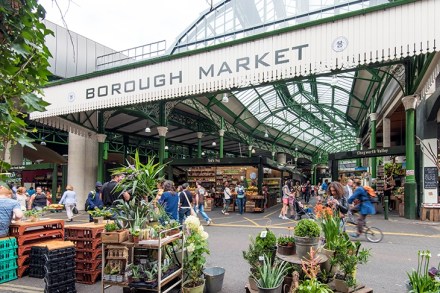
Turnips is an haute cuisine restaurant inside a greengrocer in Borough Market in London. I suspect others will try this conceit soon — it is the sort of dishonest fantasy affluent anti-vax mothers enjoy as they peddle their oblivious self-hatred on smartphones made of minerals hewn by child slaves — but not like this. Turnips is indisputably magical. Perhaps I say this because it is almost completely outdoors but still warm. These are mad times, even for mad times. Borough is a good place to feel the throb of the ancient city; but particularly now. It has the toughness and ennui of a district that says: global pandemic, kids? What else you got? Look at late-capitalist masculine inadequacy disguised as a skyscraper called the Shard. What else you got?

Me, myself and Thai: my cooking lesson from Cher Thai Eatery

From our UK edition

Lockdown is hurting everyone except the chickens. I have bought them a conservatory because Philippa, a Light Sussex, looks like ancient pants in rain. It is really plastic sheeting to hang under the henhouse; they need it because the rain is horizontal. They stare out like chickens from film noir. I have exhausted local take-aways, and you cannot get fresh hampers here. Someone sent me stock cubes for beef stroganoff in the post, which feels joyless, but everyone is selling condiments — you can lick them, call it lickdown — or chocolates or alcohol, as if for a loveless Valentine’s Day. What do I seek? Thai food.

The journalists who scripted the golden age of Hollywood

From our UK edition

When talkies appeared in 1927, Hollywood went searching for talkers to write them. It turned to men like Herman J. Mankiewicz: to journalists. The greatest screenwriters of the golden age were journalists first; unlike novelists, they thrived in Hollywood — at least professionally. Good films and good journalism need brevity; novels don’t. Reading about F. Scott Fitzgerald struggling at MGM, 12 years after The Great Gatsby, is brutal, like trying to watch a man learn to walk. The film Mank, by David Fincher, tells the story of how Mankiewicz and Orson Welles created Citizen Kane — for which they shared an Oscar for the screenplay in 1942 — and how they bickered over the credit.

Winning a knife fight with a fish: Newlyn Fresh Fish reviewed

From our UK edition

It’s a good day to stab something and tear out its heart. Elaine Lorys is the only female master fishmonger in Britain. She stands in an apron in the Stevenson fish shop in Newlyn amid the brightness of the autumn sun and signage offering mussels, oysters and clams; bass, bream and red mullet; crab and scallops; fish cakes and fish pies. Much of the fish is caught by Stevenson boats and landed at Newlyn, and is available for delivery across the UK during lockdown. The harbour is across the road, looking fine and functional, apart from the mossy medieval pier that the Mayflower may have sailed from: a local tale says the ship stopped here for water on its journey from Plymouth to Cape Cod. If a pier could look bewildered by reality, this one would. I know how it feels.

The long winter – why Covid restrictions could last until April

From our UK edition

39 min listen

Why does the government think the second wave will be worse than the first? (00:49) Will a Biden presidency restore America's fortunes? (18:45) And finally, does Covid mark the end for the silver screen? (30:10)Spectator editor Fraser Nelson talks to Carl Heneghan, professor of evidence-based medicine at the University of Oxford; editor of The Spectator's US edition Freddy Gray is joined by columnist Lionel Shriver; and reviewer Tanya Gold is in discussion with The Spectator's arts editor Igor Toronyi-Lalic.Presented by Lara Prendergast.Produced by Gus Carter, Max Jeffery and Sam Russell.

The magic of cinema isn’t just about film

From our UK edition

Cinema is fading. Borat went straight to Amazon Prime, where he is smaller, and Bond 25 — no time to die eh? — is delayed until next year. In response Cineworld has ‘temporarily’ closed its cinemas and the smaller film houses are struggling. Millennials and Generation Z don’t mind, but I am no such creature: I was an usherette at Options in Kingston-upon-Thames in 1990. Do they know that cinema remains, despite its best efforts, the most inspiring kind of mass culture? Dreams mean nothing to the gilded and interesting: they do not need them. But I, an ordinary suburban child, did need cinema, specifically Options, which is now an Odeon, showing Ooops! The Adventure Continues… With product such as this, you could argue cinema deserves to fail.

This replica is better than the original: The Ivy Oxford Brasserie reviewed

From our UK edition

Oxford is not an easy city to homogenise; but that doesn’t mean you can’t try. I found a vast shopping centre where the Westgate used to be, looking as shopping centres do: lonely, despite its similarity to every other shopping centre. This was confirmed by the signage. New York City loves and misses you, said a sign, which I doubt: surely New York has things to worry about beyond the citizens of Oxford being unable to shop in New York City if they cannot get what they want at the Westgate? Still, I like the idea of shopping centre lamenting shopping centre across the ocean; it expresses the fashionable neurosis that objects are sentient, and worthy of compassion. Oxford is an ideal place to believe this, because the stones are the most convincing thing here.

The best food Italy can offer: Giannino Mayfair reviewed

From our UK edition

Pity the gilded restaurants of Mayfair, if you can: they are dying. Some have reopened; they ache on like men with no legs but a glut of polenta. Occasionally, a brave one will open for customers who simply do not exist and so hangs about like a character in a Vladimir Nabokov novel: interesting but superfluous. Where are the rich? In Tuscany? On MS The World, the floating block of luxe flats? In the vault? Because they are nowhere to be seen: they are like plushly appointed Borrowers. A journalist wrote his report of the reopening of the Savoy Hotel in the Strand last month. They had six guests in a hotel reconfigured — for social distancing — for 100.

Would be much better without Bill or Ted: Bill & Ted Face the Music reviewed

From our UK edition

I think I am supposed to say that Bill & Ted Face the Music, the third in a franchise about two Californian morons who time travel to save the world, is a harmless satire on American teenage good-naturedness and stupidity. I’m not sure about that: I think it is more likely evidence of what American cinema has done to the American mind since Jaws turned the B-list film into the A-list film, and vice-versa. Its heinous. The premise is: creatures of the future decided long ago (in 1989) that Bill and Ted would one day write a song that would heal reality.

Social distancing in Soho: The French House reviewed

From our UK edition

London is gasping — so where to go but Soho, which is so good at despair? It is often necrotic but now, of the central London districts, it feels the most alive. Mayfair is a pretty corpse — I pity the luxury services industry, for its clients are in hiding — but Soho’s restaurants have spread themselves on to the streets and it feels as interesting as it used to, a place that has found its purpose again. It has been over--gentrified — the renovation of Raymond’s Revue Bar is horrifying, because they closed the revue bar and kept the signage — but now it feels giddy and important: a home for the insensible and the brave. Soho has known worse things, after all.

This is what cinema is for: Netflix’s Cuties reviewed

From our UK edition

Cuties is the subject of a moral panic and a hashtag #CancelNetflix. It tells the story of Amy (Fathia Youssouf), an 11-year-old Franco-Senegalese girl living in Paris, who learns that her father is taking a second wife. (Polygamy is widespread in west Africa, but you wouldn’t know it from mainstream cinema. You wouldn’t know much from mainstream cinema.) The film deals with the lead-up to the wedding. Amy watches the suffering of her mother (the superb Maïmouna Gueye), who must prepare the house for the interloper, scattering cushions over the marital bed, and the bombast of her small brother, who eats cereal and is learning to be a misogynist. (I suspect the baby will get there too, in the end. But he will have to learn to talk first.