Tanith Carey

Tanith Carey is the author of books including Feeling 'Blah'?: Why Anhedonia Has Left You Joyless and Never Kiss a Man in a Canoe: Words of Wisdom from the Golden Age of Agony Aunts.

Why my dog is vegan (and yours should be too)

This morning, as usual, I was woken up by the large ball of golden fluff that is my dog, Honey. At a time she considers decent, she bounds on to my bed, tail wagging furiously, to tell me it’s time for her breakfast. Honey still has the puppyish bounce she has always had – even though, at the age of almost 12, she is gently settling into canine old age. And I’d go so far as to say that what I give her to eat has a lot to do with her youthfulness. Eye-roll as much as you like, but I believe one of the key reasons Honey is thriving is because she hasn’t eaten meat for more than six years. Yes, my dog is vegan. Not that she realises that, of course: as far as she’s concerned, she still gets the same sausages, dog chews and choice of dry and wet foods as she’s always had.

Why Roman gladiators were the first feminists

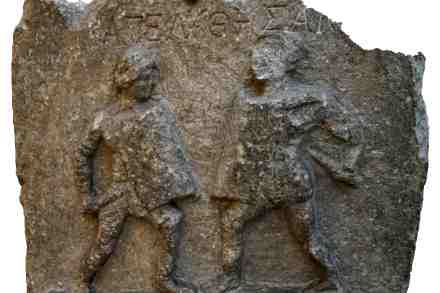
Chiselled out of stone in around the 1st century AD, the scene in this image gives a powerful snapshot of the excitement of gladiatorial combat. In this carving found in Turkey – once a key part of the Roman empire – the opponents face each other head-on, with a look of grim determination. From behind their curved rectangular shields, both appear ready to lunge with short stabbing swords. However, this gladiatorial fight differs from what you might expect in one crucial way: both opponents are women. Look closely enough and you will see the gladiator on the left has her long hair in a plait which snakes down to a bun at the bottom of her neck.

The real reason you hate vegans

Just when it seemed as though January in Britain couldn’t get any bleaker, along came ‘Veganuary’. Cue loads of puny, blue-haired wokerati spending this month preaching about how we should give up on two of man’s greatest pleasures – meat and cheese. If you’ve been finding it irritating, you’re not alone. In surveys of public opinion, vegans are hated more than any other group, with the exception of drug addicts. So when a chef tells the newspapers that he’s banned vegans from his restaurant, or a magazine editor jokes that they should be killed, do you feel justified in allowing a smirk of amusement to cross your face? After all, in an era when we are supposed to have obliterated all our prejudices, despising vegans still feels deliciously permissible.

The life-affirming misery of the Cure

Watching the Cure’s live-streamed performance of their first album in 16 years, it was hard not to notice the toll time has taken on Robert Smith. At 65, his black spiky hair has long turned into a bedhead of fag-ash grey – a reminder to those of us who have grown up with him that none of us are as young as we used to be. As the slow waltz of the first track of Songs of a Lost World kicked in, and Smith wailed ‘Where did it go?’, it was starting to look like a very gloomy evening indeed – even by the standards of a band hardly known for its cheeriness. I’ll admit that as I started to watch the Troxy gig live from my sofa, even I, as a long-time Cure fan, worried how dark it was going to get.

The science of a happier 2025

As 2025 gets under way, I’m going to guess that one of your hopes for the coming year is ‘to be happy’. I’m also going to take a punt that you’re likely to spend a considerable amount of time, effort and money doing things you hope will make you feel that way. But considering that happiness is the number one goal of most people living in the western world, here lies the unspoken paradox at the heart of this tireless quest. Most of us can reel off a list of things that we believe will make us feel good – a great holiday, a delicious dinner, a promotion at work, fabulous sex. Yet many still don’t have a clue about how the feeling of pleasure is made in our brains in the first place. And knowing would be an incredibly useful way to work out how get more of it in 2025.

The sad demise of the scathing school report

As the first term of the school year draws to a close, pupils’ reports will soon be landing, encrypted and password-protected, on parents’ smartphones. But once they’ve finally managed to open them to find how little Amelia or Noah has been performing, there will be another code for them to crack: what on earth the teachers are actually trying to say about their child. These days, reports tend to be written with the help of AI software or templates, which makes it impossible to work out how your child is really doing. In our super-sensitive age, many schools now play it safe by couching all comments as positives, and only using approved adjectives from word banks and drop-down menus.

Why are Brits such bad neighbours?

I sometimes wonder if a property lawyer dreamt up the idea that an Englishman’s home is his castle. Over the years, it’s certainly been a lucrative concept for the legal profession, especially when said castle is worth a few bob. Barely a week goes on when one of the posher papers doesn’t feature an expensive spat in an equally expensive neighbourhood. The latest feud I’ve seen involves a brook that runs through two properties – one owned by an artisan potter, the other a part-time painter – in the bucolic Leicestershire village of Thrussington. The row over who owns the right to this peaceful babbling has so far cost the rival parties a nerve-jangling £300,000 after it was heard by three judges in the Court of Appeal last month.

Did Churchill have ADHD?

If ever a mental health diagnosis can be called ‘fashionable’, it’s ADHD, or Attention Deficit Hyperactivity Disorder. The mere mention of it can trigger moans that it's nothing but the latest ‘woke’ way to pathologise fidgeting, lack of self-discipline and bad parenting. So if you’re in that camp who rolls their eyes everytime you hear the term, prepare to be irritated. I’m going to argue this so-called ‘new’ condition is responsible for nothing less than changing the course of British history. ADHD is real, and it’s had consequences throughout history: few more surprising than the qualities it bestowed upon Winston Churchill.

Confessions of a competitive dog owner

Defeat stares me in the face every time I walk down my north London street. Decorating the knocker of a house a few doors along is a blue rosette announcing it’s home to the winners of the street dog show. Whenever I go past with my cockapoo Honey, she is nonchalant, barely bothering to stop for a sniff of the doorstep. I, on the other hand, am still seething – because until that sunny day almost two years ago, Honey had been undefeated. She was a champion, if not at Crufts, at least on the local dog show circuit where she has racked up certificates, rosettes and vast supplies of free dog chews, in everywhere from Hampstead Heath to Crouch End. Honey had seen off countless rivals, from cavapoos to bichon frisés, huskies to sausage dogs.

Why modern life doesn’t make us happy

The greatest delusion ever sold to us by modern advertising is not that we need to buy water in bottles or that rocks make good pets. It’s the delusion that we should expect to be happy all the time. This idea certainly would have been news to our ancient ancestors. Over millions of years, they became the dominant hominid on the planet because their brains evolved to be survival machines, not happiness generators. The first peals of laughter around those early campfires were not because everyone was having a good time; laughter evolved as a social bonding signal to communicate to the rest of the tribe: ‘Phew, we’re safe now. Looks like we’ve seen off that saber-toothed tiger.

The invasion of the wheelie bins

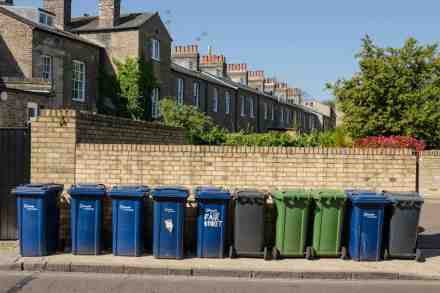
Once I thought nothing could make residential Britain look uglier than pebble-dashing, PVC windows and satellite dishes. I was wrong. As if the country had not been brutally homogenised enough by the fact that every high street has the same shops, now every residential road is reduced to being an identical backdrop for a very persistent invader: the wheelie bin. Lined up like Daleks, they are breeding in my North London neighbourhood, blocking front gardens and pavements. Outside houses split into flats, where each has its own set, there are actual crowds of these 4.5ft graceless plastic buckets, which come in multiple colours for different sorts of rubbish. When wheelie bins first started infiltrating our streets just over a decade ago, we valiantly tried to fight back.

In praise of meatless steak

Sirloin, rump, tomahawk, fillet, rib-eye. However it comes, is there any food that gets salivated over more than steak? Restaurant reviewers compete to outdo one another with their florid descriptions of the sensual delights of tucking into a particularly prime example. But then steak comes loaded with far more than a dollop of garlic butter or hollandaise. More recently, tucking into a juicy slab of meat has also become a bold statement of ‘I will eat – and live – as I please’, a carpe diem rejection of vegan-botherers and eco-worriers. Veganism is on the rise, with the number of vegans in Britain quadrupling between 2014 and 2019.

Six more years: how long can Biden go on?

43 min listen

On the podcast this week:  The Spectator’s deputy editor Freddy Gray writes the cover piece looking ahead to the possibility of another 6 years of President Biden. He is joined by Amie Parnes, senior staff writer at The Hill and co-author of Lucky: How Joe Biden barley won the presidency, to discuss whether anyone can stop Biden running in 2024 (01:00).  Also this week:  In the magazine Fr Patrick Burke writes a moving tribute to Pope Benedict XVI. He joins the podcast to discuss Benedict’s intellectual legacy and what the Church gained from his theological work (16:05). We are also very lucky to have a special recording from Melanie McDonagh who dials in from St Peter’s Square to give her reflections on the late Pope’s funeral (29:43).

The rise and fall of agony aunts

What better barometer of the nation’s psyche could there be than the questions in an agony aunt’s postbag – and the answers they receive? ‘My transgender brother is furious over my choice of baby name’, ‘My Remainer husband is refusing to get a new passport’ and ‘My leftie wife is condescending and annoying’ are just a few of the timely examples from one recent broadsheet column. These days, many responses to such dilemmas are variations on ‘Live your truth’ (in other words, do and say whatever makes you happy) – which may go some way towards explaining why agony aunts are no longer the essential reading they once were.

Why David Bowie was the model of a Renaissance Englishman

It’s hard to imagine how baffled the British public must have been by the arrival of David Bowie on to TV screens in the early 1970s. With his saffron hair, make-up and androgynous clothes, superficially he looked like a rejection of everything his post-war south London childhood had taught him. One of the most pivotal scenes in Moonage Daydream, the recent film about his life, is his 1973 interview with chat show host Russell Harty. Throughout this awkward cross-examination, Harty searches for a label he can stick on Bowie for the benefit of discomfited viewers. ‘Are those men’s shoes? Or women’s shoes? Or bisexual shoes?’ Harty inquires, looking down at Bowie’s strappy red and gold platform sandals. ‘They’re shoe-shoes, silly!