Svitlana Morenets

Svitlana Morenets

Svitlana Morenets is a Ukrainian journalist and a staff writer at The Spectator. She was named Young Journalist of the Year in the 2024 UK Press Awards. Subscribe to her free weekly email, Ukraine in Focus, here

How Ukraine plans to revive its birth rate

From our UK edition

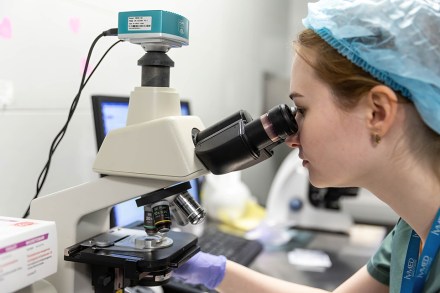
In my village in Ukraine, there aren’t many families left intact. The funerals of those who have been killed in the war have been taking place with crushing regularity. It feels like everyone’s loss. Today, in house after house, you can find parents whose children have either died or are still fighting with no indication of when they may return. It’s almost impossible for couples to start families – men are deployed to the front line with little hope of any leave. If they return alive, most are maimed in some way.  There is, though, a spark of hope for these young Ukrainians. Ukraine has quite an advanced network of fertility clinics, which are often used in more peaceful times by foreigners taking advantage of liberal surrogacy laws.

Ukraine has brought the war back to Russian soil

From our UK edition

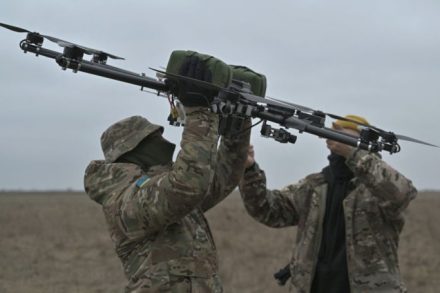
Ukraine can’t stop Vladimir Putin’s re-election as Russian President on Sunday, but that doesn’t mean it can’t shatter the perfect image of his sacred day – by bringing the war once again to Russian soil. Throughout the week, Ukrainian drones have been striking oil refineries and energy facilities deep inside Russian territory, while anti-Kremlin Russian militias fighting on Ukraine’s side have crossed the border on tanks and started a fight with Russian forces. This incursion into Russian territory wasn’t unprecedented: last spring, exiled Russians fighting on Ukraine’s side infiltrated several Russian towns in the Belgorod region, fought for several days, and then withdrew.

Zelensky’s sacked army chief posted to London

From our UK edition

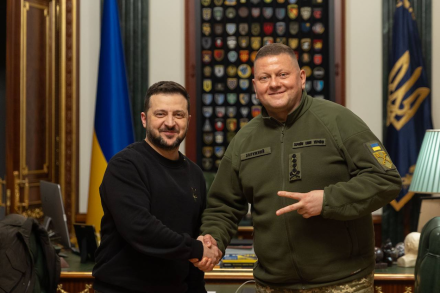
When Ukrainian war hero Valery Zaluzhny was fired as the head of the military a month ago, all talk was on what his new role would be. The logical option seemed to keep the general among Ukraine's military command, where he could share his valuable experience of fighting the war with Russia. But instead, he is being sent to London as Ukraine’s ambassador to Great Britain. According to president Zelensky, Zaluzhny requested the posting himself. It was rumoured at the time that, when Zaluzhny was fired, he was given two options: become Zelensky’s adviser or head to London. At the time, sources suggested Zaluzhny turned down both offers. Now, he has accepted the new role.

Zelensky: ‘31,000 Ukrainian soldiers have been killed so far’

From our UK edition

After two years of secrecy, Volodymyr Zelensky has finally revealed the number of fallen Ukrainian soldiers. ‘31,000 Ukrainian military personnel have been killed in this war. Not 300,000 or 150,000, as Putin and his deceitful circle falsely claim. But each of those losses is an enormous loss for us’, he said. The President chose not to disclose the number of wounded troops: this, he said, was to prevent Russia from knowing how many people had ‘left the battlefield’. The news was shocking but not surprising. Sergei Shoigu, the Russian Defense Minister, recently claimed that the Ukrainian army had suffered over 160,000 casualties during counter-offensive last year. Such Russian updates on the matter are widely dismissed in Ukraine as ludicrous.

Will the Ukrainian army retreat from Avdiivka?

From our UK edition

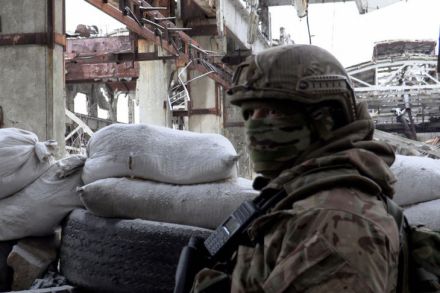
The battle for Avdiivka in Donetsk Oblast is a bloodbath. The city, which is also called the ‘gateway to Donetsk’, is semi-surrounded. Some 50,000 Russian troops are trying to advance from three sides while they keep the main supply route into the city under artillery fire. At least 15 per cent of Avdiivka has been captured – and battles are being fought in urban areas. ‘We are forced to fight at 360 degrees against more and more brigades that the enemy is bringing in,’ said Andriy Biletskyi, commander of the 3rd Assault Brigade, which was deployed to rescue Avdiivka last week. Russia has sufficient manpower and artillery superiority, so its army is less keen on sending wave after wave of poorly trained troops into battle.

Svitlana Morenets, Paul Mason, Robbie Mallett and Lloyd Evans

From our UK edition

26 min listen

This week: Svitlana Morenets takes us inside Ukraine's new plan for mass conscription (01:01); Paul Mason says that Labour is right to ditch its £28 billion green pledge (10:49); Robbie Mallett tells us about life as a scientist working in Antarctica (15:48); and Lloyd Evans reads his Life column (21:24).  Produced and presented by Oscar Edmondson.

What Tucker Carlson should have asked Vladimir Putin

From our UK edition

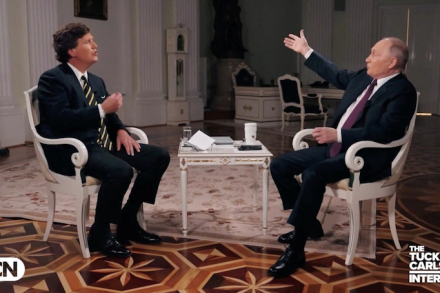
Vladimir Putin relished being interviewed by American journalist Tucker Carlson, who doesn’t seem to know much about Russia, Ukraine or the war. The old autocrat turned a two-hour interview into a monologue and spent most of it talking about a fictionalised history of Ukraine. In one of the rare moments when Carlson dared to interrupt Putin and ask about the war, Putin said he didn’t start it. ‘This is an attempt to stop it. We have not achieved our aims yet, because one of them is denazification,’ he said, and then continued to talk about neo-Nazi Ukrainians.

Zelensky has sacked a Ukrainian hero

From our UK edition

If you have to ask Ukrainians to name the biggest hero of the past two years, most would probably say Valery Zaluzhny, who has just been fired as the head of the military. Under his command, Kyiv was defended and Ukraine reclaimed more than half of the territory that Russia occupied since February 2022. It was Zaluzhny, as much as president Zelensky, who inspired Ukrainians. But now he has been sacked. One of his former deputies, Colonel-General Oleksandr Syrsky has taken his place.  Zelensky broke the news in a video address to the nation. ‘I am grateful for every victory we achieved together and thanks to all Ukrainian soldiers who are heroically fighting this war’, he said. ‘We spoke frankly today about what needs to change in the army. Urgent changes.

Ukraine is in a bind over mass conscription

From our UK edition

In the second world war, the average age of a combat soldier was 26. In the Falklands, it was 23. For Ukrainian soldiers, it’s 43. The war in Ukraine has been, so far, fought mostly by fathers so their sons and daughters can rebuild the country when the fighting ends. But resisting Russia has cost so much and has continued for so long that the Ukrainian army is depleted. What to do next is a question that’s not just dividing the country but its two foremost leaders: President Volodymyr Zelensky and Valery Zaluzhny, the head of the military. The gap between those who are fighting and those who aren’t is wider than ever Ukraine’s 600-mile front line is being defended by 880,000 soldiers, according to Zelensky.

Who is persecuting Ukraine’s journalists?

From our UK edition

Investigative journalism has often been deadly for the careers of corrupt politicians in Ukraine, with stories leading to resignations and even imprisonment. Now, under the conditions of martial law (including the closure of public data services) and limited opportunities for society to control the actions of the authorities, Ukrainian journalists became the main watchdogs over the government. This week they found out they were being watched, too. Bihus.info, an investigative team exposing corruption among Ukrainian officials, came under attack. A questionable media outlet named People’s Truth released a video showing some Bihus employees (camera operators and social media managers) allegedly ordering and taking drugs at a New Year’s party.

What Britain’s defence deal with Ukraine means for the war

From our UK edition

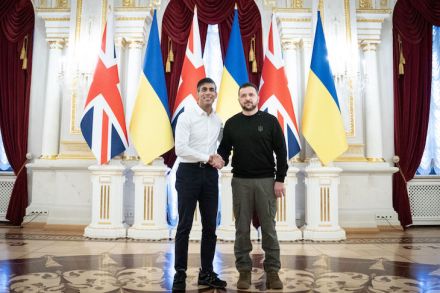
In his surprise visit to Kyiv, Rishi Sunak had two pieces of good news for Ukrainians: another £2.5 billion in military aid and an agreement to sign a bilateral defence deal. Ukraine isn’t going to join Nato any time soon, so the country's leader Volodymyr Zelensky has been trying to build a next-best alternative: a series of deals with allies. Britain is the first. The UK says it will provide intelligence sharing, cyber security, medical and military training and defence industrial cooperation. And post-war, if Ukraine is ever attacked by Russia again, the UK will agree to provide ‘swift and sustained’ assistance.

Svitlana Morenets, James Heale and Theo Hobson

From our UK edition

17 min listen

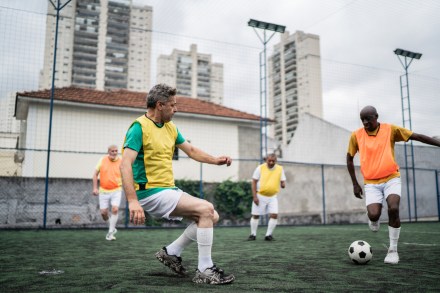
This week: Svitlana Morenets explains why Ukrainians can't trust Putin's hollow promises (00:57), James Heale reads his politics column on Rishi's January blues (05:42), and Theo Hobson describes the joys of middle-aged football (10:54).  Produced and presented by Oscar Edmondson.

Putin’s ‘peace’ is a partitioned Ukraine

From our UK edition

52 min listen

On the podcast: In his new year’s address this year Vladimir Putin made no mention of the war in Ukraine – despite missile strikes over the Christmas period – and now Owen Matthews reports in The Spectator this week rumours that Putin could be looking to broker a land-for-peace deal. Unfortunately – Owen says – this deal would mean freezing the conflict along its current lines and the de facto partition of Ukraine. Owen joins the podcast alongside The Spectator’s Svitlana Morenets who gives her own take on Putin’s 'peace' deal in the magazine this week. (01:21) Next: Former Sky News and GB News broadcaster Colin Brazier writes a farmer’s notebook in The Spectator this week about his new life as a farming student.

Ukrainians can’t trust Putin’s hollow promises

From our UK edition

Ukraine’s parliament will soon vote on much-needed conscription regulations which would draft an extra half a million recruits into the army. The categories of eligible men will be expanded, the draft age will be lowered from 27 to 25, and any man caught attempting to evade it will face harsh sanctions or imprisonment. Volodymyr Zelensky has stopped talking about victory coming any time soon. His New Year’s message was grim: everyone must either fight or help through work. Ukrainians are braced for another year of war. But talk of ‘peace’ or ‘compromise’ is still seen as code for a surrender which would reward rather than punish Vladimir Putin’s atrocities, cede ground and give him the opportunity to come back for the rest later.

What will it take to stop Putin?

From our UK edition

I feel sorry for Volodymyr Zelensky. It’s devastating watching him travelling all around the world, struggling to convince even his closest ally, Washington, to keep helping Ukraine. But that is not his only problem. I bet Zelensky and his speechwriters are tossing and turning in bed at night, wondering what he should say when he addresses Ukrainians over Christmas and New Year. This time last year, he said 2023 would be ‘the year of victory’. Now there are fears that Ukraine could lose. These are dark times for Ukraine. While the West drowns in ‘fatigue’ from a war it is not fighting, Russian forces have taken the initiative along the frontline. Avdiivka in the Donetsk region remains the scene of the most intense battles.

Russia’s plan to freeze Ukraine

From our UK edition

Winter hasn’t officially started, but Ukraine is already covered in snow. As temperatures dip a few degrees below zero, the nation is grappling with an electricity deficit. Ukrainians have been urged by the national power company to use electricity sparingly during the day and take measures such as switching on the washing machine at night. It’s just a taste of what’s about to come: for Russia, the cold is a weapon – and missile strikes aimed at power stations seek to freeze the nation into surrender. Last winter, even though Ukraine’s air defence systems downed hundreds of Russian missiles and drones, Russian forces managed to successfully strike Ukrainian energy facilities 271 times. The average Ukrainian household endured five cumulative weeks without electricity.

Svitlana Morenets, Sean Thomas and Angus Colwell

From our UK edition

21 min listen

This week, Svitlana Morenets says Ukraine’s counteroffensive is not living up to the hype (00:59), Sean Thomas says he likes travelling to crappy towns (10:27), and Angus Colwell defends London’s rickshaw drivers (17:38).  Presented and produced by Max Jeffery.

Back to the future: Sunak’s big gamble

From our UK edition

45 min listen

On the podcast: It's been a busy week in Westminster. On Monday, Rishi Sunak's first major reshuffle saw Suella Braverman sacked and David Cameron make a surprise return to politics.  Then two days later, the Supreme Court's Rwanda ruling left the government's pledge to 'stop the boats' in tatters. It was meant to be the week in which Rishi Sunak had hoped to stamp his authority on a fracturing party, but it seems to have only added to the narrative of Tory disrepair. Katy Balls writes about Rishi’s last gamble in the magazine this week, and joins the podcast alongside Kate Andrews, The Spectator’s economics editor. (01:01) Also this week:  Svitlana Morenets writes a candid account of the current state of the war in Ukraine for The Spectator.

Zelensky must be honest about the state of the war

From our UK edition

‘Happy New Year! The year of our victory!’ said Volodymyr Zelensky on 1 January. After the liberation of the Kharkiv region and Kherson, Ukrainians entered the ninth year of the war with hope that they could win. Light will always prevail over darkness, Zelensky likes to say. But now the counter-offensive is nearly over, having made crushingly few gains. With western support waning, Kyiv needs to be honest about how the war is going and what it will take to turn the tide. Ukrainians should be told that there is a shortage of soldiers and that mass conscription is urgently needed After Zelensky, the most popular figure in Ukraine is Valery Zaluzhny, commander-in-chief of the military – and he has a very different message.