Susan Moore

Jeff Koons’s work is childish — just like us

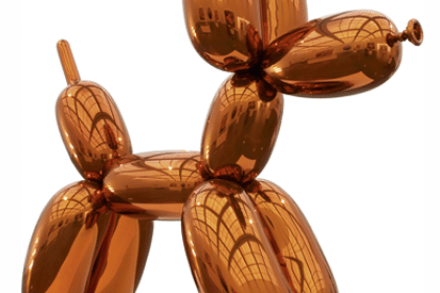
The contrast could not have been more acute. It came the day after a press release from Christie’s New York pinged into my inbox announcing the forthcoming sale of Jeff Koons’s ‘Balloon Dog (Orange)’ on 12 November. Even by current auction-house standards, the hype was of heroic immoderation but it was the novel brazen pandering that shocked me. It is a moot point whether Mr Koons’s monumental party balloon — sleekly engineered in high chromium stainless steel and more than three metres long and some three and a half metres high — is indeed ‘the most beloved of all contemporary sculptures’, or whether the auction itself will be a ‘landmark’ event ‘set to make history’.
Museums in dire straits forced to sell treasure to raise funds

It is a desperate state of affairs when museums and art galleries sell outstanding works of art in order to raise funds. It is even worse, perhaps, when they do so because they no longer want them. Next month, on 5 June, Sotheby’s New York is offering some 25 classical carpets on behalf of the Corcoran Gallery of Art in Washington DC, which includes what the auction house describes as ‘one of the most important and revered carpets in the world’. No one taking the trouble to contemplate the 17th-century Isfahan ‘Clark Sickle-Leaf Carpet’ (right) for more than a minute could fail to be entranced by it, or to recognise that this most beautiful and astonishingly complex of textiles is a remarkable work of art. That is, in one sense, precisely why it is being sold.

A step away from buying toothpaste

Fifty years ago it was not possible to bid at auction via the telephone — that first historic telephone bid was made for a Monet at Christie’s in 1967. Now the auction house’s Great Rooms, and indeed every other international saleroom, is lined by banks of telephones and digital screens, and absentee clients may also bid from anywhere in the world online, live through an interactive bidding portal or via iPhone and iPad apps. It seems that one moment advances in technology allowed Elizabeth Taylor to sit by her pool in Bel Air in her swimsuit and bid on the telephone for Duchess of Windsor diamonds in Geneva, the next, that part of her estate could be dispersed around the globe courtesy of Christie’s inaugural online-only auction.

Back to the future | 11 October 2012

Two pop-up art fairs border Regent’s Park in London. To the south is Frieze London, an edgy fair-cum-fairground offering the thrills and spills of the latest and most innovative trends in global contemporary art. Launched a decade ago, it was unique among ambitious international art fairs in proving an instant and overwhelming success. Last year some 68,000 visitors walked through its doors. This year sees the launch of Frieze Masters, sited at the northern end of The Broad Walk, also running 11–14 October. Frieze Masters sets out to offer a fresh perspective on historical art — paintings, works on paper and sculpture — by highlighting the eternal dialogue between the old — at times extremely old — and the new.

All the fun of the fair | 3 March 2012

It is easy to take the art and antiques fair for granted. After all, thousands of them take place every year, from humble events in village halls — cardboard boxes, old newspaper and cups of tea — to fairs so glamorous that on opening nights the ticket alone can cost $5,000. It was not ever thus. That revered mother of all such selling exhibitions — what became known as the Grosvenor House Art and Antiques Fair — was conceived in 1934 as a daring initiative to stimulate trade in the dark days of post-Depression London. As for the word ‘fair’, the late and much-lamented Frank Davis, who was still writing his Country Life saleroom column aged 97, recalled in 1961 that the very use of the term had caused unease when first mooted.

Money talk

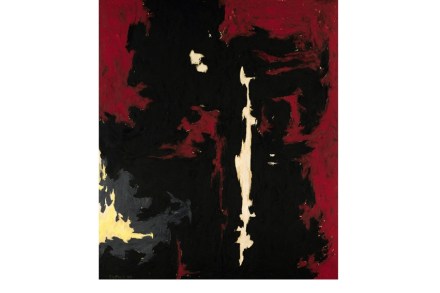
At least one market posted strong results in November. That was the market for contemporary art. In just four days in New York — 7 to 10 November — a phenomenal $775 million was spent on postwar and contemporary art at auction alone (who knows what deals were transacted privately). Sotheby’s evening sale exceeded its expectations by more than $45 million. Here, a real market rarity, a magnificent painting by the American Abstract Expressionist Clyfford Still, fetched a mighty $61.7 million. Some 45 works sold for over $1 million; seven sold for more than $10 million. Good news, one might say — but only up to a point.

Going private

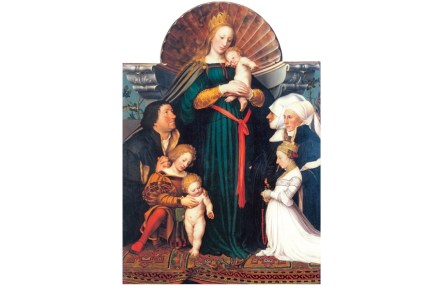
One of the greatest Renaissance paintings remaining in private hands, Hans Holbein the Younger’s ‘The Darmstadt Madonna’, was sold discreetly this summer. It was not offered at auction but sold by private treaty sale — auction-speak for a negotiated private sale rather than a public auction — in a deal brokered by the art consultant and former head of Sotheby’s Germany, Dr Christoph Graf Douglas. This seminal panel painting, begun in 1526, was commissioned by Jakob Meyer zum Hasen, Mayor of Basel, who is portrayed alongside his family praying at the feet of the Virgin and sheltered by her cloak. It is the artist’s first major altarpiece to represent a new and Italianate form of ideal beauty.

Out of the ordinary | 4 June 2011

From high in the sky over Cappadocia Susan Moore looks down at part of the largest contemporary land art project in the world There are few artists whose work is best seen by hot-air balloon. There are even fewer whose works can only be photographed in their entirety by satellite. To describe the Australian Andrew Rogers as a land artist on an epic scale seems something of an understatement. Over the past 13 years he has masterminded the construction of 47 monumental structures in 13 countries spanning seven continents and involving some 6,700 people. The more remote a site, the better it suits his purpose. Rogers has a penchant for wilderness, desert and plateau, favouring culturally resonant sites that are often barely accessible, and not flinching from challenging extremes of climate.

Chinese burn

A kind of madness has taken grip of the art market. It seems that the world’s super-rich have decided that money has no value — or at least that it has a value different from that understood by the rest of us. Just this month, one of Alma Tadema’s fanciful biblical epics was sold for an incredible $36 million (previous auction record $2.8 million), a Modigliani changed hands at $69 million (previous record $31 million), while a now famous porcelain vase made for the Emperor Qianlong, which turned up in a bungalow in Pinner, realised more than £53 million — a world auction record for any Chinese work of art. Of all global art markets, none is more feverish than that of Chinese art.

Art is a high-risk business

Never before have so many people in so many places collected works of art. In the past decade, the auction houses in particular have made heroic efforts to expand their markets, both by reaching out to emerging economies and by embracing new technologies. Thanks to instant translation by online search engines and live online auction platforms, it is now as easy to buy a work of art offered by an English provincial auction house or a Manhattan dealer while sitting in Guangzhou as it is from Guildford. The international art market has become global, and art is now seen as an asset class for investors. Given the current performance of the global financial and property markets, it is probably fair to say that more people than ever are tempted to put their money in works of art.

Art fairs: Satellite superiority

It is a critical moment for the Biennale des Antiquaires in Paris — and for the French art trade. It is a critical moment for the Biennale des Antiquaires in Paris — and for the French art trade. For this year’s edition of this most august art and antiques fair (which ended last week) — ostensibly celebrating its 25th anniversary — came as a real shock. It was not that the fair was poor; it was simply underwhelming. How can it be that this once peerless event is no longer distinguishable from any other good international fine art and antiques fair?

The hard sell

For all the billion-dollar turnovers and glamorous, high-profile sales in New York, London, Hong Kong and Paris, the top level of fine-art auctioneering is a notoriously high-overhead, low-profit business. At times, it is even a no-profit business (Sotheby’s made a loss last year). How the Big Two auction houses have grappled to respond to this uncomfortable fact has shaped recent saleroom history. First came collusion and price-fixing, which resulted in damaging — in every sense of the word — antitrust litigation in the US, and then brave but initially unsuccessful attempts to harness the internet revolution, with sothebys.com.

Shutting up shop

One day, perhaps sooner rather than later, it may be possible to draw a telling analogy between the practices of the world financial markets which propelled the global economy to the brink of recession and those which prompted the phenomenal rise of the international contemporary art market. After all, so many of the players are one and the same. Of course, the contemporary art market has not crashed — its next real test comes with November’s multimillion dollar sales in New York — but only fools’ gold would bet on anything other than what might euphemistically be termed an adjustment.

Special relationship

For the past 20 years or more the auction houses have been doing their utmost to wrest the retail art market out of the hands of the dealers. Few would disagree that they have had considerable success. In taking over Sotheby’s in 1983, the Detroit shopping mall billionaire Alfred Taubman saw what he called ‘a unique marketing opportunity’ in transforming what was essentially an up-market but loss-making wholesale operation — the majority of saleroom buyers were dealers — into a glamorous retail business. The allure of turning a profit by circumventing the dealers was irresistible. And the real beauty of it was that this ‘retail’ business did not require any investment in expensive inventory.

Cult of the masterpiece

Location, location, location. On the morning that Christie’s prepared to launch the art market’s latest high-profile, big-buck season of Impressionist, modern and contemporary sales in New York — a series beadily scrutinised by the throng of art-world Jeremiahs who have long predicted the end of this particular art-market bubble — the auction house announced that it was offering by private treaty sale one of the most highly valued works of art of this or any season — a colossal $120 million Warhol portrait of Chairman Mao. Not in New York but in Hong Kong. The announcement speaks volumes about the nature of today’s newly truly global art market.

The ideally expensive thing

Susan Moore on how the Americans have become net sellers of works of art Junius Spencer Morgan caused a sensation in 1876 when he paid the staggering sum of £10,100 — more than the National Gallery of London’s annual purchase grant — for Gainsborough’s celebrated portrait of Georgiana, Duchess of Devonshire. Since then a seemingly interminable line of nouveaux-riches American ‘Despoilers’ has relieved the impecunious (and often only too willing) European aristocracy of the art treasures their ancestors had amassed over the centuries. The phenomenon prompted the foundation of the National Art Collections Fund in Britain in 1903 to help save such treasures for the nation, and was subtly dissected by Henry James eight years later in The Outcry.

What a waste

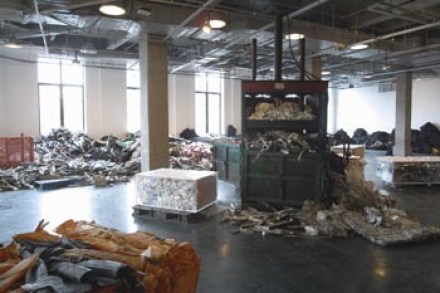
Tons of sterilised domestic and industrial waste lay strewn across the gallery floor. Against one wall mounds of unidentifiable detritus are shrouded with ribbons of black tape like seaweed on rocks. Beyond, the work of sifting and sorting and baling recyclable material has begun. Despite the sanitisation, the place reeks. All around are the sounds of Guangdong — of the ships, the trucks, the machines and the people involved in processing the rubbish that the developed world has dumped in China. On the walls, in both Mandarin and English, a litany of statistics and quotations offers a damning indictment of the environmental and public health disaster of this ugly new China Trade. The irony of the venue is not lost on artist Liu Jianhua.

Aiming high and wide

‘It is a compelling moment in the art world,’ says Robin Woodhead, Sotheby’s executive vice president and chief executive, Europe and Asia. ‘There has been a fundamental change in the market worldwide. Growing numbers of people have begun to take an interest in art, and we see continuing effective economies and new emerging markets — China, Russia, India — creating wealth on a scale that is unprecedented.’ He adds, ‘History tells us that the nouveau riche inevitably acquire works of art as symbols of wealth, power and culture.’ So do his company accounts.

Rich pickings

Forget London, Paris and New York. For any serious collector of art and antiques there is just one unmissable event: The European Fine Art Fair at Maastricht. No one could have predicted 20 years ago that this once modest fair in a small Dutch town few had heard of before the eponymous treaty would become the greatest art and antiques fair in the world. Against all the odds — not least the unbeguiling ring-road venue of the town’s conference centre (not a natural habitat for the international über rich) — it has established itself as the pre-eminent professional marketplace. Unlike all its glamorous counterparts, this event has nothing to do with being seen, charitable good works or bella figura. It is a place where business is done.

Crisis of confidence

What do you find at the world’s great antiques fairs these days? The answer, increasingly, is modern and contemporary art. Few will lament the disappearance of doleful, second-rate period furniture in favour of Art Deco and post-war design, or the introduction of major international art galleries offering the work of 20th-century masters. But as growing numbers of dealers adjust their stock in a bid to attract a new generation of buyers — not always with conviction or success — it seems that the antiques trade is in danger of shooting itself in the foot. It is evident that the trade is suffering a crisis of confidence. Heaven knows, the business is beleaguered — under siege by both changing tastes and by the ever-growing retail might of the auction-houses.