Susan Hill

Susan Hill

Susan Hill’s latest novel is A Change of Circumstance.

Gothic mysteries

This is a muddle of novel (originally published last year by Tartarus Press in a limited edition), though there are plenty of indications that the author will go on to do great things. I doubt if he had quite decided what he was writing — a Stephen King horror story, a book about the loss of intense Catholic faith, a serious novel about families, a Gothic mystery.… It has elements of all these, but has not settled down to be any. It is written as though at a distance from the characters, by someone observing them, perhaps ironically, perhaps fondly, never closely. Only the narrator, and his younger brother, Andrew — called Hanny — have inner lives, and their relationship is movingly described.
French Notebook

An overnight stop on the Ile de Ré taken between the St Malo ferry and the Quercy, where we always spend June, reminds one how closely French history lives entangled with modern life. Sleek hotels, harbours full of private boats, overpriced gift and fashion boutiques are cheek by jowl with ancient monuments and fortifications, in streets of small stone houses so narrow that the ubiquitous bicycles barely get through. Amid the massed tourists here, they still cultivate vines, mine salt and grow potatoes to send over toute la France. The mussels and lobsters remind me of home in north Norfolk and the pretty cottages are freshly painted white with pale grey or soft green shutters.

Anne Tyler’s everyday passions

There was nothing remarkable about the Whitshanks. None of them was famous. None of them could claim exceptional intelligence, and in looks they were no more than average….Their family firm was well thought of. But then, so were many others. But like most families, they imagined they were special. So, you know what you will get in this novel, which Anne Tyler says will be her last, and that is the stories of three generations of the Whitshanks, a straightforward, unexceptional Baltimore family. We have been here before.

Spectator books of the year: Susan Hill on David Walliams

Behind the Mask: The Life of Vita Sackville-West by Matthew Dennison (Collins, £25). Brave man to take on the biography of Vita, and he has brought it off superbly. So many facets, so many talents, so rich and full a life. Where do you start? Aristocrat, writer, greatly underrated novelist, garden creator, poet, wife, mother, friend, lover — it’s all here; and this is no dull ‘birth to death’ chronicle. It studies and reveals this extraordinary woman as well as could possibly be. A fine achievement. The Mad Boy, Lord Berners, My Mother and Me by Sofka Zinovieff (Cape, £25). If you love Lord Merlin you love Lord Berners, and if you don’t follow me you shouldn’t be reading this.

The wonderful and unpredictable Candida Lycett Green

With Candida, you learned to expect the unexpected. She said she might make the charity sale at my house on Thursday, but not to rely on her. I didn’t. But on Friday, a bright red pick-up truck turned into the yard and out got Candida with a bagful of contributions. But she also brought a birthday present of a beautiful Alice Temperley skirt for my younger daughter. The red pick-up was a present for Candida’s own birthday, thrilling her as much as any red bike for a six-year-old. ‘I’m an old hippy,’ she once said. Perhaps. She was certainly a child of the Sixties, when half the aristocracy’s offspring were hippies.

How the NHS fails new mothers on breast-feeding

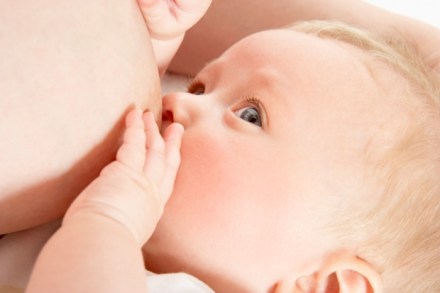
There is really no question about whether it is best for babies to be breast-fed, at least for the first few weeks of life. Plenty of research from around the world has proved conclusively that breast-fed babies, who receive all the mother’s antibodies from the colostrum (produced during the first few days) and then the milk, have a better resistance to infections and viruses, and get them more mildly if they do succumb. They have fewer allergies, have a 20 per cent lower risk than formula-fed babies of dying between the ages of 28 days and one year, and may be protected against some diseases that strike later.

Don’t let creative writing students read this book

One of these is by Lydia Davis, acclaimed American writer. One is not. They are whole pieces, by the way, not extracts. This morning I went into the park I often pass on my journeys to somewhere else. I can now say that I have been into this park and not always passed it by. Now that I have been here for a little while, I can say with confidence that I have never been here before. One of these accounts of a dream is by Lydia Davis. One is not. I am a college girl. I tell a younger college girl, a dancer, that the sun is very low in the sky now. Its light must be filling the caves by the sea. I am watching a man lift up the sails of a windmill in his bare hands. The sails catch the light and appear to be spinning. One of these observations is by Lydia Davis. One is not.

Susan Hill short story: The Boy on the Hillside

Listen to Susan Hill read The Boy on the Hillside: [audioboo url="https://audioboo.fm/boos/1816403-susan-hill-reads-the-boy-on-the-hillside"][/audioboo] The boy, Seth, stirred in his sleep. ‘Cold…’ He had pushed the blanket off, with his tossing and turning about. ‘Here, here.’ The man seated on the ground nearest to him rearranged Seth’s covering, pulling it up and tucking it under him until he was swaddled like a baby. His head rested on an old fleece. There were five men and the boy out on this first night of bitter weather.

The Good Nurse, by Charles Graeber – review

Charles Cullen, an American nurse, murdered several hundred patients by the administration in overdose of restricted drugs. Hospitals should be safe places but they are actually rather dangerous: mistakes are made, accidents happen, medics may be careless or just exhausted. But although many patients die when they should have recovered, very few die at the hands of a psychopathic serial killer — so far as we know. The trouble is, we often don’t know. There could be a Cullen working and murdering in a hospital near you. Look up ‘Healthcare professionals convicted of murdering patients’ on the internet and you find 39, and note the ‘convicted’. Many have merely been suspected but escaped conviction because of lack of evidence. Alarmist?

The Breath of Night, by Michael Arditti

There is always meat in Michael Arditti’s novels. He is a writer who presents moral problems via fiction but is subtle and shrewd enough to know that ‘issue books’, which are tracts not works of the imagination, are dull to read and rarely work as fiction should. He presents us with characters who are fully rounded, credible human beings living through moral dilemmas, affected by them, caring about them, living and dying within their context. In other words, he is an intelligent novelist.

NHS GPs should charge for appointments. Here’s why

The Chairman of the Royal College of GPs recently said that ‘general practice has radically altered over the last five years, with ballooning workloads and more and more patient consultations having to be crammed into an ever-expanding working day.’ The blame for this tends to be put on a growing and ageing population or an ever-increasing range of ailments. It might also be put on the last Labour government for changing the way in which GPs work, by rewarding them for preventing, not just treating, illness. Whatever the cause, the solutions are more numerous and often ineffective. NHS Direct is for the most part staffed by poorly trained non-medics who regularly tell people to go to hospital for fear of being sued if the caller dies.

Susan Hill’s diary: The joy of fountain pens, the frustration of GP appointments

I bet you remember your first fountain pen. Mine was a Conway Stewart with marbled barrel, I had it for starting Big School and I used to polish it. That trusty pen lasted until A-levels finally broke its back and after that I slipped down the primrose ballpoint path to slovenly writing. I never used a typewriter — too noisy, so I hand-wrote my books until the almost-silent laptop seduced me down another slithery slope. But I still hand-write when I need to take my time — books can be divided, like Americans, into fast ones and slow ones. Recently, a friend told me he had gone back to a fountain pen and was finding it a joy when writing up his notes — he is not a novelist but an engineer, and appreciates good tools.

Diary – 6 December 2012

Finding an outfit for a wedding is a doddle compared with finding one for an investiture and I wonder how sensible it was to buy my hat first. I love hats. My mother was a dressmaker and designer and she also made hats and wore them with style and aplomb, in the days when women never went hatless, even just to go shopping. When I was a child she embarrassed me beyond endurance when turning up at school events in one of her rakish creations. I remember the Christmas play and a small black felt number worn jauntily on one side of her head. It had protruding bright turquoise feathers and a turquoise satin slash. Worse was the one that turned up at sports day. That had cherries dangling from it and a sort of ribbon pineapple atop.

The phantom lover

Driving past several long abandoned second- world-war airfields in East Anglia last year I was struck by how spooky they seemed, just like the decommissioned army base that used to exist near me. Places where people have not only lived and worked but which form the background of wartime drama, and from which men went to their deaths, are bound to be haunted, and in Helen Dunmore’s short novel, it is an airfield that once saw Lancaster Bombers fly out into the night that forms a ghostly scene. Isabel is newly married to a doctor, Philip, and the two have moved to Yorkshire where he is now a GP. It is the early 1950s, the country is still redolent of wartime hardships, ration books, nasty linoleum in rented flats and nosey landladies.

Winter Notebook

You don’t go to North Norfolk in winter for good weather, but we had it — vast blue skies, sunshine and a couple of wild gales. North Norfolk in summer, like the Cotswolds in which I live landlocked, mingles the horribly overcrowded with quiet spaces about which locals keep schtum. In late November it had been reclaimed by them and was half-empty. Staying in a peaceful converted barn, we were there to work but also to walk on near-deserted Holkham Beach, where Poppy the border terrier thought she had died and the sand and sea were heaven.

Blue Night by Joan Didion

This is a raw, untidy, ragged book. Well, grief is all of those things. On the other hand, Didion wrote about the death of her husband in an iconic memoir, A Year of Magical Thinking, which apart from being raw was none of them. So she knows how it can be done.  That book was about the horribly sudden death of her husband, about shock and pain and then the confusion of bereavement and loss. But it was also a vivid portrait of the man himself. ‘One never knows when the blow may fall’, yet people have been surprisingly surprised that it fell again so quickly on Didion, when her adopted daughter Quintana, also died, a year later. But blows rain down relentlessly, not to say unfairly, on some individuals. Such as Job.

The great detective

As a child, Mark Girouard must have been easy to buy for at Christmas.  An ideal gift would have been a puzzle, preferably the sort that looks easy, but is actually fiendish; one you have patiently to tease away at for hours until finally you unlock it, and long to share its cunning solution. This is more or less what Girouard does in several of the essays in this delightful collection. Girouard is our most distinguished architectural historian and writer on great houses, but here he solves puzzles, and also reveals a rich and diverse literary taste. He solves puzzles because he is sure there is something more to this or that received version of a story than meets the eye, and wants to dig deeper. Take two well-known facts about the rise and fall of Oscar Wilde.

The villain as hero

Juvenilia is an unfortunate word, with its connotations of the derogatory ‘juvenile’. Juvenilia is an unfortunate word, with its connotations of the derogatory ‘juvenile’. When they reach adult estate, most writers prefer their early work to be forgotten. But publishers have long ferreted about to unearth the juvenilia of anyone with half a name.Though the reading public has never been so easily conned, such works are appreciated mainly by scholars of an author’s entire ouevre, wanting to trace early influences. So, if you could buy only one book this week, would it be The Doll, which contains a dozen very early short stories by Daphne du Maurier, and one rather later one (published in 1959)?

M. R. James’s dark world

M. R. James died at peace with himself and the world. We can be reasonably confident in claiming that after reading about his last weeks, during which he was ill, tired, weak and bored but probably not in pain, and even more on learning what his sister Grace said of his final days. During the tedious weeks of illness a group of Monty’s closest friends had made him the present of ‘a radio- gramophone of the latest type’ and he had taken to it immediately. Grace wrote: The radiogram proved such a pleasure to him and I can see him now after dinner … listening so intently, with his pipe in his mouth and matches strewn around.

Under the skin

Why do so many aspiring writers think it best to begin with the short story and graduate to the novel? It’s madness. The short story is infinitely harder to write well. Some novelists succeed at both — William Trevor and John McGahern are the names that spring to mind — but Chekhov never wrote a novel and, coming up to date, our leading woman short-story writer, Helen Simpson, has not been tempted to do so either. I can count on a hand the names of contemporary writers whose collections of short stories are worth reading, but Polly Samson has belonged on one of its fingers since her fine first volume, Lying in Bed. That was published ten years ago.