Sumantra Maitra

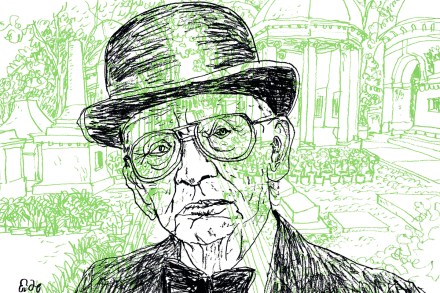
In search of Nirad Chaudhuri

From our US edition

The false sense of complacency in Washington DC, now restored as the imperial capital of the world, is only matched by a tone of utter bafflement. History has apparently renewed its march toward a progressive utopia, and the American cabinet seems as epidermally diverse as it is ideologically totalitarian. But there remains a sense of unease. The imperium suffered a systemic shock in 2016, one that needed and still lacks explanation. The shock was not limited to America. The Guardian struggles to comprehend that British Indians tended to support Brexit, and that members of their community such as Rishi Sunak and Priti Patel have risen to influence in the Conservative party and high office in the government.
chaudhuri

Will India finally learn its lesson on China?

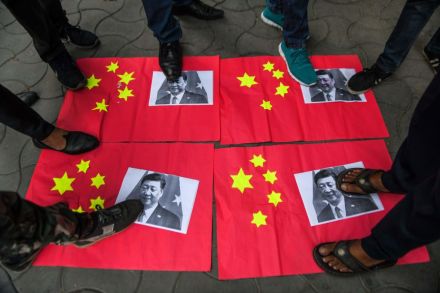
Clashes between Indian and Chinese troops are shocking but nothing new. For almost twenty days, in the autumn of 1962, a handful of Indian soldiers surrounded by Chinese troops weathered incessant assaults, before being overrun in Walong, in the Namti plains; the Eastern most corner of India. No support came in 1962, from the shocked Indian government to the unprepared Indian army. A dusty stone-plaque stands there today pledging that Walong will never fall again; a pledge whose strength might soon be tested once more. For a decade before those events, Jawaharlal Nehru, India’s first socialist post-independence prime-minister, wanted to create a utopian post-colonial alliance in Asia with China.

The possibilities of a US-Indo alliance are YUGE

From our US edition

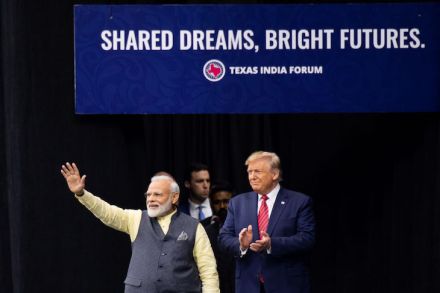
President Donald Trump is not all that fussed, one way or another, about vague concepts like human rights. He prefers realpolitik and semi-feudal pomp; the Maharaja of Queens is set to enjoy plenty of both during his visit to India this week. Indo-US relations are not as sclerotic as they were during the bleak, stagnating, Sovietized Eighties — an era which no one other than the New York Times remembers fondly. Since the Cold War, American presidents have conspicuously sought to align with New Delhi, as a counterbalance to a rising China, and have equally been courted back. The appeal of an alliance is not simply strategic, Indian Americans are the most successful minority community in the US. With Trump and Modi, their bonds look set to grow even stronger.

US-Indo alliance

Don’t blame Britain for Modi’s plan for a ‘new India’

History has a sarcastic sense of humour, just ask Francis Fukuyama. Or eminent historians and literary ornaments of India like Ramachandra Guha, Arundhati Roy, and Shashi Tharoor, who are now mourning the loss of a secular liberal India under a Hindu majoritarian quasi-imperial centre. These four and their fellow academics are the first ones to blame India's turn for the worse on the British empire, and all that it 'made, shaped and quickened'. This is somewhat ironic, given that Modi’s march to Kashmir is as rebellious and subaltern as it gets. Yet India’s post-colonial moral guardians are worried.

The end times of the liberal order?

From our US edition

A liberal order is not natural. Robert Kagan admits as much in his new book, The Jungle Grows Back, when he writes that the ‘the creation of the liberal order has been an act of defiance against both history and human nature’. Nor is a liberal order an ‘order’, or liberal in nature. It is a sort of hegemonic or imperial peace. Nothing wrong with that, of course; peace, any peace, is important. Unfortunately, it is the liberal part, which causes the problem. An internationalist, utopian worldview, liberalism is full of crusaderly zeal, constantly ‘going abroad in search of monsters to destroy’. Liberal internationalists badly want to shape the world. When given the chance, they do manage to shape the world, very badly indeed.

robert kagan liberal order