Sue Prideaux

Football vs opera, and the terror of being considered highbrow

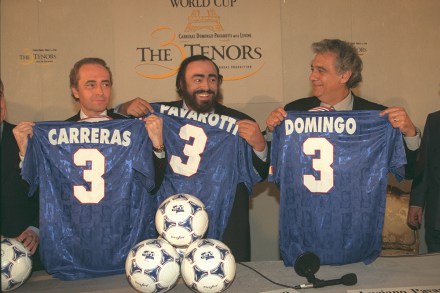
After Handel introduced Italian opera to London, Georgians and Victorians went to performances to wear their diamonds and meet friends. As Victoria’s reign progressed, opera percolated down, via brass bands, organ grinders, music hall warblers and whistling delivery boys. In 1869, the Leeds impresario Carl Rosa set up ‘a sort of operatic Woolworths’, a touring company putting on shows in cinemas and working men’s clubs Lilian Baylis was the other great populariser. In 1897, she took over her aunt’s music hall, the Old Vic, and threw herself into social improvement: ‘My people must have the best. God tells me the best is grand opera.’ With 2,000 seats priced between 3d and 3/- , her operas were so popular that they subsidised her Shakespeare plays.
The making of Van Gogh as an artist came at a terrible cost

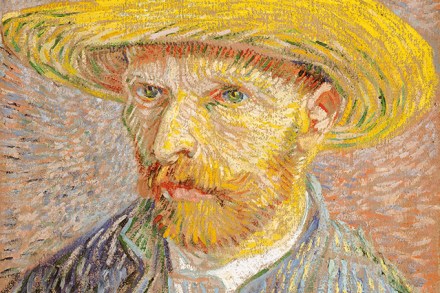
Six months before Vincent van Gogh’s death, the critic Albert Aurier, waxing poetical, wrote an article entitled Les Isolés on the then unknown painter. It raised to sainthood the solitary genius driven to insanity by an uncomprehending world. ‘Is he not one of the noble and immortal race which the common people call madmen but which men among us consider sort of saints?’ The man had already become myth. His life would be a sacrament and his suicide a reproach. It has remained that way ever since. Miles J. Unger thinks otherwise. He recasts our hero as the very opposite of isolé, a painter whose stylistic development was totally dependent on the artists and influences surrounding him in Paris.

A struggle not to scream

Norway doesn’t have a world-class philosopher (Kierkegaard was Danish). Karl Ove Knausgaard declared at the end of his previous book that he is no longer a writer, and it looks as though he’s moving in to fill that space. A very modern space: a selfie space. Nietzsche observed that all philosophy is autobiography, and Knausgaard certainly qualifies, having written 4,000 pages of a multi-volume autobiography called My Struggle. Now he has given us a book on Edvard Munch, the Norwegian artist best known for painting ‘The Scream’. Munch wrote an almost Knausgaardian number of autobiographical pages in his private journals while recording the outer reality of his life in hundreds of self-portraits.

Wagner’s Ring is a mythic mishmash

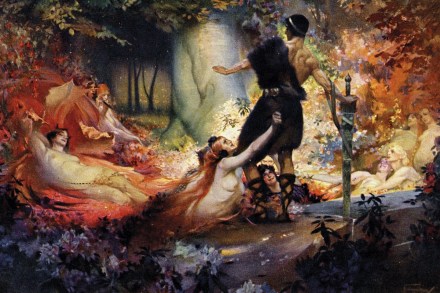
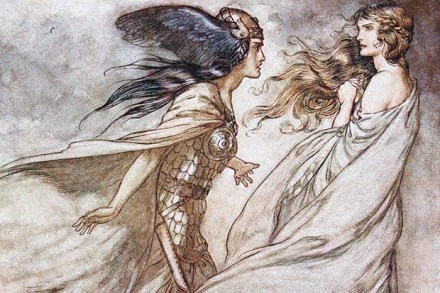
Wagner’s Ring is an ambitious cycle of four operas relating world history from Primal Swirl to End of Days. It took 26 years to write, takes 15 hours to perform, a double-size orchestra to play and a specially built opera house to stage. Michael Downes, the director of music at St Andrews University, places the fons et origo of the epic in Wagner’s frustration as a kapellmeister, when he wrote, unsolicited, to his boss the King of Saxony, proposing a total revamp of the royal music scene. No reply was forthcoming. A second proposal was also blanked. Furious, Wagner flung himself into the Dresden uprising of 1848, financing the manufacture of hand grenades and giving bloodthirsty speeches from the barricades.

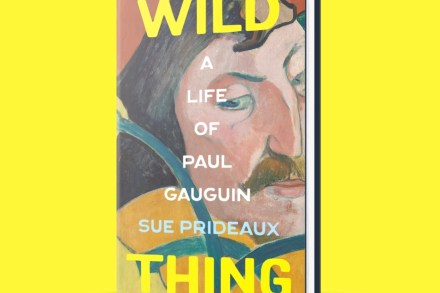
Sue Prideaux: Wild Thing, A Life of Paul Gaugin

41 min listen

In this week's Book Club podcast Sam Leith’s guest is the great Sue Prideaux who, after her prize-winning biographies of Nietzsche, Munch and Strindberg, has turned her attention to Gauguin in Wild Thing: A Life of Paul Gauguin. She tells me about the great man's unexpected brief career as an investment banker, his highly unusual marriage and his late turn to anticolonial activism. Plus: why she starts with his teeth. This podcast is in association with Serious Readers. Use offer code ‘TBC’ for £100 off any HD Light and free UK delivery. Go to: www.seriousreaders.com/spectator Produced by Patrick Gibbons and Oscar Edmondson.

Nietzsche’s thinking seems destined to be mangled and misunderstood

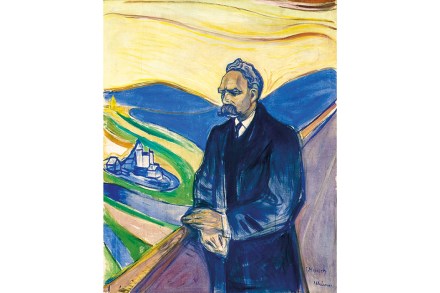
For Mussolini’s 60th birthday, Hitler gave him a de luxe edition of Friedrich Nietzsche’s complete works, bound in blue pigskin. After the war, writers vied to revile the philosopher. Then, in the 1960s, he suddenly became philosophy’s darling. How come? Enter two erotically entangled Italians: Georgio Colli, a philosophy teacher at Lucca from 1942, and his pupil Mazzino Montinari, who in 1943-4 was beaten, interrogated and imprisoned for anti-fascist activism. Both found Nietzsche’s philosophy irreconcilable with fascism. Rumours had been swirling that the Nazifying of Nietzsche emerged from the Nachlass, a mysterious hoard of Nietzsche’s manuscripts suspected to contain forgeries that were the work of his sister Elisabeth and her Nazi minions.

Roger Scruton’s swan song: salvation through Parsifal

This is Roger Scruton’s final book. Parsifal was Wagner’s final opera. Both works are intended to be taken as Last Words: testaments of belief at the end of a long spiritual journey. In the introduction, Scruton identifies the enduring problem in his life, and ours, as: ‘How to live in right relation with others, even if there is no God.’ He gives us his answer: Whether or not there is a God, there is this hallowed path towards a kind of salvation, the path that Wagner described as ‘godliness’, the path taken by Parsifal, and it is a path open to us all. Scruton sees Parsifal as a tale of redemption from the corrupting bondage of erotic love The path of our salvation, then, can be seen in the opera. Parsifal is a retelling of the Grail legend.

The Redeemer

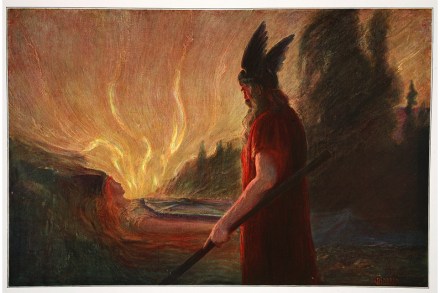
The political trigger for the Ring was the 1849 Dresden uprising, when the young freedom fighter Richard Wagner financed the hand grenades and debated ethics with his co-revolutionary Bakunin. According to Bernard Shaw, the Russian stood model for Siegfried, the Ring’s hero who would overthrow the old order and install a new realm of personal and political freedom. God was dying; nationalism killing Goethe’s enlightened neo-Hellenism. For Wagner, loss of faith in the divine and the divinely remote ancient Greeks demanded another route to meaning. He found it in pre-Christian Germanic texts, using them to shape the new cosmology of the post-Christian world.

Hiding in Moominland: the conflicted life of Tove Jansson

Tove Jansson’s father was a sculptor specialising in war memorials to the heroes of the White Guard of the Finnish civil war. He did not like women. They were too noisy, wore large hats at the cinema and would not obey orders in wartime. Tove used to hide to spy on his all-male parties, where everybody got astoundingly drunk and attacked chairs with bayonets. ‘All men are chums who will never leave each other in the lurch,’ she concluded. ‘A chum doesn’t forgive, he just forgets — women forgive everything but never forget. Being forgiven is very unpleasant.’ Father and daughter had such a strained relationship that she sometimes had to run to the loo and vomit.