Steven Poole

Princess Uppity

From our UK edition

Princess Margaret was everywhere on the bohemian scene of the 1960s and 1970s. She hung out with all the famous rock stars, actors and other arty types of the day. Marlon Brando was struck dumb; Picasso wanted to marry her. As Craig Brown puts it artfully: ‘Everyone seems to have met her at least once or twice, even those who did their best to avoid her.’ And so, having noticed her ubiquity in the indices of other books, the satirist has written a hugely entertaining sort-of-biography. Why would anyone do their best to avoid the princess? Well, she had a Prince Philip-ish way with the rude put down. (On being presented with a dish of Coronation Chicken: ‘This looks like sick.

Size matters | 29 June 2017

From our UK edition

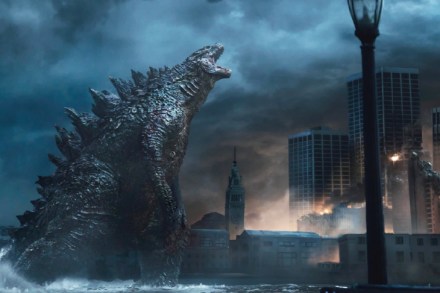
Trust scientists to ruin all our fun. The spectacularly beautiful 2014 film reboot of Godzilla, it turns out, is anatomically misleading. At 350ft tall, such a beast would simply collapse under its own weight, because an animal’s mass cubes with a doubling of its size, while the strength of its supporting limbs only squares. The basic principle was known to Galileo, and it turns out that the simple observation that things do not scale linearly can tell us much else besides, as this quite dazzling book amply demonstrates.

No end in sight

From our UK edition

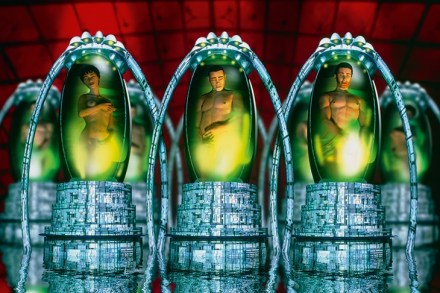
Are you a deathist? A deathist is someone who accepts the fact of death, who thinks the ongoing massacre of us all by ageing is not a scandal. A deathist even insists that death is valuable: that the only thing that gives life meaning is the fact that it ends — an idea not necessarily embraced by someone about to be murdered on video by an Isis fanatic. But what is the alternative? There has never been one, which is why until recently no one needed to coin the term ‘deathist’. But now many tech entrepreneurs and scientists take a different view: death, they say, is simply an engineering challenge. Biotechnology should, in principle, be able to reverse the wear-and-tear on cellular machinery in our bodies and keep us in our prime indefinitely, barring violent accident.

Nothing matters very much

From our UK edition

Nothing will come of nothing, said Lear, because he wasn’t familiar with quantum physics. According to our current best theories, a region of space that contains nothing at all is still seething with pairs of virtual particles popping in and out of existence for no good reason. Meanwhile, it is possible to be mathematically sure that an entire universe contains nothing whatsoever, but then if you go looking for stuff in a particular part of this same universe you could find a wheelbarrow. But what did I mean by ‘a region of space’? It turns out that all sorts of assumptions are baked into such a phrase depending on what cosmology I have — and similarly with the ideas of ‘stuff’ and its alleged opposite, ‘nothing’.

The great intellectual bromance of the last century — between Daniel Kahneman and Amos Tversky

From our UK edition

It’s the intellectual bromance of the last century. Two psychologists — Danny, a Holocaust kid and adviser to the Israel Defence Forces, and Amos, a former child prodigy and paratrooper — meet at the end of the 1960s, and sparks immediately begin to fly. They spend countless hours locked in rooms together at Hebrew University and elsewhere, and eventually co-write a series of papers that will revolutionise the field, and lead to the surviving partner being awarded the Nobel prize in economics. Not, however, before this extraordinary partnership has itself fallen apart, like a love affair, in regret and mutual recrimination.

When reasoning goes wrong

From our UK edition

It’s the intellectual bromance of the last century. Two psychologists — Danny, a Holocaust kid and adviser to the Israel Defence Forces, and Amos, a former child prodigy and paratrooper — meet at the end of the 1960s, and sparks immediately begin to fly. They spend countless hours locked in rooms together at Hebrew University and elsewhere, and eventually co-write a series of papers that will revolutionise the field, and lead to the surviving partner being awarded the Nobel prize in economics. Not, however, before this extraordinary partnership has itself fallen apart, like a love affair, in regret and mutual recrimination.

A puzzling phenomenon

From our UK edition

Everyone has played it, or one of its manifold variations and rip-offs. Blocks of different shapes fall from the sky; you have to rotate and shunt them around so they fit perfectly together at the bottom, and then that horizontal line of blocks vanishes. This is Tetris, and it was created in 1984 by a Soviet mathematician called Alexei Pajitnov. But how it came to the West is a remarkably complicated cloak-and-dagger story, here given its first book-length treatment. The narrative opens with all the bad bravado of a Dan Brown novel, as one of the several businessmen chasing the rights to the game flies into Moscow for a meeting with Elorg, a department of the Soviet trade ministry.

Tomorrow’s world | 1 September 2016

From our UK edition

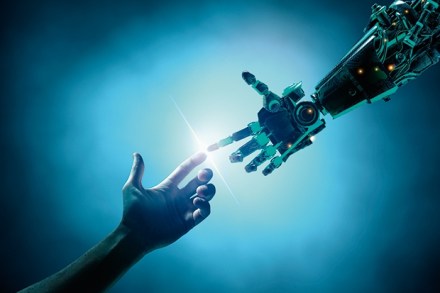
It may be difficult to believe when you think of Donald Trump, but the age of super-humans is almost upon us. Some people are confident that over the next century genetic engineering, electronic implants, new drugs and the medical defeat of ageing will give rise to a race of beings with capabilities far beyond our own. And what will they do with them? What will clichéd fears about ‘playing God’ mean to our descendants who, by comparison with us, will effectively be gods? Such questions exercise the historian authors of these two books.

Fast and furious | 14 April 2016

From our UK edition

Modern life is too fast. Everyone is always in a hurry; people skim-read and don’t take the time to eat properly; the art of conversation is dying; technology places too much stress on the human brain. This litany of familiar complaints comes, of course, from the late 19th century, as collected by the American writer and XKCD comic artist Randall Monroe in his arch cartoon ‘The Pace of Modern Life’. And here we are in the 21st, in another culture that both worships and deplores its ostensibly unprecedented speed. Today we have hookup apps and high-frequency trading, and ‘tl;dr’ (too long, didn’t read) is the all-purpose internet comment; but on the other hand we have long reads and slow food.

Ruling the digital waves

From our UK edition

Everyone, we hear these days, must learn to code. Being able to program computers is the only way to be sure a computer can’t steal your job. So doctors, dancers, drivers and dieticians must all acquire programming skills, and coding needs to be at the centre of modern secondary education. Well, evidently it is in the interests of giant technology corporations to have future generations of employees educated to their precise specifications at the public expense. The message is amplified by journalists anxiously extrapolating from their own predicament. (Generating ‘content’ is an increasingly unrewarded dead end; the cool things are data and ‘sharing’.) But the all-must-become-programmers idea does imply a rather weird future culture.

For better, for worse | 17 September 2015

From our UK edition

Before I read this book, I wasn’t aware that I was a creationist. But Matt Ridley tells me I am, in his broad sense of someone who foolishly believes that any good can come of ‘human intentionality, design and planning’. With no little intellectual chutzpah, he offers to treat us to a ‘general theory of evolution’ of everything, surpassing Charles Darwin’s ‘special’ one that applied only to living organisms. According to the author, ‘top-down’ is always bad, ‘bottom-up’ is always good. By what evolutionary method he avoided consciously designing this book itself remains a mystery to the end. The book’s many short chapters are determined to find evolutionary virtues in different arenas.

Was Keats right after all?

From our UK edition

Mediterranean crockery has a lot to answer for. It famously spoke thus to John Keats: ‘Beauty is truth, truth beauty, — that is all/Ye know on earth, and all ye need to know.’ Well, even if true, it’s obviously not all one needs to know. But then Keats was never one for irritable reaching after fact and reason. Any attempt at ‘cold philosophy’ would, as he wrote in another poem, ‘unweave a rainbow’. It would also, the poet groaned, ‘empty the haunted air, and gnomed mine’. Gnomed mine? Really? The Nobel-winning physicist Frank Wilczek, though, is determined to put the gnomes back into the mines. His eccentrically brilliant book is a ‘meditation’ on the possibility that beauty really is truth.

Indulge your inner reptile

From our UK edition

What do you get if you cross renegade psychoanalyst Carl Jung with lizard-men conspiracist David Icke? It is a question no one in their right mind would ask, but this book represents a kind of answer anyway. Offering a rambling pseudoscientific argument that some countries are better than others at enabling their citizens to flourish, it affects to have uncovered archetypes of the Jungian ‘collective unconscious’ that are characteristic of each nation. Meanwhile, cultures get a gold star if they indulge, rather than repress, the ‘reptilian’ part of our brains, which is mainly interested in food and sex, as opposed to the ‘limbic’ brain (emotions) and the cortex (higher reasoning). As the authors repeatedly insist, ‘The reptilian always wins.