Steven Fielding

Steven Fielding is Emeritus Professor of Political History at the University of Nottingham. He is currently writing a history of the Labour party since 1976 for Polity Press.

Why is the Labour left so averse to Winston Churchill?

From our UK edition

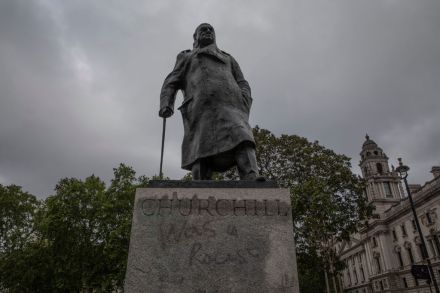
It has become a ritual almost as traditional as the Changing of the Guard. During a weekend of mostly peaceful protests, Winston Churchill’s statue in Parliament Square was once again vandalised. The first recorded defacement of Ivor Roberts-Jones’ imposing rendition of Churchill took place during London’s 2000 May Day anti-capitalist protests. A strip of grass placed on the statue’s head gave the impression it sported a Mohican haircut. James Mitchell, a former soldier in his twenties, also sprayed its mouth with blood-like red paint. Mitchell said he did this because: ‘Churchill was an exponent of capitalism and of imperialism and anti-Semitism. A Tory reactionary vehemently opposed to the emancipation of women and to independence in India’.
Could Keir Starmer become a populist politician?

From our UK edition

It has been a remarkable week. Boris Johnson’s refusal to sack Dominic Cummings for what the vast majority of Britons consider a flagrant breach of lockdown rules has caused his personal ratings to tumble. According to YouGov his party has seen a 15 per cent lead over Labour collapse to just 6 per cent in a matter of days. Johnson’s insistence that Cummings has done no wrong and that the country should move on from the issue and focus on tackling Covid suggests the Prime Minister hopes the fickle British public will eventually lose interest. Perhaps he is right: and with the next election four years away there is still much to play for.

Coronavirus and the enduring myth of Britain’s ‘Dunkirk spirit’

From our UK edition

World War Two remains, for a certain kind of Brit, a living and vital presence. The increasingly-distant memory of our Finest Hour still shapes how many regard Britain’s present and future. How else can we even begin to explain Nigel Farage’s appearance to the sound of air raid sirens at one of his Brexit party rallies? Why else should our current Prime Minister have felt obliged to write a biography of Winston Churchill? It was then no real surprise that during the early weeks of the Covid crisis many hoped for a renewed, if somewhat bogus, ‘spirit of the Blitz’. Then, with the 75th anniversary of VE Day looming, in her address to the nation the Queen drew numerous parallels between the war against Hitler and the one against the deadly virus.

Boris Johnson should be wary of comparisons with Churchill

From our UK edition

Despite his carefully-crafted bumbling image, Boris Johnson is anything but daft. When vying to replace the apparently rootless Tory moderniser David Cameron as Conservative party leader he knew what to do: write a book praising Winston Churchill. 95 per cent of Conservative members regard the wartime Prime Minster favourably. Johnson lost out to Theresa May in 2016 thanks to Michael Gove’s treachery. But during the Brexit referendum campaign he returned to familiar territory by drawing lurid parallels between the European Union and Nazi Germany, if only to imply that by leading the Leave campaign he was our modern-day Churchill. And when the Conservative leadership become vacant again last year he assiduously if subtly associated himself with the wartime leader.

How Keir Starmer’s message was pitch perfect

From our UK edition

It was not the acceptance speech he could have anticipated making when the campaign for the Labour leadership began many months ago, but it was one Keir Starmer used to define the type of leader he would be during the pandemic, and beyond. Recorded before he was confirmed as Jeremy Corbyn’s successor, Starmer spent most of his speech addressing, not Labour’s electoral crisis, but the national emergency provoked by Covid-19. Significantly, he talked to the country first, rather than his party’s members – 56.2 per cent of whom had just made him leader. Starmer positioned his Labour party as the solution to the country’s current ills Elected promising to reunite Labour, Starmer in his speech highlighted the ties that bind all Britons.

Corbyn’s leadership has been a success and a failure for Labour

From our UK edition

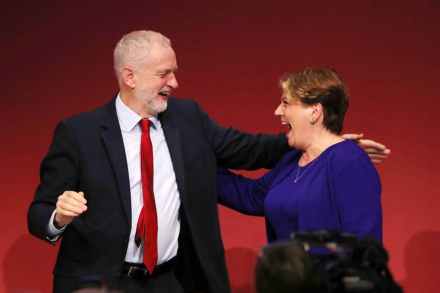
When he was elected Labour leader on 12 September 2015 opinion was uniquely divided as to what impact Jeremy Corbyn would have on his party. Critics looked to his far-left politics and predicted disaster, believing Corbyn would repel millions of former Labour voters who had just re-elected a Conservative government committed to austerity; supporters believed his principled socialism would in contrast save the party by mobilising those alienated by Labour’s reluctant embrace of austerity. As he prepares to step down a settled consensus has yet to emerge about the Corbyn years. It is likely one never will. For both sides of the argument can point to evidence that suggests Corbyn’s leadership both repelled and attracted, that he was at once a failure and success.

Labour’s coronavirus conundrum

From our UK edition

Labour chairman Ian Lavery has expressed hope that the coronavirus crisis could provide his party with a ‘great opportunity’. Lavery’s comments have been attacked for being in desperately poor taste. For on one reading, here was a leading Labour figure sounding upbeat over how his party could take political advantage of a global pandemic. The reality is however slightly different. Lavery undoubtedly expressed himself in a crass way but he was actually hoping the crisis would see Labour members help bring people together and organise community activities to alleviate the crisis. But Lavery’s comments – and the reaction to them – establish, as if we did not know, that politics never goes away.

Blair failed to save Labour from itself, so how can anyone else?

From our UK edition

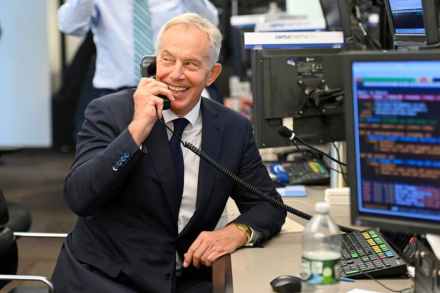
Tony Blair is at it again. With Labour members currently pondering who should replace Jeremy Corbyn, the party’s most electorally successful living leader once more decided to give them the benefit of his experience, whether they wanted it or not. This time it took the form of a history lesson: to mark the party’s 120th anniversary he gave a lecture on what it takes for the party to regain power. But should we listen to what Blair has to say? For keen Blair-watchers this address contained no surprises: he has been saying much the same things since becoming Labour leader in 1994. As ever, Blair’s starting point was the pathetically small number of times Labour has ever won power.

Richard Burgon, political genius?

From our UK edition

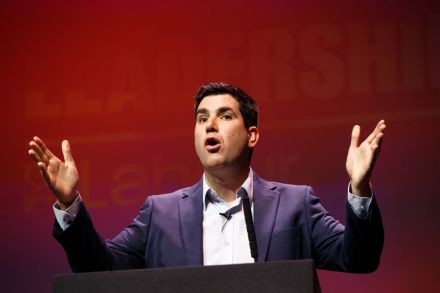
Richard Burgon is not going to be Labour’s next deputy leader. Burgon trails the favourite Angela Rayner by some 42 points, according to the latest YouGov poll. While Rayner has been nominated by 363 constituency parties, Burgon is backed by just 75. This places him third, behind Dawn Butler, in the race to become number two in the Labour party, with little prospect of making up the numbers he needs to win. But just because Burgon won’t win, it doesn’t mean his campaign hasn’t been successful. Burgon’s supporters certainly aren’t fazed. Take the hundred or so who gathered together last week at a meeting to support Burgon’s campaign.

Are all the Labour leadership candidates Corbynites now?

From our UK edition

This week every contender for the Labour leadership and deputy leadership signed up to a series of pledges issued by the pressure group We Own It, an organisation established in 2013 to campaign against privatisation and in favour of what it calls ‘21st century public ownership’. The pledges repeat many of the promises made in Labour’s 2019 manifesto. They include nationalising various public utilities, introducing a publicly-owned broadband infrastructure provider, ending NHS ‘privatisation’, returning all schools to local government control, allowing bus services to again be run by councils, opposing profit-making in the justice system and ending the outsourcing of municipal services. Some of these pledges are less clear than others.

Labour’s class obsession shows how far the party has shifted from its origins

From our UK edition

Labour is currently all at sea over class – and at risk of drowning. For a party whose members imagine themselves to be the only legitimate representatives of working people the last election has provoked an existential crisis. George Orwell once said Britain is 'the most class-ridden society under the sun'. That may no longer be the case, but Labour is determined to prove Orwell right. In December, Boris Johnson smashed Labour’s ‘Red Wall’ and captured constituencies in the north and midlands whose histories evoked some of the greatest moments of proletarian struggle. The resulting symbolism is painful for Labour: the Durham Miners Gala will now take place surrounded by Conservative-held seats.

Keir Starmer is Labour’s ‘continuity Miliband’ contender

From our UK edition

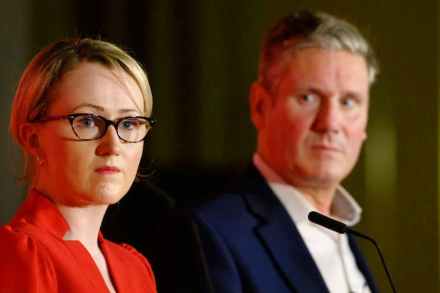
Rebecca Long-Bailey denies she is the 'Continuity Cobynism' candidate in Labour’s leadership election. Her public statements suggest otherwise. Having given Jeremy Corbyn’s leadership a remarkable 10/10, Long-Bailey proposes to double down on the party’s 2019 manifesto commitments and simply present them in a new way. At least members know what they’re getting with a Long-Bailey leadership: more of the same but with a different face. Had Labour not suffered its worst defeat since 1935 that might have been enough to secure her victory in April. Instead, the disaster in December means it is Keir Starmer who looks likely to become the next Labour leader. But what does he stand for?

Labour’s moral superiority problem

From our UK edition

Keir Starmer has been described as a ‘moral leftwinger’. He certainly liberally peppered his leadership campaign launch speech with references to Labour’s ethical correctness, describing his campaign as a ‘moral fight against poverty, inequality and injustice’. It is understandable why Starmer praised Labour members’ collective moral superiority: he needs their votes. In doing so, Starmer is following in a time-honoured tradition of flattering party members. But there are pitfalls with this pandering approach, as Jeremy Corbyn’s leadership shows. It was way back in 1962 that Harold Wilson told Labour’s annual conference: ‘This party is a moral crusade or it is nothing’.

Is the Labour party ready to abandon ‘Corbynism’?

From our UK edition

As Labour prepares to say goodbye to Jeremy Corbyn, if not yet ‘Corbynism’, it is possible to put his time as party leader into perspective. Initially hailed as marking a break with the ‘centrist’ status quo and a response to grass-roots radicalism provoked by austerity, Corbyn’s tenure as Labour leader actually fits a pattern of behaviour observable throughout Labour’s existence. For if the party has changed in numerous ways since it was founded in 1900 one thing remains unaltered: the civil war over what it ultimately stands for. Over decades, members have argued about whether Labour’s objective is to reform society through winning power in Westminster; or socialist transformation through the embrace of extra-parliamentary action.

Corbyn’s cult have learnt nothing from the left’s last election wipeout

From our UK edition

I initially misread the reaction of Labour’s leading Corbynites and social media outriders to the party’s most cataclysmic defeat since 1935. I thought they were arguing Labour lost because of Brexit; that Jeremy Corbyn’s unpopularity was purely due to media vilification; and its manifesto evoked only a positive response on the doorstep simply because they wanted to persuade members they should vote for a continuity Corbynite candidate in the forthcoming leadership election. But as the days passed I realised I was wrong. At least some of them genuinely believe that, as Corbyn himself put it, Labour ‘won the argument’ on 12 December.

Will Brexit save Corbynism?

From our UK edition

In the immediate aftermath of an election, its meaning is established. Once this is fixed, it is almost impossible to shift. There are plenty of such mythical explanations for defeat. Most famously, in 1959 Hugh Gaitskell and his supporters claimed Labour had lost its third election in a row because of the party’s association with nationalisation. It soon became the conventional wisdom and, on that basis, Gaitskell tried to revise his party constitution’s Clause IV, which committed it in principle to the public ownership of industry. But it wasn’t necessarily true: Labour lost for many reasons, with Gaitskell in particular having made a terrible mistake over tax policy during the campaign from which he wanted to divert attention.

Could Keir Starmer succeed as the next leader of the Labour party?

From our UK edition

During his last days as manager of Manchester United it was widely thought that whoever came after Sir Alex Ferguson would have an impossible job. The same might be said of Jeremy Corbyn’s successor as Labour leader. For while Sir Alex won every trophy in club football and Corbyn has won nothing at all there is a paradoxical similarity. Because in losing, Corbyn has made many Labour members feel as happy as Manchester United fans did about winning the treble. Corbyn was elected leader in 2015 promising to speak for members rather than talk down to them about the hard choices that needed to be made if the party wanted to win power, as Tony Blair had.

We are witnessing the death throes of Corbynism

From our UK edition

Jeremy Corbyn has given up on winning this election and is currently struggling to ensure that on 12 December Boris Johnson will be denied a Commons majority.  Last week Labour’s campaign strategy switched from trying to win seats to trying not to lose them, reflecting just how badly things are going. With polling day just around the corner, the party has been reduced to sending its chair Ian Lavery to visit once rock-sold northern seats to try and win back former miners to Labour. It should not have been this way. Indeed, according to John McDonnell, Corbyn was just a week away from becoming Prime Minister in 2017. If only that election campaign had lasted just a little bit longer he would have entered Downing Street as the victor.

Could Corbyn cling on if Labour lose?

From our UK edition

Unless Jeremy Corbyn defies the odds, it looks unlikely that the Labour leader will become prime minister come 13 December. So what might happen if Corbyn loses for a second time? Will he try to cling on? Is there life for Labour after Corbyn? Before the campaign began, John McDonnell conceded Corbyn could not remain leader if the party loses. If that sounded conclusive from the shadow chancellor, Len McCluskey subsequently muddied the water. Instead of Corbyn immediately stepping down, there should, he said, be ‘a period of reflection’ after any defeat. ‘We need to consider the election result’, he went on, ‘If it was a defeat … then we’d have to look at the scale of that, and where it happened.

When it comes to trust, our party leaders could learn from Tony Blair

From our UK edition

According to a YouGov poll 45 per cent of Britons believe today's party leaders are worse than any of their predecessors in history. The survey fits neatly into the dominant narrative of the 2019 election, where ‘Don’t Know’ is the preferred option of prime minister for one third of the UK, only 14 per cent of the public trust politicians to tell the truth, and voters are fed up with their political leaders. But is this fair? You do have to wonder which titans of the past Boris Johnson, Jeremy Corbyn and Jo Swinson are being unfavourably compared with. Perhaps Edward Heath, whose time as Prime Minister ended with power cuts and a three-day week? The infamously slippery Harold Wilson?