Steven Fielding

Steven Fielding is Emeritus Professor of Political History at the University of Nottingham. He is currently writing a history of the Labour party since 1976 for Polity Press.

Jeremy Corbyn is a pale imitation of Clement Attlee

From our UK edition

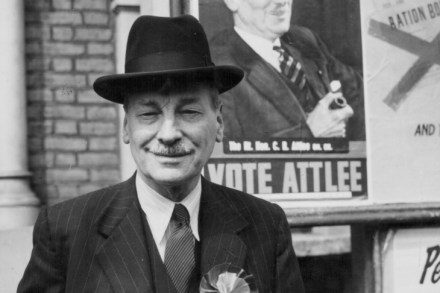
To excited cheers, Angela Rayner last week promised Labour supporters that a Jeremy Corbyn-led government ‘would knock the socks off’ the one led by Clement Attlee. Given Attlee oversaw the creation of the NHS and the nationalisation of 20 per cent of the economy while establishing a universalist welfare state, not to mention building nearly one million homes – and all during a time of acute post-war shortages - Rayner’s claim was a brave one. Given its record, the government elected in 1945 is Labour’s version of Motherhood and Apple Pie. It has long enjoyed a revered status across the party. During the early 1980s, both those who left Labour to form the SDP and the Bennites who forced them out each claimed to be true heirs to Attlee.
Corbyn’s ruthless party leadership shows he is an heir to Blair

From our UK edition

Is Jeremy Corbyn a democrat? With Labour now promising a ‘democratic revolution’ this has become a critical question. We can only judge Corbyn on his record as Labour leader and that suggests his rhetoric of radical empowerment conceals a traditional politician’s desire to hold on to the levers of power. Corbyn won't like it, but in many ways he is an heir to Blair. Sally Gimson's deselection certainly calls into question Corbyn’s democratic credentials. Selected by members of Bassetlaw constituency Labour party, the Corbynite-dominated National Executive Committee refused to endorse her, claiming Gimson was the subject of numerous complaints relating to her time as a Camden councillor.

Boris Johnson is repeating Churchill’s campaign mistake

From our UK edition

In one of Boris Johnson’s opening salvoes of the 2019 campaign he said of Jeremy Corbyn’s Labour party: ‘they detest the profit motive so viscerally…they point their fingers at individuals with a relish and a vindictiveness not seen since Stalin persecuted the kulaks.’ Boris Johnson is no Winston Churchill. But in making that claim, the Prime Minister evoked one of his most illustrious predecessor’s greatest campaigning mistakes. For in a radio broadcast during the 1945 election campaign Churchill claimed a ‘socialist government’ led by Attlee, aimed to control ‘the entire life and industry of the country … [and] would have to fall back on some form of Gestapo’.

What The Clangers can teach us about the snap election

From our UK edition

On election night on 10 October 1974, the BBC broadcast a special episode of The Clangers, a children’s animated television series. The episode, ‘Vote for Froglet’, satirised the politics of the day, showing the gentle mouse-like Clangers rejecting a divisive two-party politics, essentially saying: ‘Sod off! The whole thing is a waste of everybody’s time!’ No two historical moments are exactly the same. But the desperate politics of mid-1970s Britain is certainly parallel to our own miserable times.

Can Labour be ‘populist’ without a Brexit position?

From our UK edition

So Jeremy Corbyn has finally agreed to back Boris Johnson’s demand for a December election. In the end he had little choice but to bow to the inevitable: Johnson already had the votes thanks to the SNP and the Liberal Democrats. But Corbyn also wanted this election. What had been holding him back was the fears of his own MPs – who were aware of the Conservative's ten point lead in most opinion polls and their own leader’s dreadful personal ratings. In contrast, Corbyn’s closest advisers and loudest supporters are hopeful the campaign will end in a Corbyn-led government.

Is this the beginning of the end for Jeremy Corbyn?

From our UK edition

Did Labour’s conference help or hinder Jeremy Corbyn’s chances of becoming prime minister? For some, Corbyn ended up stronger than ever. There will be a review of the post of deputy leader, one likely to see the authority of Tom Watson, his severest internal critic, greatly diminished. Corbyn also won a critical vote on Brexit which endorsed his position of neutrality going into a general election. The conference also passed a raft of policies that confirm support in the party for Corbyn’s desire to dramatically extend state intervention in the cause of promoting economic growth, greater equality and tackling climate change.

Jeremy Corbyn is on the wrong side of history over Brexit

From our UK edition

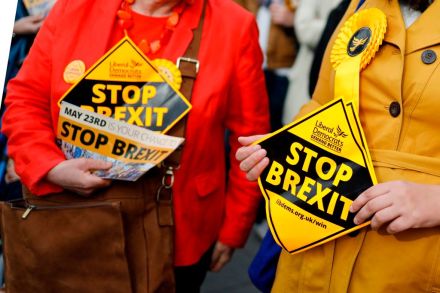
So far as his keenest supporters are concerned, Jeremy Corbyn has always been on the Right Side of History. From challenging Thatcherism, taking on apartheid, standing up against the Iraq War, to opposing austerity, Corbyn, they believe, has always been unafraid to embrace morally correct causes no matter how unpopular they were at the time. This is what distinguishes him from all previous leaders of the Labour party. That makes Corbyn’s recent announcement on Brexit all the more remarkable. He has said that if Labour forms a government after the next general election and holds a referendum on Britain’s membership of the EU, he will remain neutral. Yet according to YouGov, two-thirds of Britons think Brexit is the most important issue facing the country today.

Why the far-left really does think there is a ‘coup’

From our UK edition

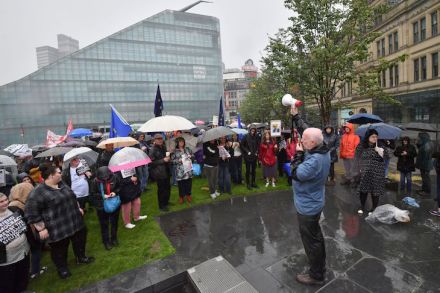
On Saturday thousands of people across Britain demonstrated against Boris Johnson’s recently-announced prorogation of parliament. Despite the heated response it provoked, proroguing parliament is a standard device which over the years has been employed by governments of all stripes. And as parliament was to be suspended for a few weeks during September and October in any case to allow the parties to hold their annual conferences, Johnson’s measure has reduced MPs’ time to prevent a no-deal Brexit by just a few days. In the context of an unprecedented crisis, with the clock ticking down to October 31, the Prime Minister’s act of constitutional sharp practice nonetheless outraged those who demonstrated on Saturday.

Is this misunderstanding behind the rise of populism?

From our UK edition

The latest stage in a series of arcane gambits and cunning plans designed to frustrate Britain’s exit from the EU came in the form of Jeremy Corbyn's recent letter to leading opponents of a no-deal Brexit, inviting them to discuss the joint coordination efforts. In his letter, Corbyn rightly predicts that during the next few weeks the country will enter a ‘constitutional and political storm’. Up to now, however, the response of our political elite to this impending crisis has been confused. Radical Leavers claim Parliament can be prorogued to allow a no-deal Brexit to pass without further intervention from MPs.

The real reason Corbynites turned on Caroline Lucas and the Greens

From our UK edition

Caroline Lucas's plan for an all-female emergency Cabinet to stop a no-deal Brexit is a fantasy, with no prospect of success. But if the plan is daft, it has provoked a revealing reaction from Jeremy Corbyn’s loyal outriders. Instead of laughing it off, many have taken it deadly seriously. Most have focused their attack on the ethnicity of the women Lucas chose to enlist: they were all white. Reasonably enough, they asked why shadow home secretary Diane Abbott, was overlooked. Recognising her mistake, Lucas apologised. But instead of giving Lucas – probably the most politically correct member of the Commons – the benefit of the doubt, the Corbynite response has been nasty and vituperative.

Lib Dems are eyeing a bigger prize than blocking a no-deal Brexit

From our UK edition

Politicians determined to prevent a no-deal Brexit are locked in a Mexican stand-off. If Boris Johnson cannot command a Commons majority, Jo Swinson has made it clear that under no circumstances will Liberal Democrats support a caretaker Jeremy Corbyn-led Labour government. John McDonnell has indicated that Labour will not back a temporary national unity government under an as-yet unnamed backbench MP. With Parliament in recess we are in the realm of second-guessing what might happen next. When MPs return to Westminster, Johnson might win a vote of confidence. But even if he loses, the Prime Minister could possibly engineer a general election to subvert the cunning plans of the no-no Dealers.

The myth behind Corbyn’s plan to transform Britain

From our UK edition

This week, The Sun instructed Remain Conservative MPs to unite behind Boris Johnson or see Jeremy Corbyn’s desire to ‘turn Britain into an experiment in 21st century Marxism’ become reality. It need not have bothered: the threat of a ‘Marxist’ Corbyn government is one of the few things about which all Conservatives agree. But what kind of a threat does Corbyn really pose? Keen supporters of the Labour leader speak of their hopes for a ‘transformative’ Corbyn-led government, one that will eventually lead to socialism. This government will permanently change Britain because, they say, it will disperse power to the people.

Labour is gearing up for the wrong fight against Boris Johnson

From our UK edition

Boris Johnson is sometimes compared to Winston Churchill, not least by the man himself. Unfortunately for Britain's new Prime Minister, most of these comparisons are fatuous. But there are some similarities. Both are politically fluid and both share an enormous sense of ambition propelling them in unexpected and contrary directions. So far, we have had two Johnsons: One Nation Boris, the expansive liberal Tory, the man who won Labour London, not once but twice. More recently, we've has Brexit Boris, whose constituency seems to have been reduced to the hard-faced men and women of Leave. It is Brexit Boris that Jeremy Corbyn’s advisers choose to see: they believe he is an enemy with whom they can do profitable business.