Steven Fielding

Steven Fielding is Emeritus Professor of Political History at the University of Nottingham. He is currently writing a history of the Labour party since 1976 for Polity Press.

Could Boris return?

From our UK edition

Asked recently whether Boris Johnson, Britain’s soon-to-be-ex-Prime Minister, would ever return to the highest elected office in the land, super-loyalist Nadine Dorries enigmatically replied: ‘Who knows what the future will hold?’ With Johnson allies reportedly looking to trade a safe Conservative seat in return for a peerage with any elderly MP hoping to secure a retirement in ermine, it looks like the hero of 2019 is, at the very least, thinking of making a come-back before he has even gone. Indeed, most polls suggest the next general election will be disastrous for the Conservatives and predict Johnson’s constituency of Uxbridge will fall to Labour. With being an MP a prerequisite to standing in any leadership contest, Johnson is keeping his options open.

Which Tory leader does Labour fear the most?

From our UK edition

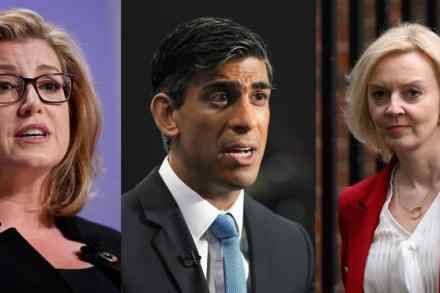
Ask any Labour politician which of the Conservative leadership candidates they fear most and they will most likely say: none of them. That is largely hubris, because Penny Mordaunt, Rishi Sunak and Liz Truss, the likeliest candidates to become Britain’s next Prime Minister, pose different threats to Labour’s opinion poll lead. Ideally, Labour would like Boris Johnson to remain caretaker Prime Minister for as long as possible – recent weeks have seen Labour’s polling rise and rise with the messy demise of the Prime Minister. When Keir Starmer said his party had an electoral mountain to climb after the 2019 election, he likely did not figure on Boris Johnson acting as his personal Sherpa Tenzing.

Boris’s attempt to become a second Churchill

From our UK edition

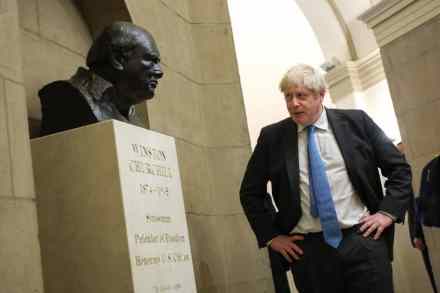
On his way up the greasy pole Boris Johnson was keen to claim an affinity with Winston Churchill. Clearly, associating himself with the man voted the Greatest Briton in 2002 was a clever if crude ruse, on par with a B-list actor standing next to Tom Cruise in the hope some of his magic might rub off. It certainly would not have escaped Johnson’s notice that Churchill was fondly remembered, especially by the Conservative party’s mostly aged members who ultimately determine the fate of candidates for the leadership. In 2014 Johnson went so far as to write a biography of Britain’s wartime premier. Most readers will have come away from the book with the impression that Johnson wanted them to think of him as Churchill reborn.

Boris Johnson’s fate is to be forgotten

From our UK edition

Boris Johnson divides Britons in a way few other politicians manage. To his dwindling group of supporters, he is the hero who Got Brexit Done; to his detractors, he is a villain, edging the country towards a dark place. He is, according to Alastair Campbell, Britain’s ‘accidental fascist’. But if you stand back from the Westminster hurly-burly you can see Boris for what he is: a carefully constructed empty space onto which Britons have, over the years, been invited to project their hopes and fears; one whose purpose has been to further the personal ambition for power of the very real but (so far as the public are concerned) largely unknown Alexander Boris de Pfeffel Johnson.

Keir Starmer’s trade union conundrum

From our UK edition

Where does the Labour party stand on the rail strikes? It is a question government ministers have spent much of their time demanding an answer to, rather than, as critics might suggest, trying to find a compromise that would avoid further strikes. It is, in any case, a rhetorical question: the Conservative party some time ago began to refer to ‘Labour’s strikes’. Downing Street clearly hopes the sight of a trade union disrupting commuters’ lives will help voters forget all about partygate and bring them flocking back to Boris. So far as some in the Labour party are concerned, the answer to the Tories’ question is obvious.

Is Britain heading for a summer of discontent?

From our UK edition

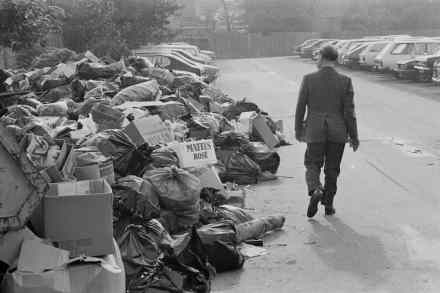
With workers across the economy looking set to go on strike during the next few months there is talk of a ‘summer of discontent’. The inspiration for this trope is the infamous 1978-9 ‘winter of discontent’, when despite the urgings of Labour ministers to show pay restraint, poorly paid public sector workers left rubbish piling up in the streets and, legend has it, the dead unburied. When the strikers returned to work the government’s effort to keep wages down was in tatters, along with its perceived authority to govern. There have been many mooted summers of discontent over the years, but none has ever rivalled the original. They have all – appropriately enough given the vagaries of the British weather – ended up as damp squibs.

Keir Starmer isn’t working

From our UK edition

Silence. That is what we heard during Gloria de Piero’s recent focus group which she held for her GB News show in her old constituency of Ashfield, one of many Red Wall seats that fell to the Conservatives in 2019. Most participants had been Labour voters up to that election but felt the party had somehow let them down and ceased to represent the working class, especially with Jeremy Corbyn as leader. De Piero found them most talkative about how Boris Johnson had once appeared to be a different kind of politician, one whose promises they had believed but who they now felt had let them down, thanks to partygate. But when the former Labour MP asked her focus group about Keir Starmer there was, for what seemed an age, silence.

Should Thatcher fall?

From our UK edition

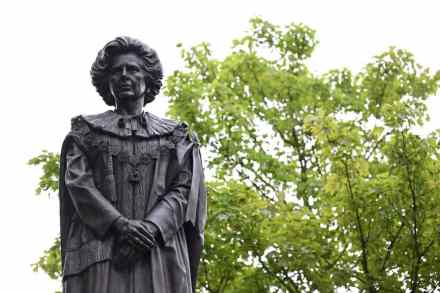
It didn't take long for the first egg to hit. Just a few hours after Margaret Thatcher’s statue was delicately placed on its ten-foot plinth in her hometown of Grantham, it was subject to the first of what is likely to be many attacks. This egging – carried out by a middle-aged protester – was hardly a surprise. The statue was once set to be placed outside Parliament, but this plan was kiboshed by Westminster Council amidst fears it could attract 'civil disobedience and vandalism'. Presumably it was hoped that by being plonked in the unassuming, out-of the way Lincolnshire town the statue would avoid such lèse-majesté. The leader of the local Tory South Kesteven District Council appears to have thought as much.

Beergate is a big danger for Starmer – and a great opportunity

From our UK edition

Beergate represents a great danger to Starmer’s leadership. But handled in the right way it could be his opportunity to show that his is a party that can be trusted by voters who have abandoned it since the days of New Labour. It might even be his ‘clause four moment’, one which allows Starmer to transform how the public regard Labour and be the springboard to victory at the next general election. Last week's local elections were good for Labour: they suggest it is on course to become the largest party in the Commons. But they were not good enough: much work remains to be done before Labour can form the next government without the help of other parties. Something is currently missing – and for that many blame Starmer’s worthy but uninspiring leadership.

Why Keir Starmer isn’t living up to the dream of 1997

From our UK edition

‘A new dawn has broken has it not?’, asked Tony Blair as the sun first blinked over London’s South Bank on the early morning of 2 May 1997. Blair was addressing a crowd of supporters following Labour’s first general election victory since 1974, an election that saw the party win 43.2 per cent of votes cast and achieve its biggest ever Commons majority, even bigger than Clement Attlee’s in 1945. It was a victory that laid the foundations for an unprecedented 13 years of Labour government. After this year’s local elections nobody in the Labour party is talking about a new dawn. In reality, the results are nowhere near good enough for Keir Starmer to credibly make this claim.

Tory MPs have a point about not removing Boris now

From our UK edition

According to the Metropolitan police, Boris Johnson broke his own lockdown rules during the Covid crisis and, according to almost everybody else, he repeatedly lied to the Commons and the nation to cover it up. This is presumably why 57 per cent of people surveyed in one snap poll think he should resign as prime minister over partygate. But ordinary Britons will not end Johnson’s tenure in Downing Street. Given he is refusing to resign that can only be accomplished by a minimum of 54 Conservative MPs who need to write to Graham Brady, chair of their 1922 committee, expressing a lack of confidence in Johnson as party leader. Brady would then be obliged to call a vote of confidence.

Ukraine isn’t Boris’s ‘Falklands moment’

From our UK edition

What should we make of Boris's response to war in Ukraine? The verdict from one Tory MP is already in: 'History will look back at this as his Falklands moment,' said Jonathan Gullis, who represents Stoke-on-Trent. But if Conservatives are hoping that conflict will transport the PM from a beleaguered position into one of national dominance – as it did for Margaret Thatcher in 1982 – they are in for a nasty surprise. It is certainly true that Thatcher’s position did improve after her quick victory in the Atlantic to such an extent contemporaries talked of a ‘Falklands factor’ to explain it. But it is less clear how far defeating Argentinian forces was the cause of it or just coincidental.

Will the Ukraine crisis finally end Stop the War’s hold over Labour?

From our UK edition

For weeks, discussion about partygate dominated Britain’s newspapers. Russia’s invasion of Ukraine has put paid to that. But Boris Johnson is mistaken if he thinks he has been saved. Instead Keir Starmer is likely to be the biggest beneficiary of the Ukrainian crisis. This might come as a surprise to some. After all, history suggests that a Conservative government should be able to benefit from this conflict by relying on its traditional reputation for being strong on defence and foreign policy in general. Yet the Ukrainian war is different, at least for now, to skirmishes that have arisen in the past.

Can Labour members ever learn to love Keir Starmer?

From our UK edition

Keir Starmer is the master of all he surveys. Thanks to partygate, Labour now enjoys a consistent poll lead over the Conservatives and his personal ratings are significantly ahead of those of the beleaguered Boris Johnson. This has given him more confidence to take on some of Corbynism’s sacred cows. But can he persuade Labour members he is the change the party needs to win power? Starmer has firmly rejected attempts by Unite, Britain’s largest trade union and a key Corbyn backer, to shape party policy. Amidst the build up of Russian troops on the border of Ukraine, Starmer has also been quick to emphasise his support for Nato. For good measure, he has attacked Jeremy Corbyn’s favourite anti-imperialists, Stop the War.

Does Keir Starmer really want Boris Johnson to step down?

From our UK edition

It's time for Boris Johnson to go, says Keir Starmer. Angela Rayner agrees: 'Fundamentally the British public are starting to see that Boris isn't fit to be Prime Minister'. Other members of the shadow cabinet think the same: the PM 'should do the decent thing and resign now,' says Labour Anneliese Dodds. But should they be careful for what they wish for? Whether Labour really wants Johnson to go – at least not until he has fatally damaged his party by its association with a leader many in the public now regard as a blatant liar and hypocrite – is moot.

Boris’s partygate troubles mean a welcome dilemma for Starmer

From our UK edition

The last time a Conservative government was in the midst of a crisis like partygate, Labour had a choice. Should it stick or twist? Should it passively allow Conservative voters, who had kept the party in power for more than decade, to drift away from John Major, thanks to his troubles over the economy, ‘sleaze’ and the EU, hoping they would remain with Labour come a general election? Or should it make a bold and positive case for why they could actively support Labour?  Both approaches held dangers. Under John Smith, Labour opted to let nature take its course. At the time, it was described as a ‘one more heave’ strategy.

Is this the start of a Labour revival?

From our UK edition

Few may know of Baron Howarth of Newport. But in 1995, on the eve of the Conservative party conference, as plain old Alan Howarth he became the first Conservative MP to directly defect to the Labour party. Today, just ten minutes before PMQs, Christian Wakeford became the fourth Tory MP to join the Labour benches. His timing was excruciatingly cruel for a Prime Minister visibly sinking under the weight of his many contradictory obfuscations over ‘partygate’. Howarth had been an MP since 1983, a junior minister and a strong supporter of Margaret Thatcher’s reforms: he was no wet. His defection was a body blow to the already embattled John Major government. But a party spokesperson put a brave face on it.

Will the real Keir Starmer stand up?

From our UK edition

Keir Starmer begins 2022 looking like the best-placed Labour leader since the distant days of Tony Blair. That at least is what many opinion polls currently suggest. During December, the party moved into a sustained lead over the Conservatives, making Starmer more highly rated as a leader than Boris Johnson. But much of this has been the result of the public turning away from the government thanks to revelations about Number 10’s egregious flouting of its own Covid rules rather than them seeing Starmer’s leadership in significantly more positive terms. In some ways those who supported Johnson in 2019 have merely moved from active dislike to a basic uncertainty about Labour and its leader.

Keir Starmer and the agony of the Corbynistas

From our UK edition

Carole Vincent briefly became the unexpected poster girl of Labour’s remaining Corbynites when she heckled Keir Starmer during his leader’s speech. For her pains, Vincent’s voice was drowned out when many (but not all) in the conference hall stood to applaud Starmer and show their support for him: she even gave the Labour leader the chance to declare that while she and others were shouting slogans, he wanted to change Britain. The Labour activist was later interviewed and outlined her beef with Starmer, one shared by many of those who like her swelled Labour’s ranks during Jeremy Corbyn’s leadership. Starmer, she said, should do more to challenge the government, promise to pay workers more, and generally stop moving Labour to the right.

Starmer’s big speech showed how far the far left has fallen

From our UK edition

For much of Keir Starmer’s life, Labour leaders have often found themselves delivering ‘make-or-break’ speeches at their party’s annual conference – and they have generally turned out to be neither. Unlike in the Conservative party, Labour tends to stick by its leaders between general elections, however hopeless they might be. The only time MPs tried to unseat an incumbent, Jeremy Corbyn in 2016, it did not turn out well for the plotters, one of whom was, of course, Starmer.