Stephen Walsh

Spectator books of the year: Stephen Walsh on Leningrad

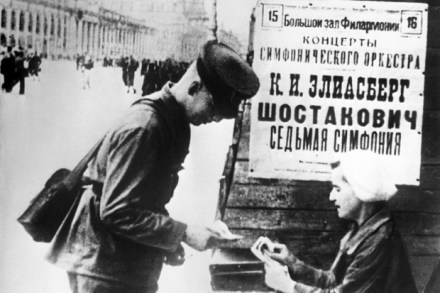
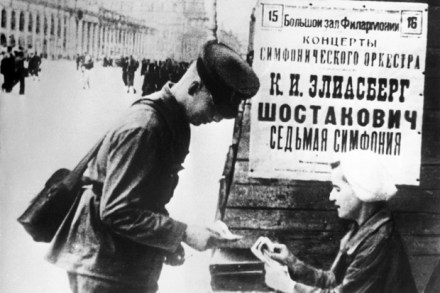
I’ve reviewed only a handful of books in 2014, but have struck lucky twice. Brian Moynahan’s Leningrad: Siege and Symphony (Quercus, £25) is one of the most moving books I’ve read for ages: a brilliant portrait of Leningrad in the Nazi blockade, culminating in the astonishing events surrounding the first performance of Shostakovich’s Seventh Symphony by a depleted army of musical stretcher-cases. The description of the audience (many of them also probably on their last legs) starting their ovation before the end, as if urging exhausted runners on to the finishing tape, will stay with me for a very long time.
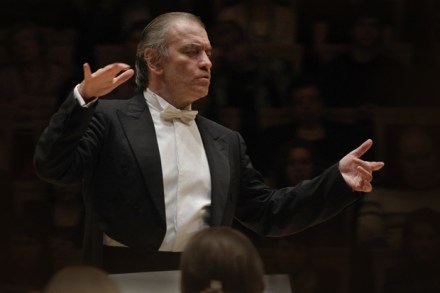
Mariinsky’s Boris Godunov – a revelation

Anyone who thinks opera singers and orchestral players are overworked should spare a thought for the Mariinsky Opera on its trek round England and Wales this week. After Prokofiev’s Betrothal in a Monastery in Cardiff on Sunday, the whole caravan rolled up at the Barbican in the shorter — but not exactly lightweight — first version of Musorgsky’s Boris Godunov. And by the time you read this it will have added Shchedrin’s The Left-Hander and (in Birmingham) the first two instalments of Wagner’s Ring, plus, for the chorus (not required in The Ring till Sunday’s Götterdämmerung), two concerts of Russian sacred music in London and Cardiff.

The yes-no-maybe world of Harrison Birtwistle

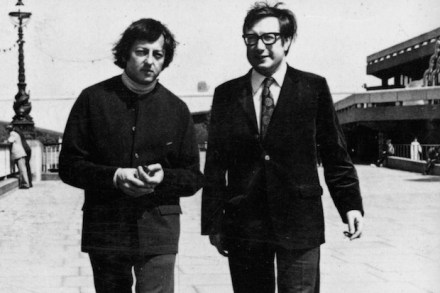
For better or worse, we live in the age of the talking composer. Some talk well, some badly, a few — the strong, silent types — keep their mouths shut, or have to have them prised open. Harrison Birtwistle belongs, by nature, to this last category. I once, a very long time ago, interviewed him for a radio programme, mercifully pre-recorded. Each tedious enquiry would be greeted by a long silence ending with a yes or a no or an ‘I don’t understand the question.’ Nothing would persuade him to contribute to my attempts at fitting him into some preconceived image of British music in the late 1960s. Fitting them in is of course precisely what talking to composers is supposed to do. Harry quietly — very quietly — declined to cooperate.

Portrait of a Guardian music critic

We critics seldom write our memoirs, perhaps because we skulk away our lives in dark corners, avoiding the public gaze, plying our shameful trade like streetwalkers or pushers of hard drugs. We might occasionally, in desperation, recycle our ephemera between hard covers. Edward Greenfield, the former record and music critic of the Guardian, has daringly come out, in a volume of reminiscences that carefully avoids the title memoir (about oneself) and instead labels itself as portraits (about other people). But a man is judged by the company he keeps, so we soon come back to the book’s subtitle and find ourselves reading a concealed ‘life’. Ted Greenfield has been unusual among music critics for a number of reasons.

Shostakovich, Leningrad, and the greatest story ever played

The horrors of the Leningrad siege — the 900 Days of Harrison Salisbury’s classic — have been pretty well picked over by historians; and meanwhile the story of Shostakovich’s Seventh Symphony, the improbable circumstances of its composition and first Leningrad performance in August 1942, is well known from the extensive, and still growing, literature on the composer. But Brian Moynahan’s book is the first to my knowledge — in English at least — to interweave these narratives to any significantly detailed extent. Moynahan is not a musician, and this is not really a book about music.

Did Leonard Bernstein do too much to be a great artist?

Nigel Simeone’s title for his edition of Leonard Bernstein’s correspondence rings compellingly, novellistically, through the force of the definite article, as in The Aspern Papers, or The Scarlet Letter. The reality, though, is more diffuse. Bernstein was a man of enormous endowments. One correspondent, after listing his talents as a composer, orchestrator, pianist, conductor, lecturer and general all-round musical functionary, ends by enquiring ironically, ‘Can you cook?’ The list might have been extended. It could have included a wild diversity of sexual activity, a seemingly limitless gift for affection and friendship, an inexhaustible capacity for work, and a genius for self-promotion. What it could hardly have included was focus.

Was Bach as boring as this picture suggests?

What, one wonders, will John Eliot Gardiner be chiefly remembered for? Perhaps, by many who have worked with him, for his notorious rudeness to performers and colleagues. At one point in his marvellous new book on Bach he refers to the master ‘losing his rag with musicians’ (as a corrective to the ‘Godlike image’ of Bach that posterity has tended to prefer), and one senses a not entirely veiled sympathy: one struggling director excusing another, admittedly greater, but in that respect at least no different. For while Gardiner doesn’t, as far as I know, compose, he has been and remains beyond question one of the most influential performing musicians of our time.