Stephen Glover

An eye for sensationalism

According to Private Eye, executives at the Daily Mail were alarmed by the impending publication of Adrian Addison’s new history of the paper. They expected an onslaught. So their hearts must have sunk when they saw the cover of Mail Men. Stephen Fry, who may hate the Mail more than anyone alive, pronounces it ‘a damned good read’; and Polly Toynbee, whose loathing is scarcely less vehement, praises it as a ‘well-informed, diamond-shaped analysis’ of the paper that ‘dominates England’s political culture’. Possibly neither of these sages has read the book in its entirety. It isn’t the hatchet job that Mail executives feared and its enemies wanted. Admittedly, as a columnist on the paper for many years I may be an imperfect judge.
Why does the BBC so love lefty journalists?

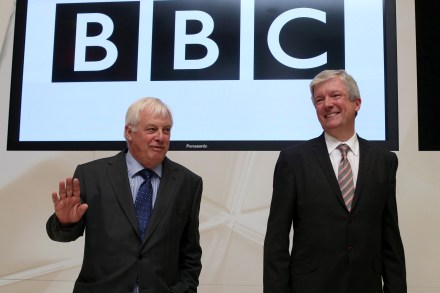
My response to the appointment of Ian Katz, deputy editor of the Guardian, to the editorship of BBC2’s Newsnight has been one of disbelief and amusement. Of course there’s nothing new in the Beeb hiring a paid-up Guardian-ista. It’s what we have come to expect. But one might have expected its new director-general, Tony Hall, to tread a little more carefully. Newsnight has a long history of Tory-bashing, and it disgraced itself last November with an orgy of false accusations against Alistair McAlpine, claiming without any evidence that he was a paedophile. Can one doubt that the programme threw caution to the wind at least in part because Lord McAlpine was once a friend and champion of Margaret Thatcher, and a hated Tory?

Farewell, Independent on Sunday

On Tuesday the Culture Secretary Maria Miller announced to a breathless world the latest development in the Leveson saga. The government wants a royal charter to oversee a new press watchdog. I say ‘the government’, but the Liberal Democrats are only half on board. Like Labour, they seem still to hanker after some sort of statute to set Leveson in stone. As for Hacked Off, the celebrity-backed pressure group that has campaigned for greater press regulation, it will settle for nothing less than a statute, and wants every recommendation made by Lord Justice Leveson to be implemented without delay. On the day Mrs Miller did her little turn in the Commons, a once successful Sunday newspaper was closed. Almost no one noticed.

Save our speech

In 1644 John Milton appealed to parliament in the Areopagitica to rescind its order to bring publishing under government control by creating official censors. I wonder what he would make of Lord Justice Leveson’s report, due to be published next week, which is expected to re-introduce statutory control of the press into English law after a lapse of centuries. The wonder is that it has happened. Thirteen months ago, as the Leveson inquiry was gearing up, the Lord Chief Justice, Igor Judge, made a moving and passionate speech defending the independence of the press.

The Times it is a-changin’

Because the Times is, or was, a newspaper like no other, it has enjoyed the distinction of successive volumes of official history. The last, written by John Grigg, covered the years 1966 to 1981, when the Times was bought by Rupert Murdoch. Volume seven, entitled ‘The Murdoch Years’, takes us up almost to the present day. Graham Stewart, a historian of the 1930s, should be congratulated on agreeing to undertake the task. For although earlier chroniclers have had to deal with controversial or painful passages in the newspaper’s history, such as its prewar embrace of appeasement or its postwar emollience towards the Soviet Union, none has been asked to wade into so perilous a minefield as was faced by Stewart.

A new climax in the historic feud between two big fat rude Tory journalists

Many people naturally assume that the final round of the Tory party leadership is between David Davis and Dave Cameron. They are seen together on the hustings, smiling at each other through gritted teeth. They take part in debates. They talk about their underwear. And on 6 December one of them — very probably Dave rather than David — will be declared leader of the world’s most successful political party. Yet in a parallel universe there is another contest that is more bitter and, in its own way, far more real. Were these two gentlemen to meet in the same room there might be terrible growlings and baring of fangs. One is a journalist who may justifiably claim to have set Dave Cameron on his path to greatness.

The Cameronians are wrong if they think they have humbled the Daily Mail

North Oxford is not one of the most deprived areas of Great Britain. When its generally quite large houses come on to the market — which is not often — they tend to be snapped up by computer millionaires or bankers from London rather than by dons. The ‘Tory turncoat’ Shaun Woodward has just paid squillions for a not particularly beautiful neo-gothic semi-detached just around the corner from me. You might expect that this would be solid Tory territory, but it is not. In fact, being a Tory in North Oxford has not been entirely plain sailing these past few years. At election time Lib Dem and Green and a few Labour boards stretch as far as the eye can see, but you have to go north of Summertown, and root around among the more modest inter-war villas, to find a Tory one.

Why is the Times so down on the Tories? And is it to do with Katharine Raymond?

Political parties should not sue newspapers: that would certainly be my general view. But one can understand why the Tories should have issued a writ against the Times. It follows two articles in the newspaper last month alleging that its Aussie campaign director, Lynton Crosby, had told Michael Howard that he was bound to lose the general election. The Times declined to publish a denial issued by the Conservatives, who also claim that they were not approached before publication. The action bespeaks a wider disenchantment on the part of the Tories. If these two articles had been out of the ordinary, there would be no writ. Michael Howard’s people evidently believe that the Times is often gunning for them, and they are largely right.

Is Murdoch about to cut the cover price of the dumbed-down Times?

To read the mind of Rupert Murdoch is difficult and not necessarily pleasant — difficult because he is cleverer than almost any other publisher who has ever lived, and not necessarily pleasant because he is nearly always planning to do someone down. But students of the man generally agree that the only thing that drives him is circulation. It is all that matters. There is no point in having a low-circulation quality newspaper if it can be turned into a higher-circulation title of less quality. That is why he slashed the cover price of the Times in 1993, which more than doubled the sales of the paper and accelerated its dumbing-down. And it is why the Times adopted the tabloid format more than a year ago, a change which has also increased circulation, if much less spectacularly.

Our modest war heroes may be forgotten by the state — but not by the Telegraph

Every morning, when I am faced by my pile of newspapers, almost the first thing I do is to turn to the obituary page of the Daily Telegraph. Obits in all the serious papers are good — generally much better than they were 20 years ago — but the Telegraph has a particular specialisation which its rivals hardly try to emulate. Three or four times a week it carries pieces about former servicemen who fought in the second world war. To be included it seems that you need to have won a military medal, or else gone on to achieve high rank after the war. These obituaries record the acts of sacrifice and bravery of young men over 60 years ago. There is nothing like them anywhere else in the British press.

Can the Guardian be a newspaper both of the Left and of the establishment?

John Lloyd has become a much lauded guru of serious journalism. A former member of a fascinating group called the British Irish Communist party, he is now a loyal Blairite, and edits the on the whole very good Financial Times Saturday magazine. He is also the author of an interesting recent book on the British media which for some reason escaped the notice of this column. One day we may put that right. Mr Lloyd recently used the pages of his magazine to make an ex-cathedra pronouncement. This was that the Guardian is poised to become the new paper of the British establishment. His suggestion, which is certainly correct, is that the Times has voluntarily given up its position as the establishment newspaper.

However bad things may seem, the news for newspapers is good

As another year looms, I cannot remember such despondency in what used to be called Fleet Street. It is not just that several newspaper groups are losing money: it was ever thus. There is talk of a general decline in newspapers. Some even suggest that the written word — as it appears in a bundle of newsprint delivered to your door or picked up at a newsagent — will not last more than ten or 20 years. We are told that the Internet will tempt more and more readers, and that the young do not have the same interest in newspapers as their parents and grandparents did. The sharpest decline in readership has been in London, where almost every title has suffered, and it is adduced as a warning of what will happen in the rest of the country.

Did he kiss and tell? Blunkett’s NoW transcript seems to absolve him

Last week I suggested that in August David Blunkett leaked news of his affair with Kimberly Quinn to the News of the World. My reason for doing so was not that I wished to champion Kimberly Quinn, who happens to be publisher of this magazine. I simply could see no other explanation. Mrs Quinn’s supporters passionately believed that Mr Blunkett did ‘kiss and tell’, and the strength of their belief was such that it was impossible to think (and remains so) that Mrs Quinn herself was the secret conduit. If she was not, who could it be other than Mr Blunkett, who had been dumped by Mrs Quinn, and had the motive of vengeance? On Friday 13 August Andy Coulson, editor of the News of the World, interviewed Mr Blunkett in Sheffield at 10 o’clock in the morning.

The who, what, where, when of the Blunkett-Quinn business

Who is more in the wrong, David Blunkett or Kimberly Quinn? Everyone has a view. Let me tell the story. I have deliberately chosen not to talk to Kimberly Quinn, who is publisher of The Spectator. Nor have I spoken to David Blunkett, or anyone who works for him. Last July Kimberly Quinn (she then called herself Kimberly Fortier) told Mr Blunkett that their three-year affair was over. Mr Blunkett was very unhappy about this. He was in love with Mrs Quinn, and seems not to have acted particularly rationally. He wanted at the very least to establish his paternity of Mrs Quinn’s two-year-old son, as well as the child she is expecting in January.

Sacking Johnson is by far the best thing Howard has done since becoming leader

One of the hazards of writing a column about the press is that sooner or later you are bound to be cornered by an editor or journalist whom you have teased. I shall never forget the time I was harangued in the street by the charming wife of my old friend Peter Stothard. Sometimes one is cut in the lavatories of clubs by people whom one has quite forgotten having written about. A worse experience is waking up to find that an editor whom you have ragged has been appointed to the editorship of the paper for which you write. Such was my fate when Sir Max Hastings was made editor of the London Evening Standard, for which I then worked. Max was not inclined to take a humorous view of the things I had written about him.

What next? Will Richard Desmond soon be lecturing us on declining moral standards?

When Richard Desmond acquired the Daily Express four years ago there was an outcry. That committed Christian, Tony Blair, immediately had the pornographer turned press baron round for tea, but perhaps that was only to be expected. Almost everyone else was appalled that a man who had made his fortune out of such publications as Spunk Loving Sluts should have acquired a national newspaper. Foremost among Mr Desmond’s critics was the Guardian, which ran a magnificent series of articles about him. It discovered that a company owned by him had registered a website which promised live heterosexual sex, live lesbian sex, as well as other images too disgusting to mention in the first paragraph of a magazine article.

Why might Dr O’Reilly want to sell 30 per cent of the Independent?

The news that Tony O’Reilly may be willing to sell 30 per cent of the Independent newspaper seems utterly astounding. It has enjoyed a considerable succès d’estime by going tabloid. From being a catch-up sort of newspaper which did not excel in any particular area, it has become a trendsetter. First the Times followed suit and produced its own tabloid version. Then the Guardian announced that once it has acquired new presses it will transform itself into a so-called Berliner — i.e., the same shape as Le Monde. The rejigged management at the Daily Telegraph will have to make up its mind whether or not to produce a tabloid edition. Nor is this tabloid craze confined to Britain.

Why poor Mr Howard can’t get a good press, even from Tory newspapers

The Tory party conference began on Monday, and Radio 4’s Today programme gave it the kind of send-off reserved for truly hopeless causes. Item after item emphasised the Tories’ unfitness to govern, their uniformly low spirits and their enduring unpopularity. One excited reporter even suggested that the party might slide off the political map as the Liberals did, an event which he chose to place in the 19th century. The reason for all this wailing and gnashing of teeth was the Conservatives’ abysmal performance in the Hartlepool by-election — which we had known about for three days — and a Populus poll which appeared in that morning’s Times showing the party’s support at 28 per cent.

The coverage of the Iraq hostage crisis has been no victory for terrorism

The Bigley affair has not brought out the best in anyone. Naturally I exclude Kenneth Bigley himself, who can hardly be blamed for being kidnapped and should be freely forgiven for his desperate Internet appeal to the Prime Minister. But I am not sure that I approve of Mr Bigley’s brother addressing Tony Blair as though he were a halfwit, and saying that he has ‘passed his sell-by date’, much as I disapprove of Our Great Leader. Even Mr Blair deserves a little respect. But then he himself and the unbelievable Jack Straw, who has barely been off the telephone to the Bigleys, have not behaved with very much dignity either.

The work of P.G. Wodehouse is immortal, but he was guilty of a moral lapse

The debate about P.G. Wodehouse’s wartime radio broadcasts from Nazi Germany has been raging for more than 60 years. It is re-ignited by Robert McCrum’s admirable new biography of the great writer. Most reviewers have taken the line that ‘Plum’s’ talks were inconsequential. Though sympathetic to his subject, Mr McCrum is a little sterner. ‘His behaviour,’ he writes of Wodehouse, ‘was incredibly stupid, but it was not treacherous.’ What business is it of a media column to re-enter these difficult waters? My excuse is that Wodehouse was almost destroyed by a journalist, and he has over the years been defended and largely rehabilitated by writers who were also journalists. His reputation has been settled by the fourth estate.